

Lesson 762: Identifying Cognitive Misconceptions Behind Hoarding Behavior

Course duration:70 minutes
This lesson focuses on the automatic thoughts behind hoarding behavior, such as "It will definitely be useful later," "I'll regret throwing it away," and "It has special meaning." Learners will practice testing these thoughts with evidence, practical uses, and current life needs, gradually loosening the urge to hoard and reducing decisions driven by fear. The practice emphasizes safety, slowness, and feasibility, without aiming for complete change all at once. Please record each action, change in anxiety, and change in location to create a reviewable practice track.
○ Course topic audio
Lesson 762: Identifying Cognitive Misconceptions Behind Hoarding Behavior
Click to view the read-aloud text
Many hoarding behaviors are driven by powerful thoughts, such as "I might need it later," "I'll regret throwing it away," "This thing has special meaning," or "Others won't understand its importance to me." These thoughts sound real and often make it hard to let go. What we need to do is not immediately refute ourselves, but learn to gently examine them. Focus on understanding, pausing, and choosing, rather than blaming yourself, when identifying cognitive biases behind hoarding. Prepare a small piece of paper and write down one thing you most want to practice today, and then write down a minimum version that you can complete. This way, even if you're not feeling well, you still have a path to follow. You can think of today's practice as a gentle companionship, not a harsh exam. Choose a very small entry point, give yourself a manageable scope, and then do it steadily. If you feel resistance, frustration, or reluctance during the process, don't rush to deny it; just gently acknowledge: "I'm feeling a little uncomfortable right now, but I can still continue slowly." When you're willing to stop and observe, you're no longer completely carried away by old habits. Even just pausing for ten more seconds, seeing one more thought, or making one more record is part of the recovery. Please factor in these small changes; they accumulate slowly. If you can't achieve a certain step, don't immediately give up. You can retreat to smaller goals, such as tidying just one corner, evaluating just three items, or writing down just one feeling. Recovery requires flexibility, not forcing yourself. The gentler you adjust your methods, the easier it is for new habits to remain. When you finish practicing, give yourself a simple wrap-up. You can drink some water, wash your hands, open the window, or write down what you accomplished today. This wrap-up reminds your body: I've done a little; I can stop here for today. Remember, change isn't about overturning the past all at once, but about gradually reclaiming life for yourself through gentle practice. You don't need to prove to anyone that you'll get better immediately; you just need to give yourself more understanding, more order, and more breathing space today. Taking it slow doesn't mean standing still; it means you're finally starting to move forward in a way that doesn't harm you. As long as you see even a little more than yesterday, it's already worth acknowledging.
AI Healing Q&A
Describe to the AI the most difficult item, thought, or space to deal with today, based on the automatic thoughts behind saving items. Let the AI break it down into context, thought, emotion, physical reaction, saving impulse, and small alternative actions, and generate a gentle alternative to remind yourself that you don't need to hoard for security. The focus of this exercise is on safety, slowness, and feasibility, not on achieving complete change all at once.
○ Music therapy guidance
Music therapy revolves around the automatic thoughts behind preserving items. Choose music with a steady rhythm and gentle melody, listen for three minutes first, then focus on a very small area. While listening, observe your breathing, shoulder and hand tension, and anxiety levels, using the music as a stabilizing signal for starting, pausing, and ending. The key to this practice is safety, slowness, and feasibility; don't aim for complete change all at once.
○East-West Healing Tea Drinks
Recommended drink: Licorice and ginger tea. Reason for recommendation: Licorice harmonizes, ginger warms, suitable for those experiencing chills, stomach discomfort, or low mood during cleansing, helping the body regain warmth. Instructions: Boil 2-3 slices of ginger with a small amount of licorice for 10 minutes. Honey can be added. Drink warm after meals. Coordinate with three slow breaths while drinking, and record changes in anxiety before and after cleansing. Suitable as a short pause before and after cleansing to help stabilize movements.
○ Healing Recipes
Lamb and wolfberry porridge
Lamb is warming and nourishing, while goji berries are soothing and moistening, making it suitable for those experiencing low energy, cold hands and feet, or feeling weak before organizing tasks. Warm porridge helps the body gain support, allowing learners to restore their energy before facing the decision-making process. It reminds us that decluttering is not punishment, but restoration. After consuming porridge, record energy changes to observe whether you find it easier to initiate small-scale actions. Simultaneously, record a small-scale decluttering session to observe changes in your body, emotions, and the surrounding environment.
Warm and replenish energy | Stimulate the body | Provide support for action

Mandala Viewing Healing
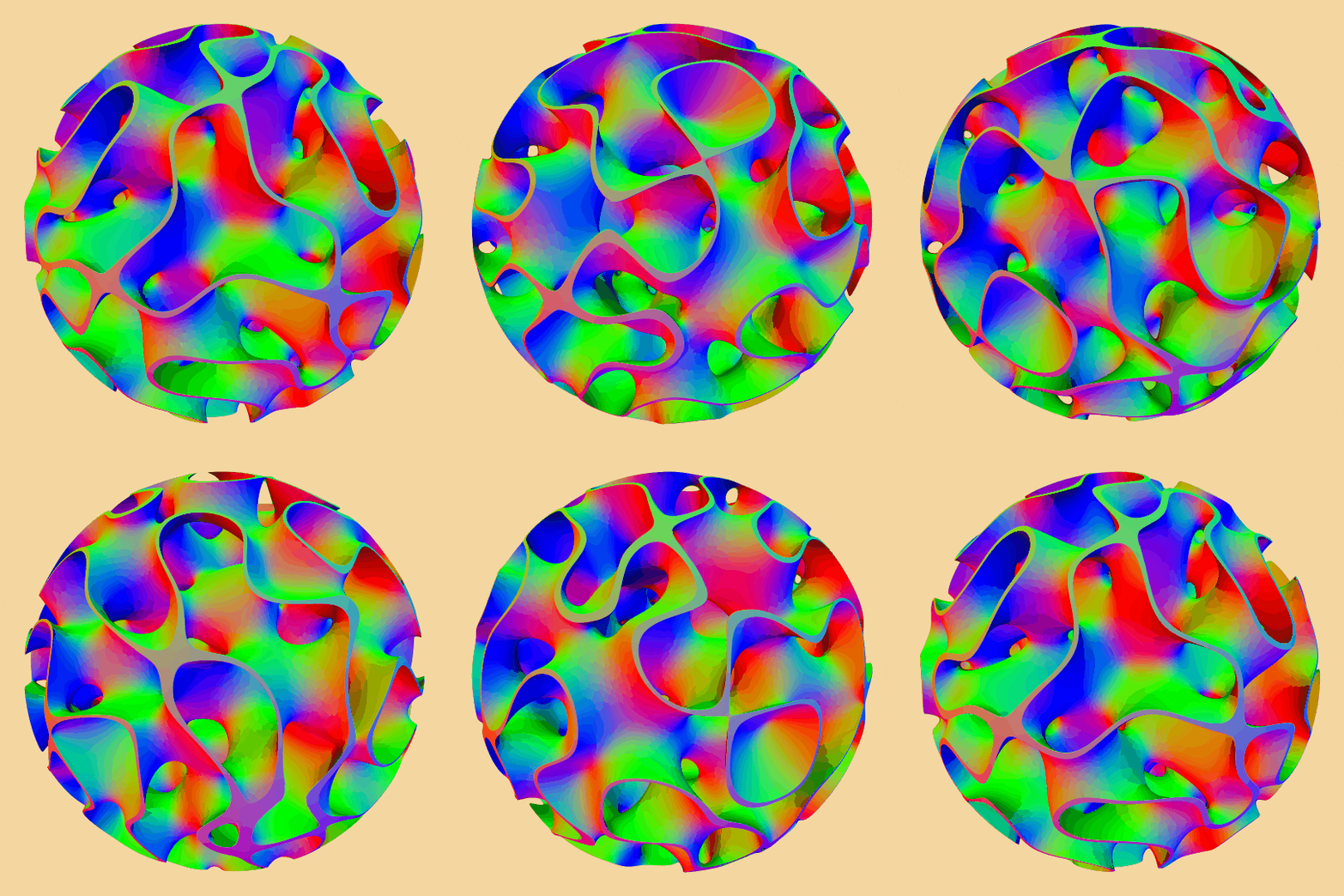
Mandala visualization involves observing the automatic thoughts surrounding the objects being preserved. Choose an image with a clear center and orderly hierarchy, and slowly look from the outer circle towards the center, then back from the center to the whole. During practice, do not analyze whether the image is good or bad; simply experience the visual process from chaos to order, helping to return attention to boundaries and a sense of space. The emphasis of practice is on safety, slowness, and feasibility; do not aim to achieve complete change in one go.
● AI Balance Psychological Simulation Engine ●
AI Balance Psychology Simulator
AI Mandala Color Healing EngineAZ Image Coloring · 40 Colors
○ Calligraphy and engraving therapy practice
This calligraphy and engraving therapy exercise revolves around the cognitive biases behind hoarding behavior. No fixed sentences are prescribed; learners can choose 2 to 6 words from the course title, personal goals for organizing, or their feelings about the day to write. When writing, slow down the beginning, middle, and end of each stroke, observing whether you are rushing to finish, fill the page, or complete the task immediately. The focus of the exercise is to let the strokes help slow down your breathing, rather than striving for a complete piece.


○ Art Therapy Guidance
Art therapy is designed around the automatic thoughts behind preserving objects. Draw a room, drawer, or desktop, gradually creating a passageway, a blank space, and a usable area from a state of overcrowding. Finally, write "I can restore the space little by little," using the image to practice moving from a feeling of loss of control to an organized order. The focus of the practice is on safety, slowness, and feasibility, not on achieving complete change all at once.
Please log in before submitting your drawings and feelings.
○ Diary Healing Suggestions
Journaling therapy revolves around recording the automatic thoughts behind saving items. Write down a small area you dealt with today, an item, the reason for saving it, your anxiety level, and your final decision. Also, record whether your body relaxed, whether the space became clearer, and a small step you can take tomorrow, making the tidying experience visible. The key to this practice is safety, slowness, and feasibility; it doesn't aim for complete change all at once.
Please log in to use.
May you gradually return to a more stable, clear-headed, and gentler version of yourself through today's practice.