

Lesson 846: Establishing a Long-Term Relapse Prevention Mechanism and a Mind-Body Balance Plan

Course duration:70 minutes
Long-term stability isn't achieved through a single, drastic change, but through the small, consistent steps of daily life. This section will help you integrate sleep, emotional reflection, stress management, and a support system into your life. Preventing relapse isn't about being afraid of failure, but about preparing a path back for yourself. Don't rush. Take it slow. Please take your time. Take care of yourself first. Don't rush. Take it slow. Please take your time. Take care of yourself first. Don't rush. Take it slow. Please take your time. Take care of yourself first. Don't rush. Take it slow. Please take your time. Take care of yourself first. Don't rush. Take it slow. Please take your time. Take care of yourself first. Don't rush. Take it slow.
○ Course topic audio
Lesson 846: Establishing a Long-Term Relapse Prevention Mechanism and a Mind-Body Balance Plan
Click to view the read-aloud text
Long-term stability isn't about enduring every day, but about having a protective lifestyle. Sleep, diet, skincare, alternative exercises, stress management, and reflection journaling can all be supportive. True relapse prevention isn't about being overly strict with yourself, but about adding gentle safeguards to your life. To build a long-term relapse prevention mechanism and a mind-body balance plan, you can gently ask yourself three questions: When am I most often triggered? What's the smallest alternative I can do? How can I talk to myself without hurting myself further? Start today with a small exercise; don't set your goals too high. For example, observe only one impulse, delay it for only ten seconds, place your hand only on a substitute, or write down just one sentence. Small goals aren't regression; they give your body a chance to actually complete them. Completing one gives you more evidence: I'm not completely helpless. If you experience frustration, shame, or a desire to escape during the exercise, don't rush to criticize yourself. These reactions are common; they indicate you've hit the hardest part of your old habits. You can stop, take a sip of water, relax your shoulders, and tell yourself: I'm feeling uncomfortable right now, but I don't need to continue hurting my body to get through this moment. Change is usually not linear. Sometimes you do well today, but relapse tomorrow. This doesn't mean all your previous efforts have been wasted. Every time you're willing to come back, every time you're willing to start over, you're training for a new path. Focus on concrete actions, not on drawing conclusions. When it's over, give yourself a gentle ending. Wash your hands, apply some skincare products, tidy your desk, write down a small progress note, or put alternative tools where they're easily accessible tomorrow. Let your body know that you've done something today, and that's something worth seeing. Take it slow; it's not about standing still, but about finally starting to move forward in a way that doesn't harm you. Carefully consider these small efforts; they're helping you gradually regain a sense of security in your body and control over your life. Just pausing a little longer today, protecting your body a little more, is already a step closer to being completely swept away by impulse. Being willing to start over is part of the recovery process. Remember, small practices aren't perfunctory; they're giving your nervous system a chance to relearn. Just being able to see yourself a little more clearly today, protecting your body a little more, is already a process of change.

AI Healing Q&A
Focusing on establishing a long-term relapse prevention mechanism and a mind-body balance plan, AI-powered healing Q&A accompanies learners through gentle questions and answers, helping them sort out impulses, triggers, misunderstandings, and next steps. It does not replace professional treatment, but rather helps clarify complex feelings, reduce shame and isolation, and make practice more relevant to daily life. It also reminds us that recovery can begin gently, allowing the mind and body to gradually return to a stable state.

○ Music therapy guidance
Long-term stability requires a small, reusable ritual. You can set aside a specific piece of music to listen to before bed, before reviewing a day, or when you're feeling emotional. It doesn't need to magically change you; it simply reminds your body each time: I can come back slowly. Calm down. Take your time. No rush. Come back. Slow down. Calm down. Take your time. No rush. Come back. Slow down. Calm down. Take your time. No rush. Come back. Slow down. Calm down. Take your time. No rush. Come back. Slow down.

○East-West Healing Tea Drinks
Yunnan black tea, produced in Yunnan province, has a bright red liquor, a rich and mellow flavor, and a slight honey aroma. It is rich in tea polyphenols, amino acids, and vitamin C, making it suitable for drinking when feeling tired in the afternoon, under stress, or needing to recharge. Directions: Take 1 teaspoon of tea leaves and steep in 95°C hot water for 5 to 6 minutes. Honey or lemon can be added.
○ Healing Recipes
○ Oven Mushrooms & Onion
The aroma of roasted mushrooms and onions is mild, and the tenderness of the mushrooms combined with the sweetness of the onions provides a comforting taste experience. It's suitable for long-term relapse prevention courses, helping learners establish simple, repeatable care meals that allow diet, rhythm, and emotional stability to support recovery.
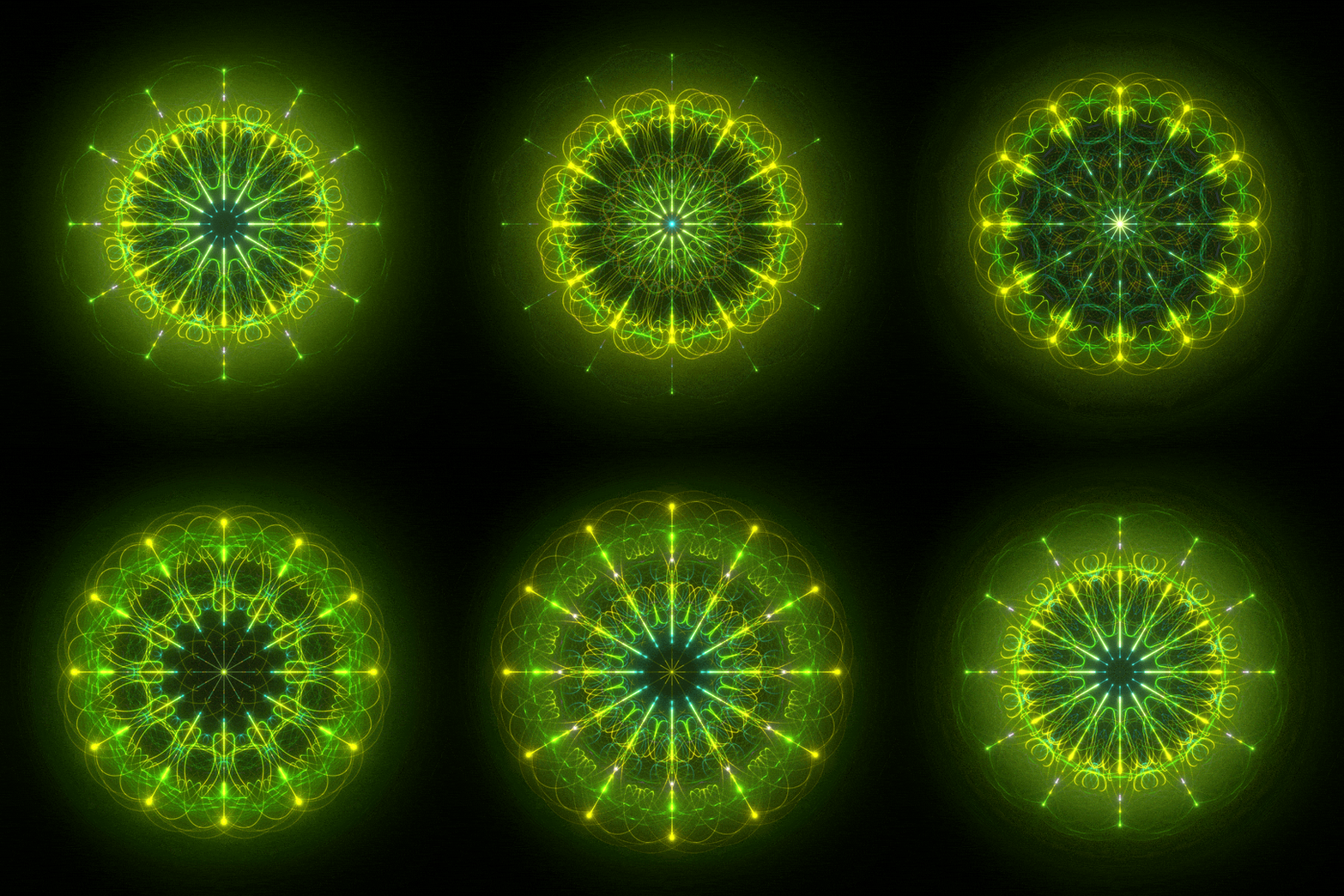
Mandala Viewing Healing
Long-term stability isn't achieved through a single, forceful effort. Think of the mandala as a rhythm diagram of your life; the center represents sleep, breathing, and support, while the outer ring represents reminders, reflection, and practice. Review it daily, and recovery will have a direction to rely on. Stay calm. Don't rush. Take it slow. Come back to the present. Please take your time. Stay calm. Don't rush. Take it slow. Come back to the present. Please take your time. Stay calm. Don't rush. Take it slow. Come back to the present. Please take your time. Stay calm. Don't rush. Take it slow. Come back to the present.
● AI Balance Psychological Simulation Engine ●
AI Balance Psychology Simulator
AI Mandala Color Healing EngineAZ Image Coloring · 40 Colors

○ Calligraphy and engraving therapy practice
Long-term prevention of relapse relies not on a single, forceful effort, but on gradual, daily stability. During practice, don't plan your entire life; simply feel the rhythm of the strokes. It's like a reminder: sleep, reflection, support, and rest can all be gradually integrated back into your life. First, stabilize. Don't rush. Slow down. Come back to the starting point. Please take your time. First, stabilize. Don't rush. Slow down. Come back to the starting point. Please take your time. First, stabilize. Don't rush. Slow down. Come back to the starting point. Please take your time. First, stabilize. Don't rush. Slow down. Come back to the starting point.


○ Art Therapy Guidance
Long-term stability isn't achieved in a day, and painting doesn't require mastering everything at once. Today, simply putting your current feelings, pressures, and hopes onto paper is enough. Each gentle record will help you gradually see your own rhythm and changes. Slow down. Don't rush. Calm down. Come back to the present. Please paint slowly. Slow down. Don't rush. Calm down. Come back to the present. Please paint slowly. Slow down. Don't rush. Calm down. Come back to the present. Please paint slowly. Slow down. Don't rush. Calm down. Come back to the present.
Please log in before submitting your drawings and feelings.

○ Diary Healing Suggestions
Please write down one small, consistent action you'd like to maintain long-term, such as a regular sleep schedule, emotional reflection, reducing stress, or contacting supportive individuals. Don't overcomplicate your plan. Start with one small action today, allowing recovery to proceed naturally, not through pushing yourself. Take your time. Take care of yourself first. Don't rush. Slow down. After writing this, breathe slowly.
Please log in to use.
May you gradually return to a more stable, clear-headed, and gentler version of yourself through today's practice.