

Lesson 1: What is Generalized Anxiety Disorder?
Duration:70 minutes
Topic Introduction:Generalized anxiety disorder (GAD) is characterized by chronic, excessive, and uncontrollable worry that is often disproportionate to current events. This course will introduce you to its core characteristics, including persistent worry, hypervigilance, distractibility, and emotional tension, and provide you with a basic understanding and self-management strategies.
○ Core characteristics of generalized anxiety disorder
- Ongoing concerns:Worrying about various things repeatedly every day, even without clear triggers.
- Hypervigilance:Always in a state of "tense waiting" and difficult to relax.
- Difficulty concentrating:The mind is occupied by worries, and learning and work efficiency decreases.
- Emotional tension:It is often accompanied by irritability, restlessness, and a feeling of being out of control.
Lesson 1: Key Points of CBT 🎧 Click to view/listen to the reading content
Generalized anxiety disorder (GAD) is like having a "perpetually worried" radio station in your brain, broadcasting "what if" programs around the clock, with no commercial breaks. To identify it, you first need to see if this radio station is constantly playing on a loop in your life. One typical sign is that the worry never stops. While others worry about the night before an exam, you find new topics every day: Will it rain tomorrow? Are my colleagues unhappy with me? Will the eggs in the refrigerator expire? This worry isn't just passing by occasionally; it's a constant presence. The second clue is that your body is very cooperative. Your shoulders feel as if you're carrying two bags of cement, your stomach occasionally protests, your heart rate spikes occasionally, and sleeping feels like negotiating with the bed—you just can't seem to settle down and sign a contract to fall asleep. The third characteristic is a brain that's hard to shut down. You try to watch movies, play games, or chat, but your brain is like having twenty web pages running in the background, all discussion forums for "what if" and "what if." So, how does it work? The mechanism of generalized anxiety disorder can be understood as—the brain's threat detection system is overly sensitive, misreporting many ordinary signals in life as "high-risk." This system is led by the amygdala (emotional alarm) in the brain and frequently negotiates with the prefrontal cortex (the center of rational thinking). However, the alarm often wins, so the body activates "tension mode," releasing stress hormones to keep you in a "fight or flight" state.
Over time, this pattern becomes a habit, and the brain will press the tension button even when there is no real danger. It's like a smoke alarm that goes off at the sight of steam, keeping you on edge every day.
Identifying GAD involves paying attention to the frequency, duration, and impact of this worry: if you've been preoccupied with worry every day for more than six months, and it's affecting your work, studies, sleep, and even interpersonal relationships, then you should consider generalized anxiety disorder, not just "cautious personality." Simply put, generalized anxiety disorder isn't just about overthinking; it's about your "worry system" running at an excessively high frequency for a long time. Understanding its mechanisms allows you to begin learning—when to listen to the radio and when to decisively shut down and allow your brain some quiet time.
▲ AI Interaction: Is your daily life surrounded by “constant worry”?
Anxiety is like the mist in the air, invisible but always around.
It makes us constantly worry about the future, as if everything could go wrong.
You are not alone, many people have experienced anxiety.
Learning to recognize its existence is the first step towards stability.
Today, you just need to say to yourself quietly: "I am understanding it."
Click the button below to sort out your worry list with AI and distinguish which ones really need attention and which ones are just "virtual alarms" caused by anxiety.
When anxiety recurs like background music, you might as well let a soft music accompany you.
The melody can slow down your heartbeat, just like someone is whispering comfort to you.
You don't have to push your anxiety away immediately, just allow yourself to rest in the music.
Let the notes become the rhythm of your breathing and help you find peace.
Oriental Healing Tea Biluochun Tea
Recommended drinks:Biluochun tea
Recommended reasons:It is refreshing and helps to keep the mind clear and relieve the chaotic thoughts caused by excessive worry.
practice:Take 3 grams of tea leaves, brew with 85℃ hot water, and add water 2 to 3 times to maintain the fragrance and sense of stability.
○ Greek Salad
Derived from the ancient Greek concept of "food is medicine," the Mediterranean diet emphasizes naturalness, simplicity, and balance. Greek salad features vibrant colors from tomatoes, cucumbers, purple onions, and black olives. Feta cheese provides calcium and protein, while extra virgin olive oil provides cardiovascular-friendly monounsaturated fats. This low-glycemic, low-calorie salad, ready in 10 minutes, is perfect all year round. It can be a light centerpiece or a classic side dish, delivering antioxidant benefits and a refreshing, satisfying flavor from simple ingredients.
Healing Recipes
/home2/lzxwhemy/public_html/arttao_org/wp-content/uploads/cookbook/greek-salad.html(Please confirm that greek-salad.html has been uploaded)Lesson 1: Chinese Calligraphy - Regular Script - Stroke Position and Posture
Learning regular script calligraphy begins with "establishment." This refers not only to the shape of the characters, but also to a stable state of body and attention. The focus of this lesson is not on writing a large number of characters, but on ensuring that each stroke has a clear starting point and stable support.
Writing Instructions:
Before writing, adjust your posture: keep your back naturally straight, relax your shoulders, and keep the paper directly opposite your body. When holding the pen, use the center of the stroke primarily, avoiding any off-center strokes.
Be steady when you start writing; do not rush. First, establish the tip of the brush, then slowly move the brush, allowing the force to be naturally transmitted to the tip.
Written words:
Blessings lasting
Motivational words:
Unstable handwriting is mostly not a matter of technique, but rather a lack of focused attention.
Writing Tips:
Before writing each character, pause for a moment to check that your posture is upright and your breathing is steady. If you feel agitated, stop writing before continuing.
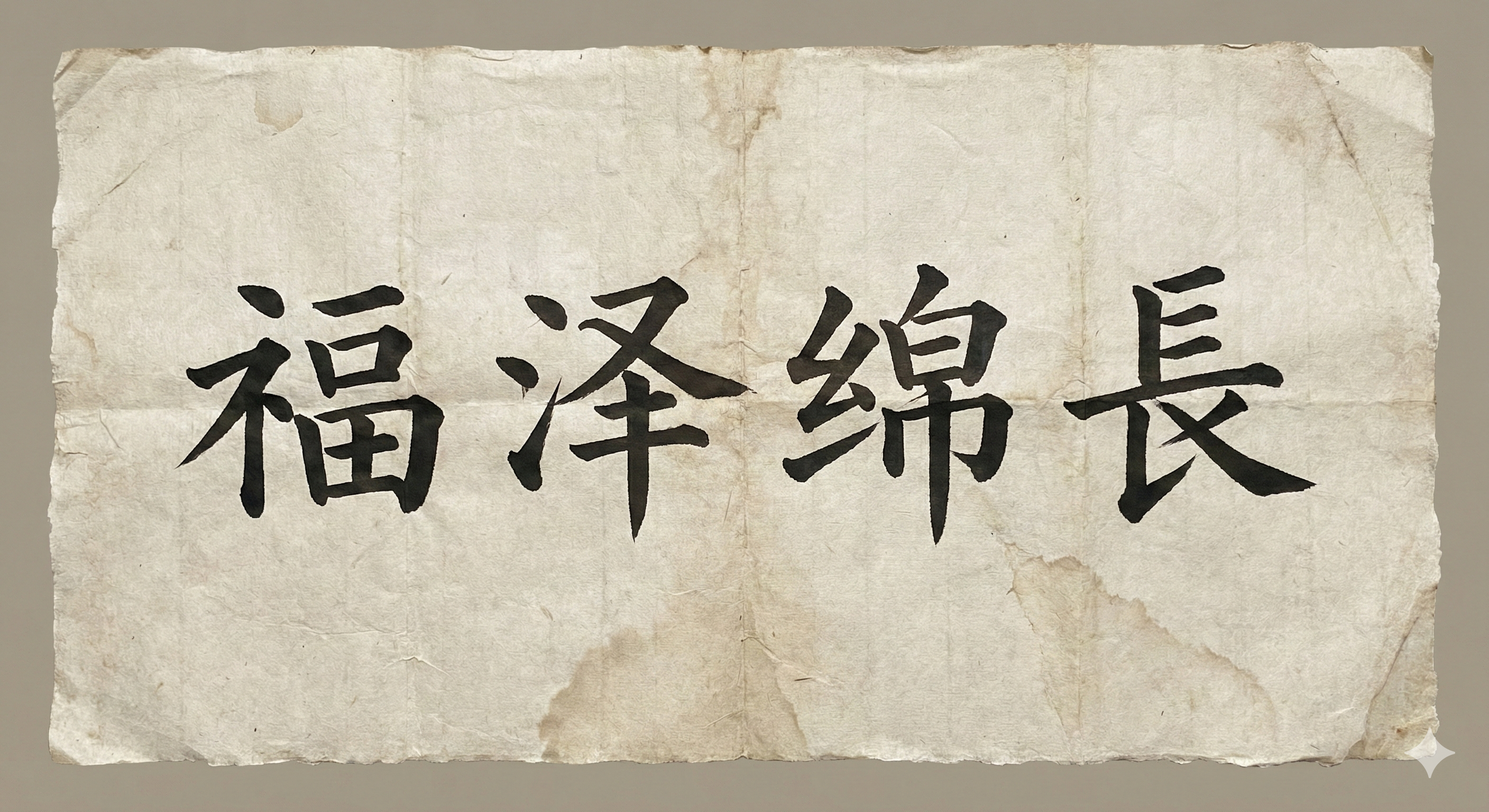
Image Healing: Mandala Stability Guidance 01
As you gaze upon this traditional mandala, let your breath flow slowly and evenly through your chest. In this circular universe, there is no center, no boundary—only a constantly returning order and harmony. Each layer of symmetrical lines tells you: beyond chaos, a balancing force still operates. You don't need to rush to solve everything; simply let your gaze flow along the geometric rhythm, let your thoughts be drawn into that eternal rotation. Anxiety is but a leaf in the wind, and you are the steadfast tree. In this tranquil form, you resynchronize with the world. Believe in order, believe in breath, believe that life is still growing—your future, like the center of this mandala, is serene and luminous.
Traditional mandalas typically feature symmetry and complex geometric structures, symbolizing the wholeness of the universe and the cycle of life. By drawing traditional mandalas, individuals can perceive inner peace and strength, achieving psychological balance.
◉ Please stare and watch twice.
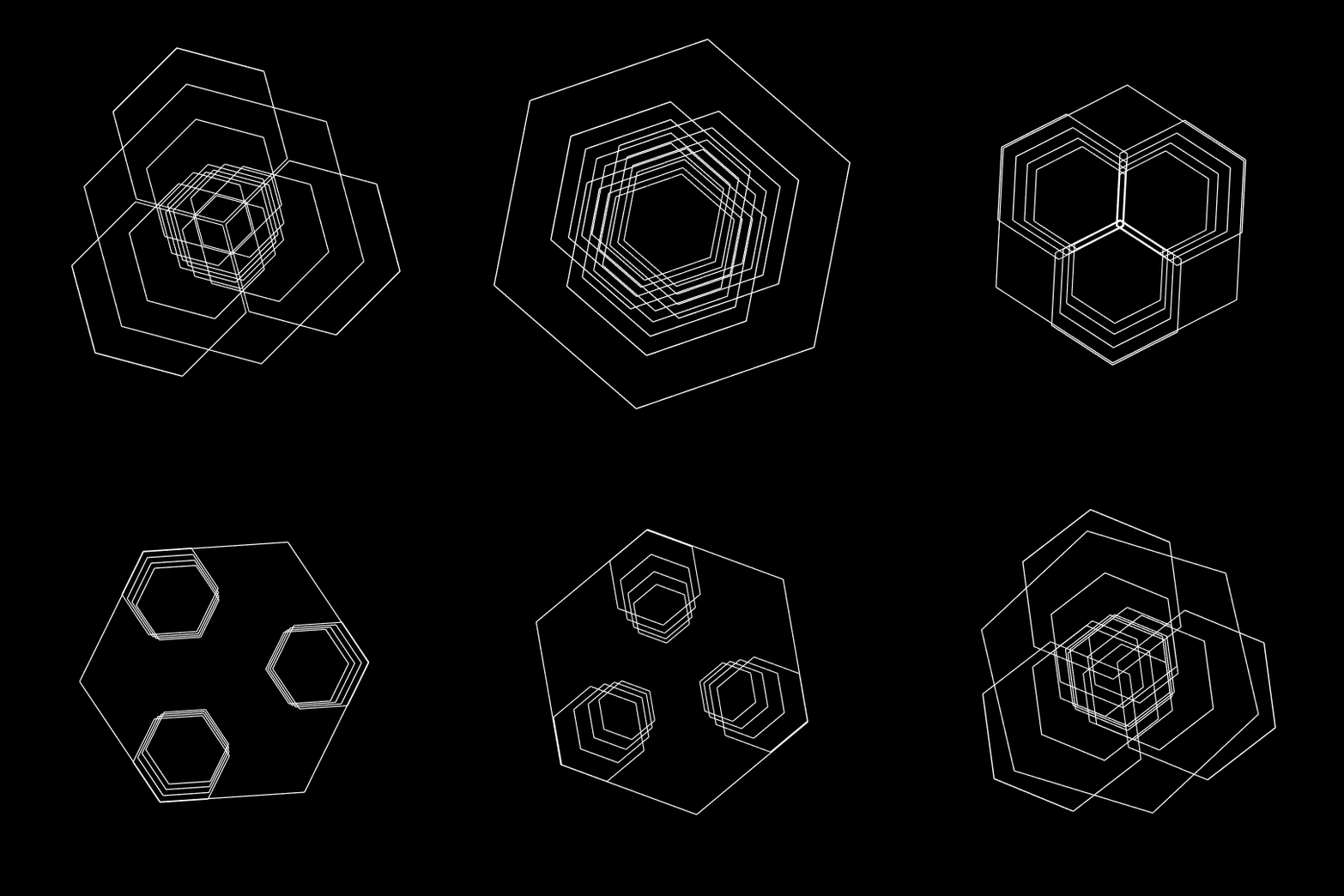
Lesson 1: The Shape of Anxiety
Objective: To understand that "generalized anxiety disorder" is not a reaction to a single event, but a persistent pattern of tension and vigilance. Through painting, this intangible "tension" can be made visible, thereby reducing the feeling of being overwhelmed by it.
Steps: Draw a constantly rotating or contracting shape on the paper, symbolizing continuous psychological tension. Use line density to represent the intensity of anxiety, and use color contrast to represent emotional fluctuations—the inner red and orange represent high pressure, and the outer blue and gray represent fatigue. Finally, draw a symbol of stability in the corner, such as a stone, roots, or a hand, to remind yourself that there is still support amidst anxiety.
Please log in before submitting your drawings and feelings.
○ 1. What is a generalized anxiety journal?
① My new understanding of "generalized anxiety": How is it different from ordinary worry/tension? How often does it occur and how long does it last?
② The three most common worries and triggering situations (people/things/places/times) in the past week.
③ Impact Inventory: What are the specific impacts on sleep, attention, efficiency, and interpersonal communication? (0-10 points for each).
④ Reality check: If my worry comes true, what are the worst/most likely/best scenarios? What are the steps I can take to prepare for it?
⑤ “Minimum Action” List (Choose 1): Take a 10-minute walk/Write 3 self-encouragement sentences/Contact a supporter/Drink a glass of warm water.
⑥ Today’s anxiety intensity (0–10 points) and reasons; tomorrow’s first step and reminder method (alarm clock/notes/peer supervision).
Please log in to use.
The biggest characteristic of generalized anxiety is "worrying about everything." When you learn to see, categorize, and put them in place, your mind will gradually find a stable place.