

Lesson 161: Understanding Spatial Phobia

Duration:70 minutes
Topic Introduction:Space phobia is not weakness, but a deep-seated safety anxiety associated with escape routes. This lesson helps you understand the psychological logic behind this fear and learn to make your body feel safe again. When practicing, keep your goals small, completing only one gentle movement. You don't need to change yourself immediately, just understand one more reaction.
○ Course topic audio
Lesson 161: Understanding Spatial Phobia
Click to view the read-aloud text
This lesson is about "Understanding Spatial Phobia." The focus of this course isn't to urge you to immediately venture out boldly, nor is it to push you to your most uneasy places. Instead, it's about understanding why the body perceives certain spaces, routes, or crowded environments as inescapable threats. Spatial phobia isn't weakness, but a deep-seated safety anxiety associated with escape routes. This lesson helps you understand the psychological logic behind this fear and learn to make your body feel safe anywhere again. The most distressing aspect of spatial anxiety is that it transforms ordinary environments into a danger map. Elevators, subways, shopping malls, train stations, bridges, high-rise buildings, plazas, and even streets slightly away from home can be marked by the brain as inescapable. The body then goes on alert: shallow breathing, rapid heartbeat, weak legs, dizziness, stomach tightening, and the constant thought of "What if I can't get out?" The first step in this lesson is to concretize spatial phobia. Please write down your most feared locations, the scenarios you most worry about, your usual avoidance behaviors, and the life segments you most want to return to if you could stay safely. This isn't about forcing yourself, but about transforming your fear from a chaotic mess into a layered map. The second step is to establish an exposure plan that allows for both staying and retreating. Don't start with the most difficult scenario; instead, choose low-intensity, short-duration practice points with clear escape routes. For example, stand at the door for three minutes, walk downstairs, then enter a convenience store for one minute, gradually increasing the distance. Record the initial tension level, peak tension level, time of decrease, and physical sensations after each practice session. The third step is to train your body to know "I'm still here." When anxiety arises, focus on the pressure on the soles of your feet, the sensation in your fingers, three objects in front of you, and slow exhalation. Don't rush to prove you're not afraid; simply tell your body: I can stop, and I can continue; I'm not trapped; I'm practicing staying. If fear of going out is severely affecting eating, working, going to school, seeking medical care, relationships, or causing intense feelings of despair and danger, do not try to tough it out alone. Contact a therapist, doctor, family, or local emergency support. Course exercises are suitable for self-training but cannot replace professional assessment and treatment. Finally, give yourself a reassuring reminder: I don't have to go very far at once; I just need a little more space today than yesterday. Every safe stop, every successful return, every gentle reflection helps the body relearn: the world can be reopened little by little. After reading aloud, write down a minimum-intensity outing practice point and a recovery exercise afterward. Before your next outing, don't force yourself to be completely relaxed; just prepare your breathing, route, exit commands, and reflection sheet. What you are learning is not to eliminate anxiety, but to retain some action and choice even amidst anxiety. Every short stop adds a new coordinate to your safety map. After reading aloud, write down a minimum-intensity outing practice point and a recovery exercise afterward.
AI Healing Q&A
To help you understand spatial phobia, you can tell the AI your most feared space, route, escape imagination, and physical reactions. We'll first break down the scenario, its intensity, and possible retreat/stay options, then design a low-stress practice routine. During practice, keep your goals small, completing only one gentle movement. You don't need to change yourself immediately; you just need to understand one more reaction.
○ Music therapy guidance
After learning about spatial anxiety, it's recommended to choose slow, stable music with a gentle sense of space to help your body slow down from tension and anticipational anxiety. When listening, don't analyze the melody; simply observe the changes in your feet, chest, and neck and shoulders. When practicing, keep your goals small and focus on completing just one gentle movement. You don't need to change yourself immediately; you just need to understand your own reactions better.
○Eastern and Western Healing Teas
This lesson suggests choosing a mild, low-stimulation hot beverage to help stabilize your body's rhythm after learning about spatial anxiety. You can use light black tea, osmanthus oolong, chamomile tea, or sip warm water slowly in small amounts. When practicing, please keep your goals small and focus on completing only one gentle movement. You don't need to change yourself immediately; you just need to understand one more reaction.
○ Healing Recipes
Lemon and herb roasted root vegetables
Lemon and herb roasted root vegetables make a perfect healing recipe after this lesson. Carrots, potatoes, and beets are slow-roasted with olive oil, while herbs and lemon bring a refreshing aroma, helping the body obtain mild carbohydrates, dietary fiber, and minerals. Eat slowly, savoring the comforting feeling of root vegetables, allowing your body to gradually regain balance between warmth, lightness, and stability.
○Mandala Healing
After learning about spatial anxiety, please quietly observe a mandala image. Don't rush to analyze the colors and shapes; simply let your gaze move between the center, edges, and repetitive rhythms to help your body regain a sense of direction. When practicing, keep your focus small, completing only one gentle movement. You don't need to change yourself immediately; you just need to understand one more reaction.
● AI Balance Psychological Simulation Engine ●
AI Balance Psychology Simulator
AI Mandala Color Healing EngineAZ Image Coloring · 40 Colors
○ Calligraphy and engraving therapy practice
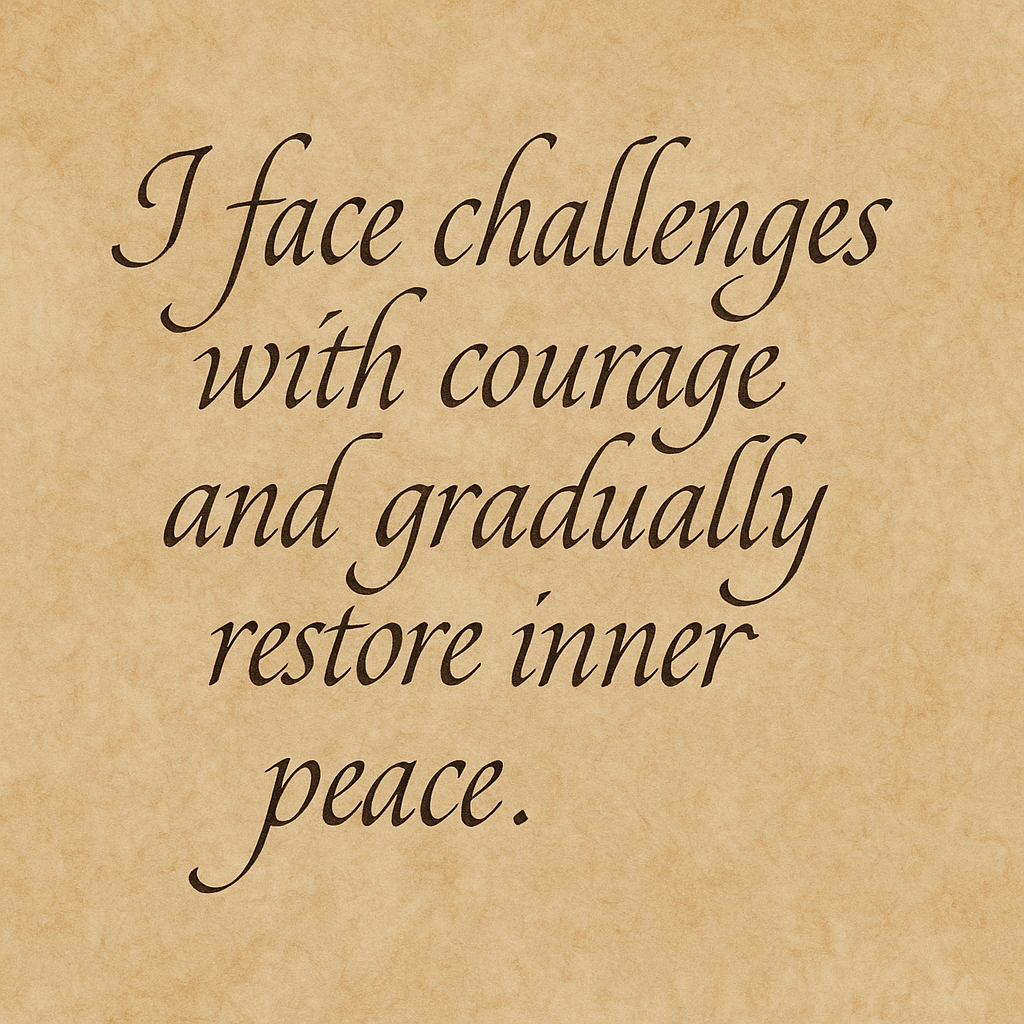
This lesson's writing exercises revolve around understanding spatial phobia. Choose a word, such as safety, boundary, route, stay, or return, and write it repeatedly with slow strokes, allowing the hand rhythm to help stabilize your body. When practicing, keep your goals small, completing only one gentle action. You don't need to change yourself immediately; you just need to understand one more reaction.
○ Art Therapy Guidance
Drawing exercises can help you visualize space, routes, exits, and physical tension associated with spatial phobia through lines, blocks of color, and distances. Don't try to make it look realistic; simply externalize your anxiety onto the paper. When practicing, keep your focus small, completing only one gentle movement. You don't need to change yourself immediately; just understand your own reaction better.
Please log in before submitting your drawings and feelings.
○ Diary Healing Suggestions
For the journaling exercise, please write down three points related to understanding spatial phobia: your most feared spatial image, your most obvious physical signals, and one small exposure you'd be willing to try. This journaling is not an assessment, but rather a way to build direction. When practicing, keep your goals small, completing only one gentle action. You don't need to change yourself immediately; you just need to understand one more reaction.
Please log in to use.
After learning about spatial phobia, remind yourself: spatial phobia is not cowardice, but rather your body searching for a safe passage.