
Lesson 1358: Relaxation Exercises and Techniques for Reducing Blood Pressure

Duration:70 minutes
Topic Introduction:Relaxation exercises help calm a heightened nervous system. This section introduces techniques such as diaphragmatic breathing, progressive muscle relaxation, and slow stretching to help the body return to a state of calm from tension, alertness, and agitation, creating gentler conditions for falling asleep. Small adjustments can be the beginning of recovery. It's important to allow the body to relearn safety. Gentle, stable rhythms are worth establishing slowly. Observe carefully, without rushing to blame yourself.
○ Course Topic Audio
Lesson 1358: Relaxation Exercises and Techniques for Reducing Blood Pressure
Click to view the read-aloud text
When the nights grow long, it's easy to feel afraid, frustrated, and even start to hate your bed and bedroom. First, remember you're not alone. Insomnia can be understood and can be gradually improved through journaling, behavioral adjustments, emotional care, and professional support. This section focuses on "Relaxation Exercises and Body Stress Reduction Techniques." Learn relaxation exercises to gradually lower your nervous system from a state of heightened arousal. This isn't about solving all your problems immediately, but about moving your sleep difficulties away from confusion and self-blame, placing them in a position where they can be observed and adjusted. When learning, begin with gentle observation. Observe if your breathing is rapid, your muscles are tense, your heart is beating fast, and your body feels like it's still on a journey. If you only focus on "Why can't I fall asleep yet?", anxiety will intensify; if you can see the clues before and after, sleep will no longer be just an uncontrollable outcome. Next, choose a small, stable exercise. Use diaphragmatic breathing, progressive muscle relaxation, or slow stretching to give your body a gentle stress-reduction signal. Don't make the changes too complicated; the simpler and more repeatable the changes, the easier it is for your nervous system to slowly rebuild a sense of security. This course content cannot replace assessments by doctors, psychologists, or sleep specialists, but it can help you record, communicate, and seek help more clearly. Please bring today's content back to a real night. Improved sleep isn't about commanding your body, but about taking better care of yourself both day and night. Every record, every reduction in stimulation, every time you ease anxiety, helps sleep slowly return. Stabilizing sleep isn't about forcing yourself, but about accompanying your body step by step back to a regular rhythm. If you only achieve a little today, please acknowledge that you are already taking care of yourself. Please give your body some time; it needs to relearn the night through repeated safe experiences. Don't see missing a night as a failure; it's just a signal that needs to be gently observed. Daytime rhythms, evening environment, and pre-sleep thoughts can all be gradually adjusted. When anxiety rises, return to your breathing, your body, and the present moment, rather than continuing to chase sleepiness. Please perform today's exercises gently and steadily, allowing your body to gradually regain trust in the night.

AI Healing Q&A
When your body is under constant stress, it's difficult to calm down immediately before bed. You can ask the AI for relaxation techniques that suit you, such as diaphragmatic breathing, progressive relaxation, or gentle stretching. Tell it about your physical limitations, pain points, and bedtime. The AI will help you choose gentler methods, not aiming for perfect relaxation, but simply allowing your body to gradually transition from tension to a state of rest. If tonight's session still doesn't go well, please be less self-critical and treat it as an opportunity for observation rather than failure; you can gently try again tomorrow.
○ Music therapy guidance
When practicing relaxation exercises with music, the focus isn't on achieving complete relaxation, but rather on gradually reducing stress in the body. Choose slow piano, soft strings, or natural sounds, and exhale slowly in sync with the music, gently relaxing your shoulders, jaw, and fingers. If any movement feels uncomfortable, immediately ease it. The music acts as a gentle rhythm, helping the nervous system to calm down from heightened arousal. Doing just a little tonight is already taking care of yourself.

○Eastern and Western Healing Teas
○ Korean Ginseng Tea - Ginseng Lemon Tea
introduce:Ginseng Lemon Tea combines the nourishing properties of Korean ginseng with the refreshing taste of lemon, making it perfect for when you need a refreshing and invigorating drink. Lemon is rich in Vitamin C, which helps detoxify the body, while ginseng provides sustained energy and can relieve stress-induced fatigue and low mood. This tea helps improve mental state, boost energy, and maintain mental balance.
usage:Slice one ginseng slice and add it to 250ml of hot water. Let it soak for 5-7 minutes. Then add lemon juice and honey to taste. Drink this once a day, especially in the morning, to help clear toxins and restore vitality.
Course Reminder:After using the "Relaxation Exercises and Body Stress Reduction Techniques" course, please treat tea as a gentle support in sleep care, not a therapeutic substitute. Before and after drinking tea, observe your sleep onset time, number of nighttime awakenings, stomach comfort, body tension, daytime stress, and screen time before bed to help you gradually see the relationship between the drink, your circadian rhythm, and sleep.
Notice:People with insomnia may be more sensitive to caffeine, cocoa, ginseng, ginger, chili, strong tea, sugar, and nighttime water intake. It is recommended to consume drinks containing green tea, black tea, matcha, cocoa, or ginseng in the morning or afternoon, avoiding them before bedtime. If you have chronic insomnia, palpitations, gastroesophageal reflux, diabetes, kidney disease, are pregnant, breastfeeding, are currently taking medication, or have special health conditions, please prioritize following the advice of your doctor and nutritionist.
○ Healing Recipes
○ Monastery Diet: Steamed Roots with Herb Seeds
Recommended dishes:Steamed Roots with Herb Seeds Recommended reasons:Relaxation exercises require the body to de-stress first. Steamed root vegetables and herbal seeds are warm and comforting, perfect for reminding you to slowly chew, breathe, and relax your muscles, gradually bringing your nervous system back to a state of calm. This recipe, based on the principles of gentleness, low stimulation, and repeatability, helps the body achieve some stability in its eating rhythm. It cannot directly "induce sleep," but it can be integrated into a regular sleep schedule, bedtime ritual, and stress management, becoming part of sleep care. Recipe (1–2 servings): practice: When preparing this dish, please slow down, don't rush, and pay more attention to the temperature, aroma, and changes in the ingredients. If you're experiencing sleep problems tonight, don't worry about whether you'll be able to sleep; just treat this meal as a gentle signal to your body. Before consuming, please pause for three breaths and observe your current physical condition: Are your eyes tired? Are your shoulders and neck tense? Is your stomach comfortable? Are you still feeling rushed? Diet is not meant to control sleep, but to help your body return to a regular rhythm. Take your first bite slowly. When eating in the evening, control your portion size and avoid eating too much, too sweet, too spicy, or too late. Let food be part of your bedtime slowdown, not a new stimulus. Video Title:Steamed root vegetables and herb seeds: A gentle dietary approach to slowing down and stabilizing sleep rhythms, as used in insomnia therapy programs. hint:Improved sleep usually comes from a combination of factors: a fixed wake-up time, daytime light exposure, regular activity, de-stimulation before bedtime, emotional relaxation, and, if necessary, undergoing CBT-I or professional evaluation.Click to view healing recipes
◉ Monastery Diet: Steamed Roots with Herb Seeds
I. Recommended Dietary Therapy and Reasons
2. Recipe and Method
3. Small rituals for body and mind
4. Dietary Therapy Experience Record
V. Instructional Videos (approximately 3–5 minutes)
6. Precautions

○Mandala Healing
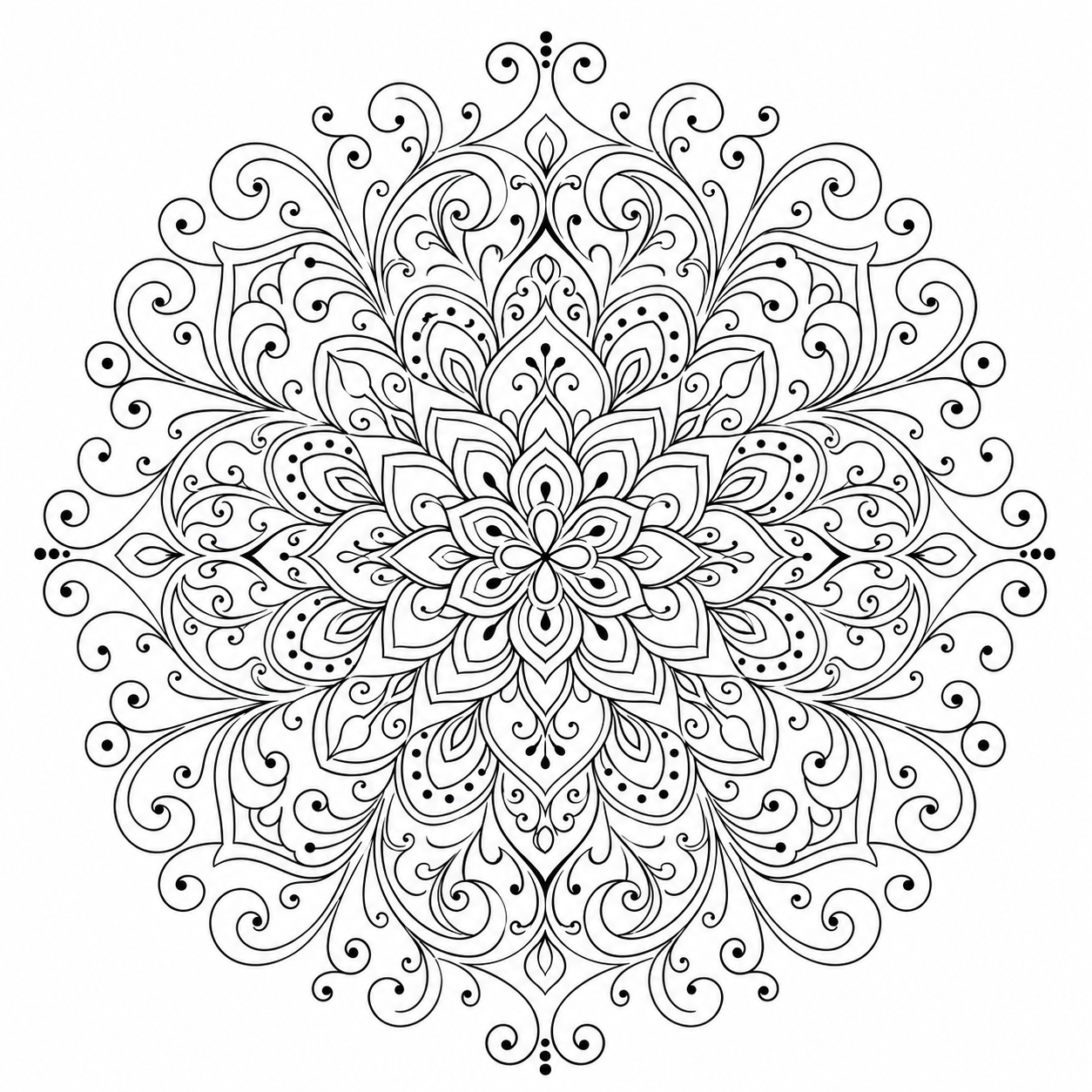
Before relaxation exercises, you can look at a mandala to help your body gradually release stress. Inhale slowly as you focus on the center and exhale gently as you look at the outer circle, coordinating with relaxing your shoulders, neck, jaw, and fingers. You don't need to be completely relaxed; just a little more relaxed than before is enough. The orderly arrangement of the patterns acts like a quiet rhythm, accompanying your nervous system from tension to rest. Do a little bit tonight; it's a way of taking care of yourself.
● AI Dynamic Geometric Vision Focus and Emotion Regulation Engine ●
AI Dynamic Geometric Vision Focus and Emotion Regulation Engine · v7.0.0
Before we begin, I'd like to know how you feel right now.
There is no standard answer; just choose the one that best reflects how you feel right now.
The experience is over. Tell us how you feel now.
There is still no standard answer; just choose the one that best reflects how you feel right now.
#FF5252
After the fluorescent line crawling is completed and stopped, first select a color, then click on the closed area in the graphic to fill in the color.
AI Digital Mandala Static Focus EngineAZ Image Coloring · 60 Colors
AI Digital Mandala Interactive Focus Engine
A–Z Free Selection · Layered Lines · 60 Color Fills

○ Calligraphy and engraving therapy practice
Before relaxation exercises, practicing calligraphy can help the body gradually release stress. The practice doesn't specify words or phrases; simply coordinate the strokes with your exhalation, gently relaxing your shoulders, jaw, and fingers. Complete relaxation isn't necessary, nor is it necessary to check for drowsiness. As long as your body is slightly less tense than before, it's already meaningful. Treat writing as a gentle rhythm, not a task to be performed. Doing only a little tonight is also a way to carefully care for your nervous system.

○ Art Therapy Guidance
Before doing relaxation exercises, you can draw the shape of your body under pressure. Tension can be represented by sharp lines, fatigue by darker colors, and exhalation by a line that gradually widens. After drawing, coordinate with gentle stretching or breathing to allow your body to slowly release the pressure. Don't strive for a perfectly calm drawing; just make it realistic. Drawing lets your body know that pressure can be released and doesn't need to be locked in your muscles.
Please log in before submitting your drawings and feelings.

○ Diary Healing Suggestions
Today's log should record how you feel after practicing a stress-reducing exercise. This could be diaphragmatic breathing, muscle relaxation, gentle stretching, or simply sitting quietly for a few minutes. Write down where your body felt more relaxed and where it remained tense before and after the exercise. Don't force yourself to completely relax; your body needs time to recover from stress. Finally, write down a small action: tonight, do only three minutes of the easiest exercise to maintain. Even something as simple as lengthening your exhale is sending a reassuring signal to your nervous system.
Please log in to use.
May you gradually return to a more stable, clear-headed, and gentler version of yourself through today's practice.