

Lesson 933: Dealing with Attachment Problems Caused by Trauma

Duration:70 minutes
Topic Introduction:Trauma can affect attachment, making people afraid of being abandoned and afraid of getting too close. Today, we learn to see the tug-of-war in relationships: the desire for confirmation, the desire to escape, the desire to hold on, or a sudden cooling off. Understanding these reactions is about slowly regaining a safe distance in relationships. Take care of yourself first. Let your heart slowly settle back down. Put safety first. You don't have to bear this alone. Small progress counts. Please allow yourself some time to slow down. May you be treated gently. Please give yourself some time. Today, you only need to take one step.
○ Course Topic Audio
Lesson 933: Dealing with Attachment Problems Caused by Trauma
Click to view the read-aloud text
Today we gently approach "addressing attachment issues stemming from trauma." Trauma affects attachment relationships, creating a fear of being abandoned coupled with a fear of getting too close. The tug-of-war in relationships can be exhausting, but it's usually not about intentionally tormenting others; it's a reflection of an unstable inner sense of security. Today, observe your body's first reaction when you want to get closer or run away. Treat today's content as companionship, not an exam. You don't need to appear strong, nor do you need to articulate all your feelings at once. Trauma recovery often happens gradually: recognizing bodily signals, expressing your needs, allowing yourself rest—all these contribute to recovery. May this learning experience help you gradually shift your focus from "Why am I still like this?" to "How can I better take care of myself?" The past cannot be easily erased, but now you can gradually have more choices, more boundaries, and the right to be supported. Allow yourself to move at a different pace than others. Some people can express themselves quickly, while others need a long time to dare to get close; both paces are respectable. At the end of today, you can simply write down one sentence: What did I see? What do I need? How am I willing to protect myself? That's enough. If you feel tired, please pause the lesson, drink water, move around, and look out the window. Being able to stop in time is a form of mature self-care. May you gradually come to believe that recovery is not about erasing the past, but about allowing yourself to breathe, make choices, have boundaries, and be supported again. Even if you are only stable for a minute today, understand a single reaction, or blame yourself less often, these are not insignificant; they are all part of returning to yourself. Please prioritize safety. Any practice that causes you excessive pain can be temporarily set aside, and you can slowly approach it again when you have more support. You don't need to complete this journey alone. When appropriate, you can share these feelings with professionals, trusted individuals, or relationships that truly support you. You can think of this voice message as a warm hand gently placed on your shoulder, not rushing you, not judging you, but simply confirming that you are learning to take care of yourself right now.

AI Healing Q&A
AI-powered healing Q&A helps learners understand how trauma affects attachment, such as fear of closeness, over-dependence, or a constant desire to escape. During the interaction, you can describe relationship patterns and physical reactions. The AI will assist in identifying needs, boundaries, and safe distances, leading to more stable connections and greater self-respect. After the Q&A, please record a safe distance in your relationship, allowing you to choose whether to approach or leave. Attachment issues can be adjusted gradually; it's not necessary to immediately change the relationship. Include physical reactions in the calculation. You don't need to describe everything at once.

○ Music therapy guidance
When attachment issues are triggered, listen to a calming, repetitive melody to help you avoid immediately clinging to or pushing others away. While listening, ask your body: Do I need closeness now, or do I need space? Music slows down choices in relationships. If you really want to commit immediately, listen to the music first and give your body some time. You can write down your needs instead of sending them immediately. Slowing down makes it easier to see security in the relationship. Soften the rhythm. Take care of yourself first.

○Eastern and Western Healing Teas
○ Jasmine Green Tea: Jasmine flowers are mild, and green tea is refreshing, making it suitable for drinking during the day when feeling anxious, stressed, or wanting to clear your mind. Take 2-3 jasmine flowers and 1 teaspoon of green tea, and steep in warm water for 5-7 minutes. Drink 1-2 cups daily. Those who are prone to waking up at night should avoid drinking it in the evening.
○ Healing Recipes
○ Eastern Food Therapy · Porridge · Pear and Oatmeal Porridge
Recommended dishes:Pear Oatmeal Porridge Recommended reasons:This lesson addresses attachment issues stemming from trauma. Pear and oatmeal porridge is gentle and soothing, suitable for when you're feeling emotionally strained, experiencing chest tightness, or want a light breakfast. The sweetness of the pear and the softness of the oatmeal can provide a sense of stability. It doesn't resolve attachment patterns, but it can help you reconnect with your own body when relationships are insecure. Recipe (1–2 servings): practice: Before preparing this dish, please stop and observe your current state: are you tense, numb, tired, anxious after waking up, panicked after being triggered, or worried about your body's reaction? Please do not blame yourself; simply treat these reactions as signals that need to be gently recorded. Before eating, take three slow breaths, observe the color of the cup or bowl, and feel the support under your feet and in the chair. If you are experiencing intense flashbacks, panic, suicidal thoughts, severe insomnia, or a significant decline in function today, please prioritize safety, seeking help, and professional support before eating. Take your first bite slowly. Daytime meals can be combined with sunlight, short breaks, and light activity; evening meals should be portion-controlled to avoid overeating, excessive sweetness, or drinking too much water that may affect sleep. Video Title:Pear and Oatmeal Porridge: A healing recipe for stabilizing rhythms and gentle self-care, used in a course supporting attachment issues stemming from trauma. hint:If PTSD-related symptoms continue to worsen, significantly affecting sleep, work, interpersonal relationships, or diet, or are accompanied by intense fear, depression, dissociation, or self-harming thoughts, please contact an in-person doctor, psychologist, trauma therapist, or emergency resources promptly.Click to view healing recipes
◉ Eastern Food Therapy · Porridge · Pear and Oatmeal Porridge
I. Recommended Dietary Therapy and Reasons
2. Recipe and Method
3. Small rituals for body and mind
4. Dietary Therapy Experience Record
V. Instructional Videos (approximately 3–5 minutes)
6. Precautions

○Mandala Healing
Looking at the lines in the diagram, sometimes close together, sometimes separate, you might think of the tug-of-war in relationships: wanting to get closer, yet afraid of getting hurt; wanting confirmation, yet wanting to run away. Please don't rush to dismiss these reactions; they are often related to past experiences. Today, let the mandala help you see this, allowing yourself in relationships to gradually be understood. There's no need to force it. Let your heart slowly settle back. You're already on your way. Put safety first. Even a short pause counts. May you be treated gently. It's okay to go a little slower.
● AI Dynamic Geometric Vision Focus and Emotion Regulation Engine ●
AI Dynamic Geometric Vision Focus and Emotion Regulation Engine · v7.0.0
Before we begin, I'd like to know how you feel right now.
There is no standard answer; just choose the one that best reflects how you feel right now.
The experience is over. Tell us how you feel now.
There is still no standard answer; just choose the one that best reflects how you feel right now.
#FF5252
After the fluorescent line crawling is completed and stopped, first select a color, then click on the closed area in the graphic to fill in the color.
AI Digital Mandala Static Focus EngineAZ Image Coloring · 60 Colors
AI Digital Mandala Interactive Focus Engine
A–Z Free Selection · Layered Lines · 60 Color Fills
○ Calligraphy and engraving therapy practice
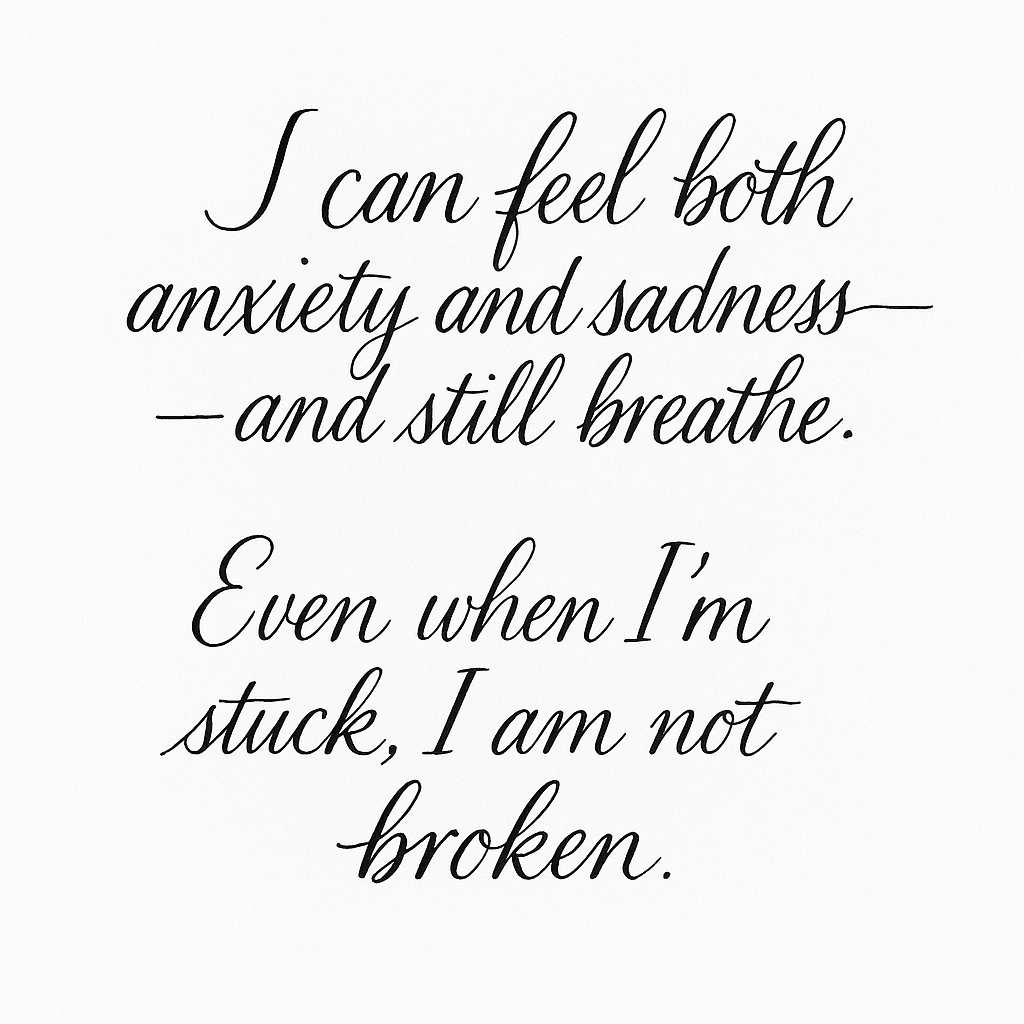
When attachment is triggered, a person may want to hold on tighter or pull away. When practicing, observe the distance and pressure of the strokes; don't rush to interpret all the reactions within the relationship. Don't write down specific objects or events here; just practice finding a perfect rhythm on paper to stabilize yourself first. There's no need to force it. Let your heart slowly settle back down. Put safety first. Even a short pause counts. You're already on your way. It's okay to go slower. May you be treated gently. Please take your time. Take care of yourself first.

○ Art Therapy Guidance
When attachment responses are triggered, draw two forces: one moving closer and the other pulling away. These can be two lines, two colors, or two spaces. Don't rush to reconcile them; just observe how they pull against each other. Understanding these responses will give you more options in relationships. There's no need to force things. Let your heart settle down slowly. Put safety first. Even a short pause counts. You're already on your way. It's okay to go slowly. May you be treated gently. Please take your time. Take care of yourself first. Just a little bit today.
Please log in before submitting your drawings and feelings.

○ Diary Healing Suggestions
Today, please write down the most common tug-of-war in relationships: wanting to get closer, wanting confirmation, wanting to escape, or a sudden cooling off. Then write down the possible fears behind it. Don't criticize yourself for being too complicated; attachment reactions often have origins. Finally, write down a small boundary that makes you feel safer. No need to force it. Let your heart slowly settle down. Put safety first. Even a small record counts. You're already on your way. It's okay to go slowly. May you be treated gently. Please take your time. Take care of yourself first. Just a little bit today. No need to force it. Let your heart slowly settle down. Put safety first. Even a small record counts.
Please log in to use.
May you gradually return to a more stable, clear-headed, and gentler version of yourself through today's practice.