
Lesson 597: Learning to Find Balance in Chaos

Course duration:70 minutes
Finding balance amidst chaos requires reducing the number of choices. You can tell your current concerns to AI and ask it to help you prioritize the most urgent, important, and actionable task, giving your mind a sense of security. Seeing things clearly before making a choice will lead to greater stability. Smaller actions are also easier to maintain. This understanding will protect your recovery rhythm. This kind of organization will make it easier to see the next step. Prioritize safety and manageability. You don't have to bear all the changes alone. Start this way.
○ Course topic audio
Lesson 597: Learning to Find Balance in Chaos
Click to view the read-aloud text
Today, I want to gently approach you with the theme: learning to find balance amidst chaos. Life sometimes becomes complicated before we're ready. Tasks pile up, misunderstandings arise in relationships, we're physically exhausted, plans suddenly change, and emotions fluctuate. The most painful part of chaos is how easily we lose our direction, feeling like everything is pulling us down at the same time. At this time, we don't necessarily need to reorganize our entire lives immediately; we just need to find a minimum stable point. The minimum stable point is a small thing that allows you to stand firm amidst chaos. It could be a glass of water, a breath, a three-item list on a piece of paper, someone to contact, or ten undisturbed minutes. Today, please stop and don't rush to solve all the problems. Write down the chaos in front of you on a piece of paper, write down whatever comes to mind. Then draw a small circle around the most pressing issue. It's not the most perfect thing, nor the most grand thing, but the thing that will minimize the chances of things spiraling out of control. Next, establish local order. For example, tidy up a small part of your desk, reply to the most necessary message, write down your first step for tomorrow, write down your emotions in three sentences, or divide tasks into today, tomorrow, and later. Local order doesn't need to solve all chaos; it merely creates a small, stable place within the chaos. Remember, a point of equilibrium isn't one that never wavers, but rather one that finds support amidst turbulence. You can allow the outside world to be unclear, relationships not fully repaired, and plans not entirely finalized, but still prioritize a small area. The more chaotic the situation, the more you need to narrow your focus; the more tense the situation, the more you need to return to the present moment; the more uncertain you are, the more you should ask yourself: What is the smallest stable point right now? After reading aloud, please write a sentence: In chaos, I am willing to first find a smallest stable point and establish a little local order.

AI Healing Q&A
Finding balance amidst chaos requires reducing the number of choices. You can tell your current concerns to AI and ask it to help you prioritize the most urgent, important, and actionable task, giving your mind a sense of security. Seeing things clearly before making a choice will lead to greater stability. Smaller actions are also easier to maintain. This understanding will protect your recovery rhythm. This kind of organization will make it easier to see the next step. Prioritize safety and manageability. You don't have to bear all the changes alone. Start this way.

○ Music therapy guidance
When searching for balance amidst chaos, choose calming, soothing music. First, write down all the chaos, then circle the smallest point of stability. Music can help you establish a little local order: a glass of water, a list, a ten-minute space, or someone to contact.

○East-West Healing Tea Drinks
Rose tea is perfect for finding balance amidst chaos. Its gentle rose aroma is soothing for feelings of grievance, tension, and low spirits. While sipping your tea, write down the chaos around you, then circle the smallest point of stability, allowing your body to regain a semblance of order.
○ Healing Recipes
Honey rye porridge is perfect for finding balance amidst chaos. The thick rye porridge and the gentle sweetness of honey offer a soothing comfort when life is in disarray. As you eat, write down the chaos around you, then circle the smallest point of stability, allowing your mind to find some peace first.
Open the healing recipe
◉ Healing Recipe: Honey Rye Porridge
I. Recommended Dietary Therapy and Reasons
Recommended dishes:Honey Rye Porridge (thick, comforting, and balanced in a chaotic way)
Recommended reasons:This lesson helps you find balance amidst chaos. Honey rye porridge, thick and soft, is perfect for stabilizing your body during times of turmoil. Rye provides simple stability, while honey adds a touch of gentle sweetness, reminding you that you don't have to sort everything out; just find a small, stable point first. Don't try to change your mood immediately while eating it; simply treat this food as a gentle pause, allowing your body to receive support so your mind can more easily readjust.
2. Recipe and Method
Recipe (1–2 servings):
- 60g of rye flakes
- 300 ml of water or milk
- 1 teaspoon of honey
- Very little salt
- A small amount of chopped nuts, optional.
practice:
- Wash the main ingredients and prepare the parts that need to be cut into pieces, steamed, boiled until soft, or prepared in advance.
- Simmer rye flakes over low heat until thickened, then add honey and serve warm.
- Use low heat, stir gently, or bake at a low temperature to allow the ingredients to meld together in a gentle rhythm.
- Keep the seasoning light, with less salt, sugar, and oil, and avoid using strong, pungent flavors that overpower the ingredients.
- Let it cool slightly after serving before eating. Take your first bite slowly to appreciate the temperature, aroma, and texture.
3. Small rituals for body and mind
When preparing honey rye porridge, you can first arrange the ingredients neatly, noting their color, shape, and texture, allowing your attention to gradually shift from emotional reactions, relational stimuli, event interpretations, or self-blame back to the present moment.
During the process, take three slow breaths. Don't rush to explain, respond to, or fix all the problems. Just let your body know: I am doing something small that can be accomplished.
When you take your first bite, first feel the temperature and texture, then gently tell yourself: I am taking care of myself, I am willing to take it slow, and I can choose to take the next step again.
If you're still feeling emotional, stop and don't force yourself to continue. What's truly important isn't eating a complete meal, but rather sending your body a safe, gentle signal that it's time to pause.
4. Dietary Therapy Experience Record
- Record the time of consumption; is it a regular meal or a meal to settle down after emotional fluctuations?
- Observe changes in stomach comfort, body temperature, and mood intensity within 30–60 minutes after consumption.
- Write a sentence: After this dietary therapy, what new action do I want to take care of myself?
V. Instructional Videos (approximately 3–5 minutes)
Video Title:Honey Rye Porridge: Gentle Dietary Support in the Emotional Coping Disorder Course
6. Precautions
- Dietary therapy should be small, mild, and light; there is no need to force yourself to finish a meal when you are not feeling well.
- If you are allergic to grains, beans, nuts, eggs, dairy, fish, honey, or vanilla, please substitute this food.
- This recipe is for daily health maintenance and is not a substitute for medical diagnosis and treatment; please follow medical advice for special physical conditions.
hint:If you experience emotional distress, noticeable or persistent physical symptoms, please seek professional help promptly.

Mandala Viewing Healing
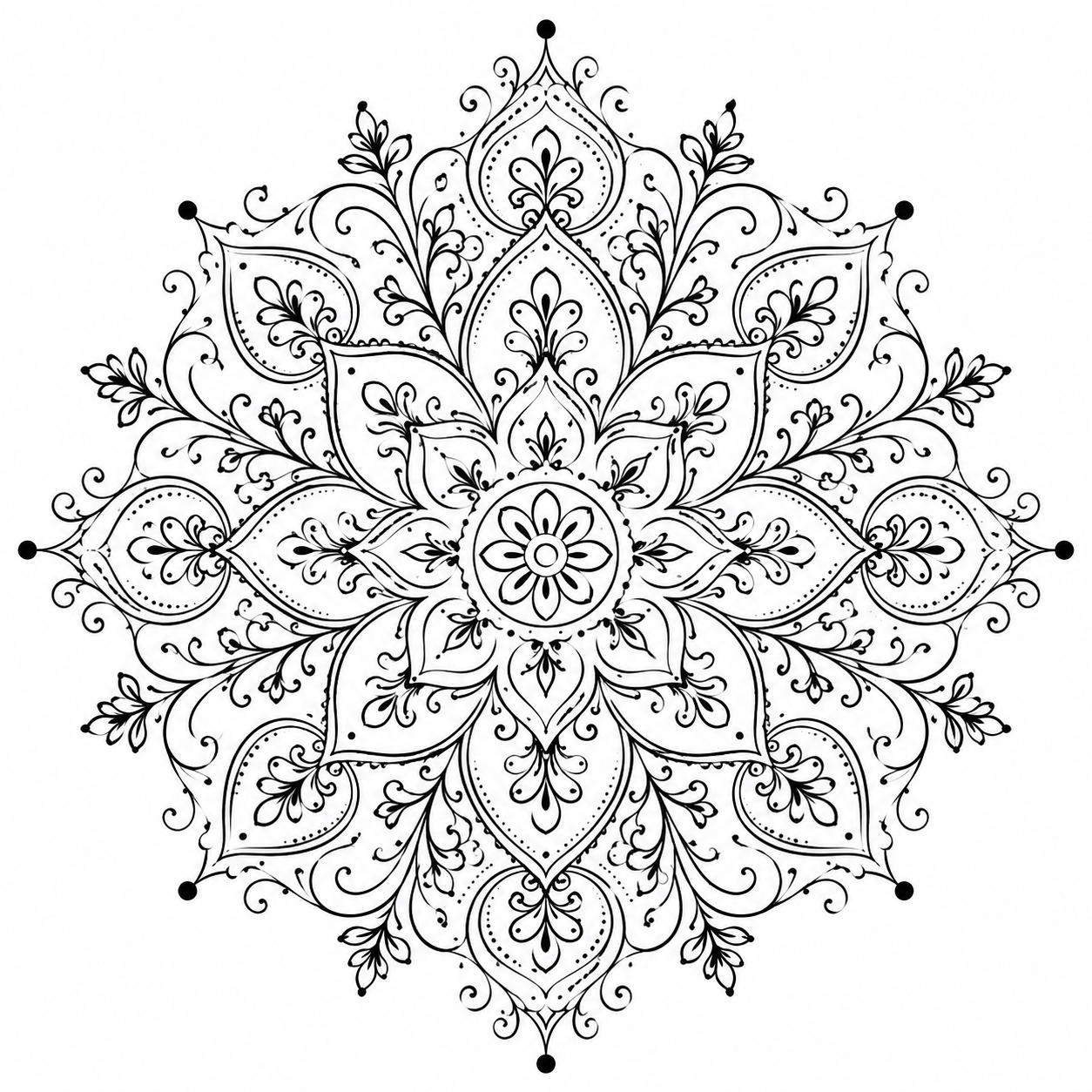
When seeking balance amidst chaos, observe a mandala with a clear center and a more complex outer ring. The outer ring represents chaos, while the center represents the smallest stable point. Return your gaze to the center and remind yourself: I don't need to organize everything; I only need to establish a little local order first.
● AI Dynamic Geometric Vision Focus and Emotion Regulation Engine ●
AI Dynamic Geometric Vision Focus and Emotion Regulation Engine · v7.0.0
Before we begin, I'd like to know how you feel right now.
There is no standard answer; just choose the one that best reflects how you feel right now.
The experience is over. Tell us how you feel now.
There is still no standard answer; just choose the one that best reflects how you feel right now.
#FF5252
After the fluorescent line crawling is completed and stopped, first select a color, then click on the closed area in the graphic to fill in the color.
AI Digital Mandala Interactive Focus Engine
A–Z Free Selection · Layered Lines · 60 Color Fills
AI Digital Mandala Static Focus EngineAZ Image Coloring · 60 Colors

○ Calligraphy and engraving therapy practice
When trying to find balance amidst chaos, do a very short writing or engraving exercise. Don't write anything specific; just make the movement the smallest stable point. Let the rhythm of your hands help you establish some local order, then slowly return to the actual task.

○ Art Therapy Guidance
Draw a chaotic scene, then find a small, stable point in the middle. This stable point could be a glass of water, a list, a person, or a quiet corner. The image reminds you: I don't need to organize everything immediately; I just need to establish some local order first.
Please log in before submitting your drawings and feelings.

○ Diary Healing Suggestions
Write down all the chaos in front of you on a piece of paper, then circle the smallest stable point. It could be a glass of water, a list, a person, or ten minutes of space. Finally, write: I don't need to sort everything out right away; I just need to find my footing first.
Please log in to use.
May you gradually return to a more stable, clear-headed, and gentler version of yourself through today's practice.