

Lesson 139: Breathing Training 1: Identifying Hyperventilation
Duration:70 minutes
Topic Introduction:
Many panic and anxiety attacks are accompanied by rapid, shallow breathing.
You may feel tightness in your chest, dizziness, and numbness in your hands and feet, as if you are "about to suffocate" or "about to lose control".
In fact, this is often not due to lack of oxygen, but rather a decrease in carbon dioxide caused by hyperventilation.
The focus of this lesson is not to force "relaxation," but to help you learn to recognize your own breathing rhythm, understand the mechanism of hyperventilation, and lay the foundation for subsequent breathing training.
○ Key points of hyperventilation
- It's not that you "can't breathe," it's that you "inhale too much":When people are panicked, their breathing becomes rapid and shallow, and a large amount of carbon dioxide is expelled, causing discomfort such as dizziness, numbness, and palpitations.
- Physical symptoms were misinterpreted as "something bad is about to happen":Normal physiological reactions are interpreted by anxiety as serious illness or danger signals, further amplifying the fear.
- Focus on rhythm rather than forceful deep breathing:Taking deep breaths will only exacerbate hyperventilation; the key is to slow down the pace and prolong the exhalation.
Lesson 139: Breathing Training 1: Identifying Hyperventilation, Click to listen to the reading, View the content
Many people, in a state of panic or persistent anxiety, are unaware that what truly causes their bodies to lose control is not insufficient breathing, but excessive breathing. Hyperventilation doesn't necessarily manifest as heavy panting; more commonly, it manifests as rapid, shallow breathing, frequent sighing, and constant inhalation with very little natural exhalation. When you're in a prolonged state of alertness, your body subconsciously accelerates its breathing in preparation for an escape. However, when this pattern persists, a drop in carbon dioxide levels can trigger dizziness, chest tightness, numbness in the hands and feet, and blurred vision. These sensations are then misinterpreted as danger signals, leading you to breathe even harder, creating a vicious cycle. Recognizing hyperventilation is the first step in breathing training, not immediate correction. You need to learn to observe, for example, whether your breathing is faster than usual, whether it's stagnating in your chest, or whether you're inhaling frequently without exhaling completely. This stage doesn't require you to deliberately slow down or control your rhythm; it only requires you to acknowledge that you are hyperventilating—not a disease, not hypoxia, but a stress response. When you stop fighting your breathing, your brain reduces false alarms. What you need to practice is restoring your breathing to a "permitted" state, not a controlled state. True stability isn't deep breathing, but natural breathing. When you can recognize hyperventilation without rushing to correct your body, you've already begun to escape panic mode.
▲ AI Interaction: When is your breathing most likely to get out of control?
Some people only realize they are breathing heavily when they are quiet, while others start to feel short of breath when they are out or in line.
You can describe a typical scenario where "breathing becomes terrifying".
Together we will distinguish between physiological reactions and misinterpretations by the brain.
We will also tailor a gentler, more practical breathing observation exercise for you.
When your breathing quickens, music can help you find an external, stable rhythmic reference.
It is recommended to listen to a few minutes of calm music before practicing breathing exercises, so that your heart rate and breathing can gradually follow, reducing the tension of "I am fighting the symptoms".
○ Eastern Healing Tea: Lily and Lotus Seed Resting Tea
Recommended reasons:Lily bulbs and lotus seeds help calm the mind and are suitable for drinking before and after breathing exercises to relieve chest tightness and pre-sleep anxiety.
practice:Soak 6g of lily bulbs and 6g of lotus seeds in warm water, then simmer over low heat for 10 minutes. Add a little honey and drink warm to gradually relax your body from tension.
○ Stable Dietary Therapy - Pumpkin and Tofu Warm Bowl (ID139)
When breathing disorders and physical tension coexist, the digestive system is often in a state of contraction, requiring a warm and gentle support. The natural sweetness of pumpkin brings a sense of security and comfort, while the delicate texture of tofu helps the body relax and harmonize the rhythm of swallowing and breathing. This warm bowl is suitable for consumption before and after practicing breath awareness. It is not for regulating breathing, but rather to convey a message to the nervous system through temperature and texture: there is no need to rush; everything can be done slowly.
Relaxation rhythm
Stable internal sensation
Open Recipe
◉ Food Therapy: Pumpkin and Tofu Warm Bowl (ID 139)
Pumpkin is warm in nature, sweet and moist without being greasy, and is often used to replenish qi and relieve fatigue; tofu is neutral in nature and rich in plant protein, which can nourish and fill you up. When the two are stewed together into a smooth and warm bowl, it is easy to digest and can also form a "warm protective layer" in the stomach, which is suitable for times when you are stressed, have a poor appetite, the weather is getting cooler, or you want to eat something refreshing but nutritious.
Gentle and nourishing Easy to digest Soothe the mind and body
I. Recommended Dietary Therapy and Reasons
Recommended dishes:Pumpkin and tofu warm bowl (ID 21)
Recommended reasons:This dish has a soft texture, is very low in fat, yet provides a good feeling of fullness. The subtle sweetness of pumpkin gently boosts energy, while the delicate texture of tofu and its protein content provide reassuring support when the body is tired or has a sensitive stomach, making it an ideal light meal for dinner or lunch.
2. Recipe and Method
Recipe (1–2 servings):
- 200g pumpkin (peeled and seeded), cut into chunks
- 120g of soft tofu, cut into cubes
- 600 ml of water or light broth
- 2-3 slices of ginger (to warm the stomach)
- salt to taste
- A pinch of white pepper powder (optional)
- A few drops of sesame oil (optional)
practice:
- Peel and seed the pumpkin, then cut it into chunks and set aside. Cut the soft tofu into small cubes and gently drain off excess water.
- Add water or light broth to a pot, add ginger slices, and bring to a boil over high heat.
- Add pumpkin chunks and cook over medium heat for about 10–12 minutes, or until soft and tender enough to be easily mashed.
- Add tofu cubes and simmer over low heat for 3–5 minutes to allow the flavors to meld.
- Gently press a few pieces of pumpkin with the back of a spoon to make the soup base thicker and smoother (optional).
- Season with salt and white pepper, and add a few drops of sesame oil after turning off the heat to enhance the aroma.
- Let it sit for 1 minute before serving to make the tofu more stable and the soup flavor more harmonious.
3. Small rituals for body and mind
While cooking the pumpkin, observe the color change from deep yellow to a soft gold, and treat it as a short pause to "slow down life".
When you pick up the warm bowl, let your nose feel the temperature of the pumpkin and soup base, and gently tell yourself as you inhale, "Let your body warm up first."“
Pause for a second with each sip, letting the warm soup slowly flow down your throat into your stomach, reminding yourself: this is gentle support for your body and mind.
4. Dietary Therapy Experience Record
- Record the level of hunger, mental state, and weather conditions at the time of consumption.
- Observe stomach comfort and energy stability 1 hour after meal.
- If consumed as a light meal for several consecutive days, changes in sleep, digestion, and energy recovery can be recorded.
5. Tutorial Video (approximately 4–6 minutes)
◉ Video Title:Pumpkin and tofu warm bowl - a gentle and light meal perfect for a tiring day.
6. Precautions
- Pumpkin has a high carbohydrate content, so those who need to control their blood sugar should eat it in moderation.
- People allergic to soy products should not consume them and can substitute with eggs or white kidney beans.
- People with weak stomachs are advised to eat small, frequent meals and avoid eating large amounts at once.
hint:This recipe is for daily health maintenance and is not a substitute for professional medical care. If you experience indigestion or persistent fatigue, please seek medical attention promptly.
○ Suggestions for Chinese Calligraphy and Seal Carving Practice, Lesson 139: Breathing Training 1 – Recognizing Hyperventilation
This lesson's seal carving practice emphasizes rhythm rather than force. Just like breathing, excessive haste in the knife will break the lines, while excessive control will make the seal surface stiff. Seal carving reminds you to be steady through awareness, not force.
- Introduction to the characteristics of seal carving:
This lesson corresponds to the concept of "leaving room for movement" in seal carving. Reserving breathing space between lines, without filling them completely or rushing, symbolizes allowing the body to move rhythmically in and out. - Written words (seal text):
Tianqu - Psychological Intention:
Inscribing "natural charm" is a reminder that breathing and life inherently possess their own natural charm and do not require human manipulation. - Knife skills:
Practice "slow start and slow finish". Start the stroke gently and finish slowly, allowing each stroke to have a complete beginning and end, symbolizing a natural breathing cycle. - Emotional transformation:
Transform the tension of "I must breathe correctly to be safe" into the ease of "I am observing my breathing".
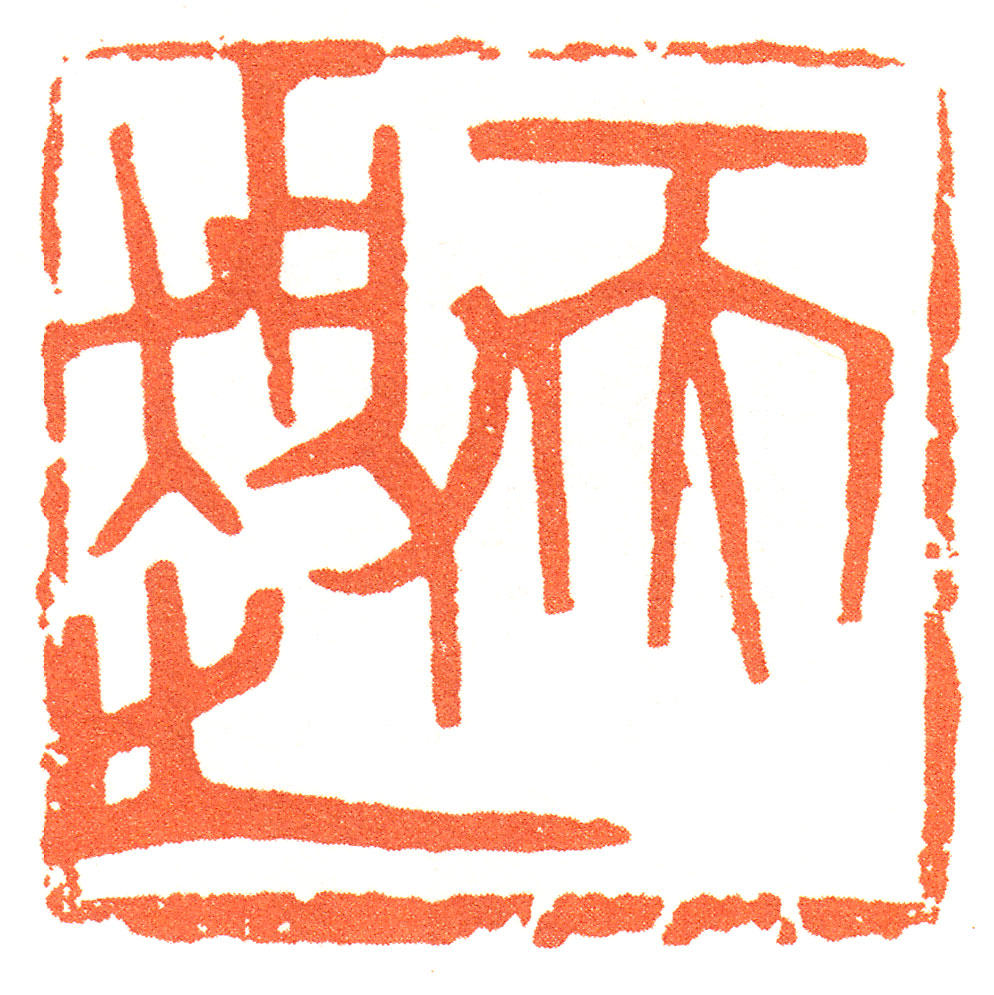
Image Healing: Guided Mandala Viewing - Lesson 139
Please observe a mandala with clear rhythm and ample white space. The lines are not crowded, allowing the eye room to linger and move freely.
Let your gaze follow the shape naturally without consciously coordinating it with your breathing. Simply observe what happens to your body when your gaze stops.
If you find yourself starting to actively regulate your breathing, gently let go of the regulation and continue watching the rhythm of the graphics.
Mandala drawing is not about what you draw, but about what you observe. When you allow your visual rhythm to settle down, your breathing will naturally follow without needing to be directed.
The mandala in this lesson is based on "clear rhythm and ample white space" to symbolize breathing returning to a natural state.
◉ One gaze is sufficient; no repetition is required.
Lesson 139: Guided Drawing - Visualizing Breathing Rhythms
① Action guidance:Draw a row of slowly undulating lines from left to right on a piece of paper, and imagine each rise and fall as a complete "inhale-exhale".
② Action guidance:Use an "exhale line" that is longer than the "inhale line," and deliberately lengthen the downward or outward extension to remind yourself that you can exhale a little slower.
③ Action guidance:In the corner of the image, a reminder was written: "I may be nervous right now, but every breath I take brings me back to my body."“
Please log in before submitting your drawings and feelings.
○ 139. Identifying Hyperventilation: Log-Guided Suggestions
① At what moment today did my breathing suddenly become rapid? What was I thinking or doing at that time?
② Did I previously mistake symptoms of hyperventilation for "something serious going to happen"? How can I reinterpret them now?
③ Try to record an experience of consciously slowing down your exhalation: What slight changes did you feel in your body at that moment?
④ Write a sentence you can read to yourself next time you feel nervous, such as: "I am hyperventilating, but my body is not in immediate danger."“
Please log in to use.
Your preparation isn't about anticipating all risks, but about telling your body: "I'm ready, I can go."“