

Lesson 140: Breathing Exercise 2: Steady Rhythm and Delayed Inhalation
Duration:70 minutes
Topic Introduction:
In the previous lesson, you learned how hyperventilation occurs.
In this lesson, we will move on to a more crucial step:
It's not about making yourself "take a deep breath," but about making your breathing more rhythmic and less easily swayed by your emotions.
By practicing "delayed inhalation" and "steady rhythm," your body will gradually learn:
Even when I'm nervous, I can still calm myself down by breathing.
○ Key points for steady breathing
- Pace over depth:The key to practicing breathing is not to "inhale a lot", but to find a stable, slow rhythm.
- Delayed inhalation helps the body "downshift":After exhaling, pause for 1–2 seconds to allow your body to naturally initiate the next inhalation.
- Exhale slowly, inhale gently:This is a core principle for stabilizing the nervous system, and it is especially important during periods when panic is likely to occur.
Lesson 140: Breathing Training II: Steady Rhythm and Delayed Inhalation (Click to listen to the reading and view the content)
After recognizing hyperventilation, the second step isn't to slow down your breathing, but to stabilize the rhythm and learn to "delay your inhalation." Many people rush to inhale when nervous, as if the next breath determines their safety. However, what you really need to practice is allowing your exhalation to complete naturally before inhaling. Delayed inhalation isn't holding your breath, but giving your body a brief respite after exhalation, letting your nervous system know that there's no need to compete for air. When you pause for a beat at the end of your exhalation, your body's chemical balance gradually returns, and dizziness, chest tightness, and feelings of unreality lessen. During practice, you don't need to count or deliberately lengthen the breath; simply wait gently each time you feel the urge to inhale immediately, allowing the inhalation to occur naturally. The key to a steady rhythm is consistency, not depth. You're training a replicable breathing pattern that occurs naturally, whether at home or out and about. When you shift your focus from "how much to inhale" to "wait before inhaling," breathing transforms from a chased activity into an automatic process. You'll find that security doesn't come from more air, but from trusting your body to regulate itself.
▲ AI Interaction: Where is your breathing most likely to lose its rhythm?
Some people tend to "rush to inhale" when they get nervous, causing their chest to harden and their rhythm to become off.
Some people experience a sudden shallowing of their breathing while socializing, queuing, driving, or talking to others.
You can describe the moments when you most often lose control, and together we'll find the perfect rhythm training for you.
We will work together to develop a "delayed inhalation" exercise program.
Music with a steady rhythm can act as a "metronome for breathing," helping you shift your attention from physical symptoms to the flow of sound.
It is recommended to listen for 1–2 minutes before practicing to allow your heart rate and breathing to have a gentle start.
○ Eastern Healing Tea: Cypress Seed Tea for Calming the Mind
Recommended reasons:Arborvitae seed and jujube seed are often used to calm the nerves and relieve chest tightness, and are a gentle aid before breathing exercises.
practice:Boil 5g of cypress seed kernels and 5g of jujube seed kernels over low heat for 8 minutes, then strain and drink warm. This will help your body gradually transition from a "tense mode" to a "training mode".
○ Stable Dietary Therapy: Mung Bean and Lily Bulb Heart-Nourishing Porridge (ID140)
During the practice of delayed inhalation and a steady rhythm, the body needs a soothing and non-stimulating nourishment to coordinate with the rhythm adjustment. The soothing properties of mung beans help alleviate internal heat, while the gentle sweetness of lilies supports mental calm and the natural unfolding of breath. This porridge is suitable for consumption before or after practice, or at night. It neither rushes nor suppresses, but rather reminds the body with its gentle taste that it's okay to take it slow and the rhythm is sufficient.
Support rhythm
Put down your haste
Open Recipe
◉ Dietary therapy: Mung bean and lily bulb porridge
Mung beans are cooling in nature and have the effects of clearing heat and detoxifying, relieving summer heat and irritability; lilies nourish yin and moisten dryness, calm the mind and soothe the nerves. When cooked together with a small amount of rice, they become a bowl of light-colored porridge with a soft texture and a fragrant aroma. It is a suitable choice for people who are prone to irritability, internal heat, unstable sleep, dry mouth and throat in summer, as a refreshing and nourishing option.
Clears heat and relieves irritability Nourishes the lungs and calms the mind Cooling and nourishing yin
1. Recommended porridge and reasons
Recommended porridge:Mung bean and lily bulb porridge (ID 37)
Recommended reasons:After a hot, irritable, or long night's sleep, mung beans help clear away internal heat and restlessness, while lilies gently soothe the heart and lungs. The overall porridge is light, not greasy, and easy to digest, making it suitable as a light porridge in the morning or evening, or as a warm bowl in the afternoon.
2. Recipe and Method
Recipe (Serves 2–3):
- 40–50 g of mung beans (soaking them for 1 hour beforehand will make them cook more easily)
- 15–20 g of dried lily bulbs (or 80–100 g of fresh lily bulbs)
- 40–50 g of rice
- 1.2–1.5 L of clean water
- A little rock sugar (optional, adjust to taste).
practice:
- Rinse the mung beans thoroughly and soak them for 1 hour beforehand; gently rinse the dried lily bulbs with clean water and set aside.
- Rinse the rice and drain the water.
- Add water to a pot, add mung beans, bring to a boil over high heat, skim off the foam, then reduce heat to low and simmer for about 15 minutes, until some of the mung beans have split open.
- Add rice and lily bulbs, and continue to simmer over low heat for 25–30 minutes, stirring occasionally to prevent sticking to the bottom, allowing the porridge to gradually thicken and become smooth.
- Depending on personal taste, a small amount of rock sugar can be added just before serving. Stir until completely dissolved, then turn off the heat and let it sit for a few minutes before serving.
3. Small rituals for body and mind
Consider mung bean and lily porridge as a small ritual of "cooling down and finding peace." Before drinking it, get away from the screen and noisy environment, and sit by the window or in a place with soft light.
Gently lift the bowl of porridge, feel the temperature change from your palm, and take a few slow breaths to bring your attention back to your body and the present moment from your chaotic thoughts.
Take each sip slowly, focusing on the refreshing and delicate sensations. Imagine your inner restlessness and turmoil gradually being "cleaned up and diluted," allowing the porridge to become a small bridge from external temperature back to internal balance.
4. Dietary Therapy Experience Record
- Record the environment and mood when drinking (e.g., "hot and humid weather", "after working overtime", "before taking an afternoon nap").
- Observe whether changes such as stable mood, refreshed feeling, reduced dry mouth, and easier sleepiness occur within 1-2 hours after drinking.
- If consumed for several consecutive days, changes in sleep quality (sleep onset time, number of nighttime awakenings, dream clarity) and daytime mental state can be recorded.
5. Tutorial Video (approximately 5–8 minutes)
◉ Video Title:Mung Bean and Lily Bulb Porridge: A bowl of porridge for a calming and restful summer night.
6. Precautions
- Mung beans are cooling in nature, so people with weak spleen and stomach, prone to diarrhea, or with cold hands and feet should not consume them for a long time or in large quantities. They can reduce the amount or extend the interval between consumption.
- Those who are menstruating, in the early postpartum period, or have severe deficiency and cold should use this porridge with caution and should prioritize following the advice of a professional physician.
- If you consume a lot of cold foods or medications (such as large amounts of herbal tea, raw or cold fruits and vegetables), you need to take into account the overall balance of cold and heat.
hint:This porridge is for daily nourishing and conditioning purposes only and should not replace regular medical care. If you experience persistent fever, severe insomnia, significant weight loss, or mood problems, please consult a professional doctor or mental health professional promptly.
○ Suggestions for Chinese Calligraphy and Seal Carving Practice, Lesson 140: Breathing Training II – Steady Rhythm and Delayed Inhalation
This lesson's seal carving practice emphasizes the coordination of "waiting and acting." Just like delayed inhalation, the knife needs a natural pause before it falls—not hesitation, but allowing the power to gather naturally. Seal carving reminds you that rhythmic stability comes from allowing, not controlling.
- Introduction to the characteristics of seal carving:
This lesson corresponds to the concept of "pausing to create momentum" in seal carving. Leaving a small blank line at the turning point actually makes the lines more stable, symbolizing the brief pause at the end of exhalation. - Written words (seal text):
albatross - Psychological Intention:
Carving "albatross" is a reminder to myself to entrust my flight to the airflow, like a seabird on a long journey, rather than relying on frequent wing flapping for safety. - Knife skills:
Practice "pause before proceeding." Each stroke, pause briefly between rising and falling, allows the lines to connect naturally, symbolizing the natural inhalation following the exhalation. - Emotional transformation:
Transform the urgency of "I need to breathe quickly" into a sense of trust that "I can wait a moment."
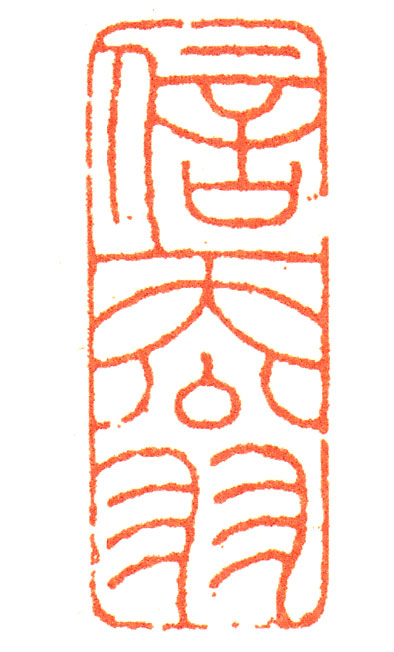
Image Healing: Guided Mandala Viewing - Lesson 140
Please observe a mandala with a balanced rhythm and a serene center. The lines are spaced clearly to allow the eye to rest.
Let your gaze slowly move along the graphic, pause briefly at each turning point, and then continue. You don't need to coordinate your breathing; just feel the alternation between stopping and moving.
When you feel the urge to speed up or turn back, gently continue forward and let your visual rhythm guide your physical rhythm.
Mandala drawing is not about depicting something, but about observing it. When you allow pauses, rhythm naturally emerges, and your breathing becomes calmer.
The mandala in this lesson, with its "even spacing and quiet center," symbolizes the restoration of order in breathing during a pause.
◉ One gaze is sufficient; no repetition is required.

Lesson 140: Guided Drawing - Visualizing Breathing Rhythms
① Action guidance:Draw a wavy line, pausing slightly at each trough, and use the line to record the "delay after exhalation".
② Action guidance:Draw several gradually enlarging circles on the right side of the image to symbolize the breathing gradually slowing down and becoming steady.
③ Action guidance:Write a sentence in the corner: "Breathe a little slower, and the world won't collapse."“
Please log in before submitting your drawings and feelings.
○ 140. Smooth Rhythm and Delayed Inhalation: Log-Guided Suggestions
① When I was practicing breathing today, at what moment did I first feel my rhythm become more stable? What happened at that time?
② What is the most difficult part for me to delay inhalation? What signals does my body give me?
③ Is there a breathing rhythm that I would be willing to continue using tomorrow?
④ Write a breathing reminder for yourself: "I can choose to slow down."“
Please log in to use.
Breathing is not just a physical action, but also a testament to "I can regain control of my rhythm".
Every time you slow down, you are telling yourself: I am returning to my body, and I am returning to safety.