

Lesson 151: Real Exposure Exercise: Staying in Public Places
Duration:70 minutes
Topic Introduction:
In panic disorder and health anxiety, "public places" are often seen as the most likely to get out of control and the most difficult to escape from.
This course will take you into one of the most core real-life exposure training exercises: staying in public spaces and gradually teaching your body, "I can exist here without having to escape."
The purpose of exposure exercises is not to force yourself, but to help you relearn the feeling of security in real-world environments.
Why is "staying" an important part of exposure training?
- Escaping will intensify the panic cycle:Each time you escape, your brain records, "This place is really dangerous."
- The pause allows the brain to experience that "no danger has occurred":This is the most crucial step in changing fear memories.
- The more public the environment, the more one can train oneself to "be seen but still safe".
Lesson 151: Real Exposure Exercise: Stay in a public place, click to listen to the reading, watch the content.
When you enter the stage of real exposure practice, the focus is no longer on creating or simulating feelings, but on bringing your body back to real-life scenarios and allowing yourself to "stay." For many who have experienced panic, the real difficulty isn't entering a public place, but stopping in it and not rushing to leave. The body often holds up initially upon arrival, but once you realize, "I need to stay here for a while," the alert system is activated. You might start scanning for exits, calculating time, and assessing your body's reactions, as if staying itself is a danger. The core goal of real exposure isn't proving how long you can hold out, but practicing allowing your body to react in public spaces without immediately acting. Staying doesn't mean freezing; it means continuing to do what you normally do, such as sitting, standing, or moving slowly, instead of making decisions based on fear. A common misconception is treating exposure as a test, such as "I must stay until I'm no longer afraid," which actually prolongs the tension. A more effective approach is to set a neutral stay time, such as five or ten minutes, and leave naturally after that time, rather than fleeing. The key is the motivation for leaving: is it to complete the plan, or because the fear has escalated? When you repeatedly make planned stops in public places, your brain gradually learns a new association—stopping doesn't equate to losing control. You don't need to hide your reactions or act normally; others won't be as focused on your internal state as you might imagine. The value of authentic exposure lies in allowing your body to personally experience "I can be here," rather than repeatedly rehearsing it in your mind. If fluctuations occur during this process, it doesn't represent failure, but rather the nervous system relearning. As you allow these stops to happen, a sense of security gradually accumulates through experience.
▲ AI Interaction: Which type of public place do you find it hardest to linger?
Is it a shopping mall, supermarket, bus stop, coffee shop, or a queue?
Tell me which one you're most afraid of, and we'll start training with the lightest version.
You don't need to be strong; you just need to let your body learn, "I can stay here for a little while."
The fear will gradually subside because you say, "I held on."
Listening to a piece of music with a steady rhythm before the actual exposure can put your body into a "tolerable state" rather than being pushed into a state of high alert.
Let the stability of music serve as a helpful anchor point before entering public places.
○ Oriental Healing Tea - Osmanthus Oolong
Recommended reasons:The aroma is gentle and calming, which can reduce anticipatory anxiety such as "Will I have an attack later?"
practice:Add 3g of oolong tea and a small amount of dried osmanthus flowers, then steep in hot water for 2 minutes.
○ Stable Dietary Therapy - Green Tea Buckwheat Soup (ID151)
During the phase of real exposure practice, the body needs nourishment that is both stable and unburdening. The gentle aroma of green tea helps restore rhythm, while the mild satiety of buckwheat provides sustained energy. This soup is suitable to be enjoyed after a practice session in a public place, symbolizing the body's natural return to a stable state after a period of rest.
Restore rhythm
Stable energy
Open Recipe
◉ Japanese Dietary Therapy: Green Tea Buckwheat Soup (ID 30)
This is a delicate dish called "Tea-Scented Noodles," inspired by the Japanese "Ochazuke" (rice with tea), but with buckwheat noodles instead of rice, offering greater nutritional value. Unlike the rich soy sauce broth, this noodle dish is entirely based on the fragrant green tea broth. When anxiety makes the body tense but the appetite doesn't crave greasy food, this bowl of hot, tea-scented noodle soup can be like a refreshing stream, washing away inner heat and allowing tense muscles and nerves to slowly relax.
refreshing and calming Clear the mind and reduce internal heat Eliminate tension
I. Recommended Dietary Therapy and Reasons
Recommended dishes:Green tea buckwheat soup (ID 30)
Recommended reasons:Buckwheat is rich in rutin, which promotes blood circulation and relieves stress-induced neck and shoulder stiffness; theanine in green tea can inhibit excessive nerve excitation. The combination of these two provides stable energy with a low glycemic index (LGI) and offers aromatherapy benefits. Warm tea can soothe internal organs and relieve tension stomach pain, making it an ideal choice for both physical and mental relaxation.
2. Recipe and Method
Recipe (1 serving):
- Buckwheat noodles (dried or fresh) 1 bundle (approximately 80–100g)
- 1–2 tablespoons of high-quality green tea (sencha or genmaicha)
- 400ml of hot water
- 100ml kelp broth (or water)
- a pinch of salt
- 1/2 teaspoon of light soy sauce (only for color, do not add too much).
- A touch of wasabi (the finishing touch).
- Shredded seaweed and toasted white sesame seeds (as needed)
practice:
- Cooking noodles:Once the water in the pot boils, add the buckwheat noodles and cook until just done (leaving a slight chewiness). Remove them and quickly rinse them under cold water, scrubbing to remove the surface slime. Drain and set aside. This step ensures a clear broth.
- Making tea soup:Pour hot water into the tea leaves and steep for 1–2 minutes, then strain the tea.
- Mixed soup base:Mix the tea with heated kelp broth, and season with a pinch of salt and light soy sauce. The broth should be a clear, yellowish-green color with a light, sweet flavor.
- combination:Place the prepared buckwheat noodles in a bowl and pour in boiling hot tea.
- Decoration:Top with seaweed strips and white sesame seeds, and smear a little wasabi around the edge of the bowl.
3. Small rituals for body and mind
The moment the tea is poured in, close your eyes and take a deep breath of the rising aroma of the tea, which carries the fragrance of grains.
As you dissolve the mustard into the soup, watch it spread and imagine that the spiciness is clearing your blocked thoughts.
Take a sip of hot soup, feel it warming from your throat to your stomach, and say to yourself, "My inner self is becoming clear and warm."“
4. Dietary Therapy Experience Record
- Record whether there is physical relief from neck and shoulder tension after consumption.
- Observe whether this minimalist, light flavor makes you feel "relieved".
- Pay attention to the clarity of your mind after consuming green tea; it often brings a "calm sharpness."
V. Instructional Videos (approximately 3–5 minutes)
◉ Video Title:Green tea buckwheat soup – a fragrant bowl to cleanse the soul.
6. Precautions
- Allergy warning:Buckwheat is a strong allergen. If you have a history of allergies, please absolutely avoid eating it. You can use udon noodles or somen instead.
- Tea brewing techniques:Don't steep the tea for too long or it will become too bitter; a slightly astringent taste is acceptable and can help calm the mind. If you're worried about bitterness, you can use genmaicha (brown rice tea) instead, which has a richer aroma.
- Eat while hot:This dish emphasizes the release of tea aroma, so please enjoy it while the soup is still hot.
hint:This dietary therapy combines the comfort of carbohydrates with the calming effect of tea, making it suitable for consumption during work breaks or when you feel your "brain can't work."
○ Chinese Calligraphy: Suggestions for Practicing Running Script - Lesson 151
Written words:
The light of the heart is ever bright
In-depth analysis:
When lingering in public places, the true anchor lies not in the external environment, but in an inner sense of continuity. The fluidity of running script trains you to maintain coherence amidst change, rather than stagnation or abrupt shifts.
“"The light of the mind is always bright" does not mean the absence of shadows, but rather that the inner light is not blocked in any situation.
Writing Skills (Advanced Version):
- The strokes flow naturally:It symbolizes continuous existence during a period of stillness.
- Qi circulation:Avoid interruptions midway and maintain a continuous flow.
- Moderate speed:Unhurried and unhurried, as if present without fleeing.
- Stable center of gravity:Prevent emotions from affecting the penmanship.
- Repeated whole words:Enhance the inherent stability of the light source.
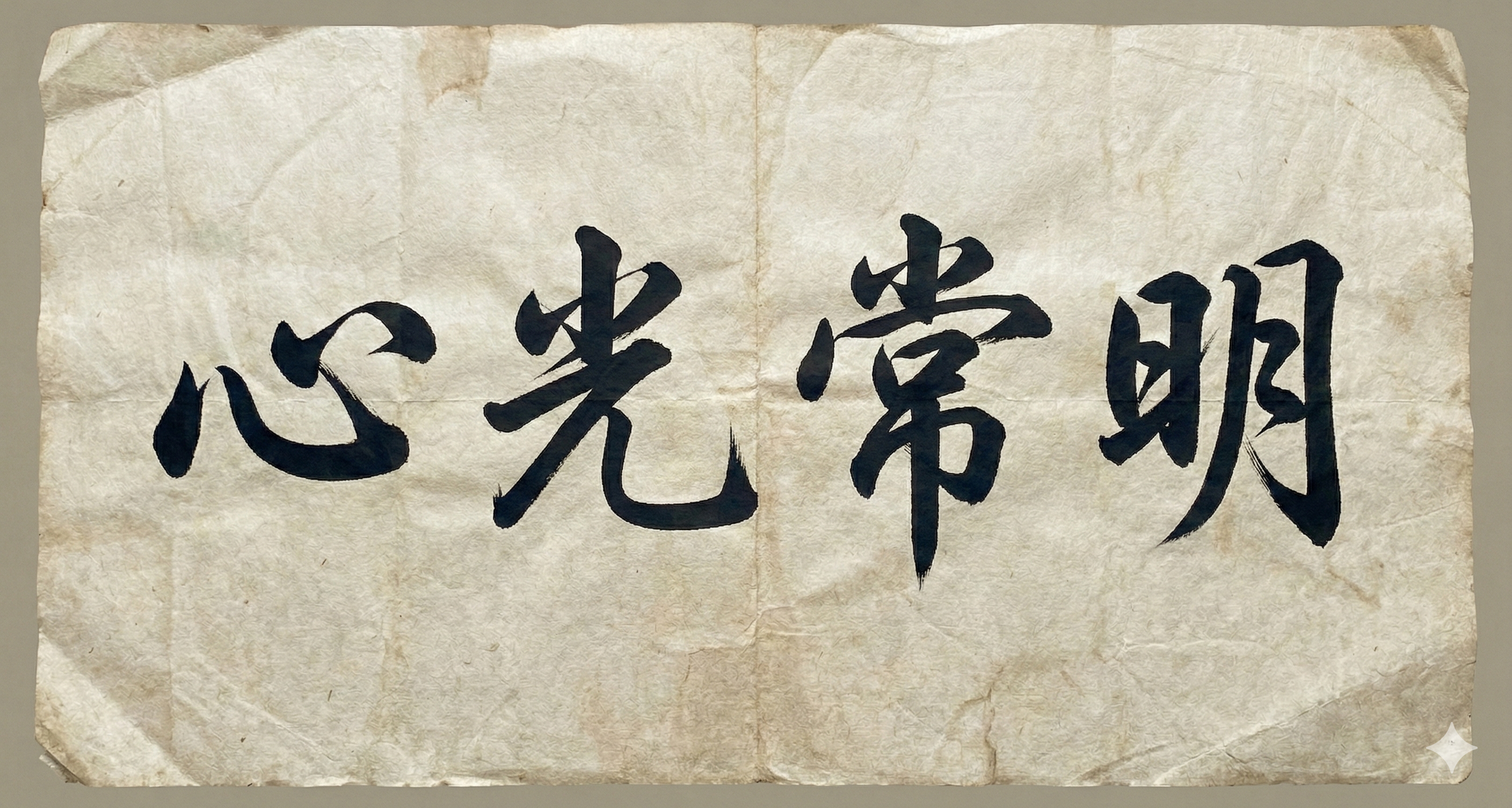
Image Healing: Guided Mandala Viewing - Lesson 151
Please view a mandala with a stable center and naturally unfolding periphery. The center symbolizes the inner "light of the heart," while the periphery represents the flow of public space.
Move your gaze back and forth between the center and the outer circle, and feel that even as the environment changes, the center still exists.
If you feel tense, gently bring your gaze back to the center; not to control, but to remember the fulcrum.
A mandala is not about drawing something, but about observing. When you can continuously observe amidst change, the act of remaining still becomes safe.
The mandala in this lesson is themed "stable at the center and flowing at the outer circle," symbolizing a real stay in a public place.
◉ One gaze is sufficient; no need to repeat.
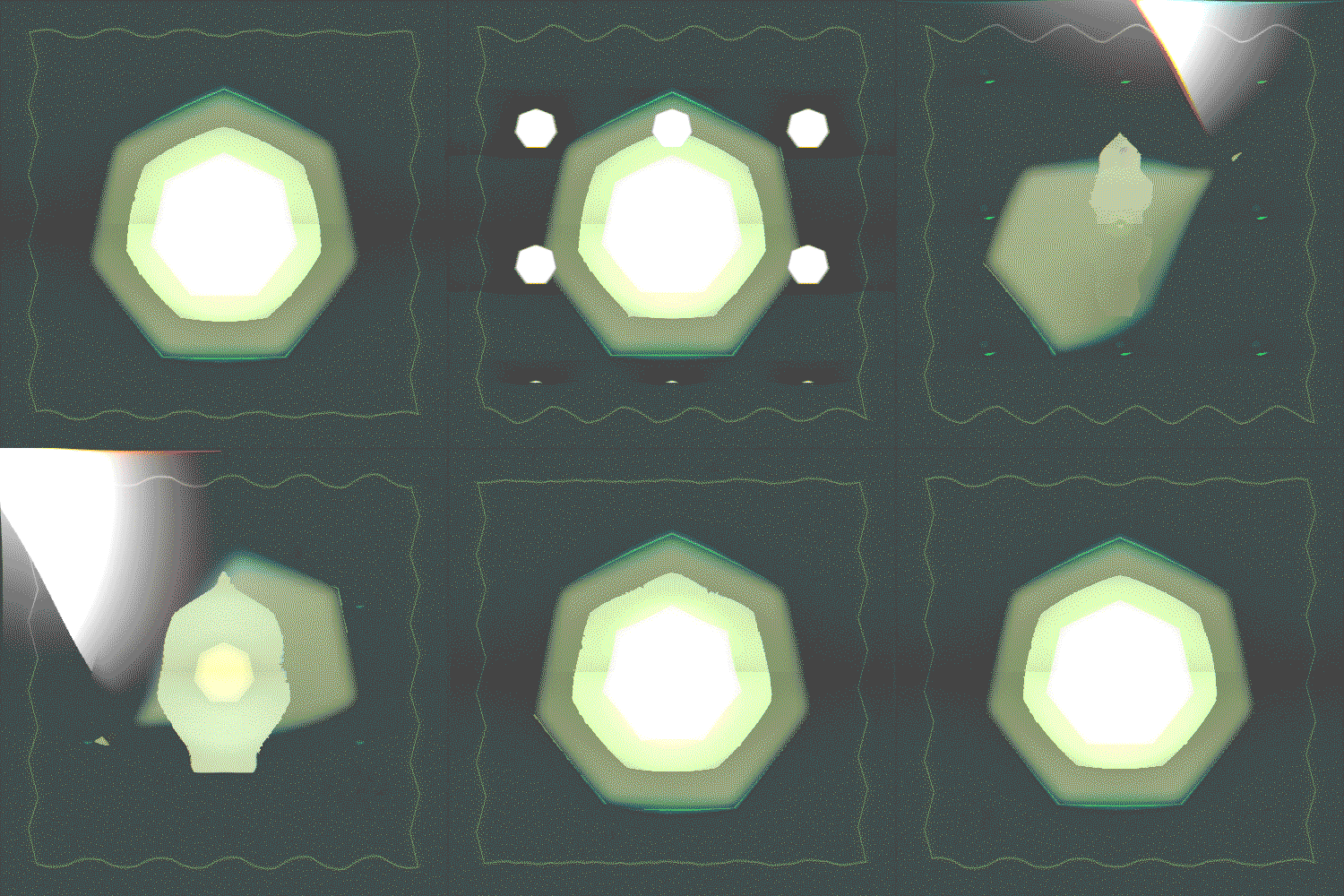
Lesson 151: Guided Drawing - "Presence Map"“
① Draw a stable shape (circle or square) in the center of the paper to represent "I am here".
② The outer ring is drawn with flowing lines, symbolizing the dynamism of public spaces.
③ At the center, I wrote a reminder: "The outside world is in motion, but I can remain present."“
Please log in before submitting your drawings and feelings.
○ 151. Suggestions for Logging in Public Places
① What kind of public setting did I stay in today? And for how long?
② What physical reactions did my body experience at that time? Did I manage to hold on?
③ What moment made me realize "I can actually do it"?
④ Tomorrow, would I be willing to try increasing the time by 30 seconds or less?
Please log in to use.
Staying still isn't about forcing yourself; it's about telling your body, "I'm here, I'm safe." A few minutes at a time, and you're rebuilding a whole new set of freedoms for your life.