

Lesson 172: How to Establish a Psychological Buffer That Allows for "Retreat or Stay"
Duration:70 minutes
Topic Introduction:
Spatial anxiety stems most from the fear of being "trapped," causing the brain to misjudge many places as dangerous.
“The psychological buffer of "being able to retreat or stay" doesn't mean forcing yourself to move forward, but rather letting your body experience it:
I can stop at any time, and I can retreat at any time; I have a choice.
When the brain rediscovers the freedom to "enter, stay, or retreat," the sense of spatial oppression will automatically decrease.
Lesson 172: How to Establish a Psychological Buffer That Allows for Both Withdrawal and Retention (Click to listen to the reading, view the content)
In the recovery process from panic disorder and agoraphobia, many people repeatedly get trapped not because the situation itself is dangerous, but because they lack a psychological buffer where they can either stay or retreat. When the brain judges that once it enters a situation, it can only endure or fail completely, the alarm system is prematurely activated to its highest level. Lesson 172 focuses on how to psychologically reserve flexible space for oneself so that action is no longer equated with being trapped. The so-called psychological buffer is not escape, but an internal structure that allows for choice. When you know you can either retreat or stay, the intensity of fear itself will decrease. The first step in building a buffer is to clarify that retreating does not equal failure. Many people have an implicit all-or-nothing rule, as if leaving halfway means they are incapable; this evaluation directly amplifies tension. You need to redefine the meaning of retreating; it is merely a way to adjust intensity, not a denial of ability. The second step is to pre-set flexible boundaries for each action. For example, before entering a certain place, you should know your minimum stay time and maximum range of attempts. When the boundaries are clear, the brain will not constantly scan for the possibility of losing control. The third step is to practice the two-way feeling of staying and retreating in actual experience. You can deliberately experience staying for a while before actively leaving, or you can experience preparing to leave but choosing to stay a little longer. This active choice will gradually reduce the feeling of being trapped. The core of psychological buffering lies not in whether you actually leave, but in whether you know you have a choice. When this sense of choice is repeatedly validated, the brain updates its assessment system of the situation from "must escape" to "can be adjusted." Ultimately, you'll find that what truly stabilizes you is not the escape route itself, but that you are no longer forced to use it.
▲ AI Interaction: Where is your "refundable point"?
Tell the system a space that makes you feel nervous (such as a shopping mall entrance, a train station lobby, or a hospital corridor).
Next, describe the minimum acceptable "stop point" and the safest "return point".
AI will help you create a "buffer map" that allows you to retreat or stay, so that space is no longer divided into danger and safety in a one-size-fits-all manner.
○ Sound buffering • Establish a rhythm of "I can stop"
Before entering a place that may cause tension, play a steady audio track for 1-2 minutes.
Let your body experience first that rhythm is something you can control, rather than being dictated by the environment.
This pre-stabilization makes it easier for you to make "stay" choices in the scene.
Herbal Tea - Lavender Lemon Tea
Recommended drinks:Lavender + Lemon
Recommended reasons:Lavender calms the nerves, while lemon enhances awareness, making it a perfect gentle tea to drink before and after entering a scene.
practice:Steep 1 teaspoon of lavender and 1 lemon slice for 5–7 minutes, then sip slowly to allow your body to enter a gentle rhythm.
○ An Ding Food Therapy - Pomelo-Scented Roasted White Radish (ID172)
During the phase of building psychological buffer and flexibility, the body needs gentle, non-stressful nourishment. Roasted white radish softens and helps release tension, while the refreshing aroma of grapefruit provides a mild boost without overstimulating the nervous system. This nourishing dish is suitable for consumption after practicing strategic choices, helping the body reassure itself of relaxation and control.
Flexibility of advance and retreat
Rebuilding a sense of security
Open Recipe
◉ Japanese Food Therapy: Roasted Yuzu and Radish (ID 172)
This is a warm, rich, and fragrant "winter healing dish." As the saying goes, "Eat radish in winter and ginger in summer," and white radish, after being pan-fried or roasted, transforms its spiciness into sweetness and becomes milder. The soul of this dish lies in lightly roasting the grapefruit peel (or using the heat to release its essential oils); that unique citrus aroma instantly dispels the gloom brought on by anxiety. As the warm, juicy radish melts in your mouth, the body's heat and unease dissipate.
Clear heat and reduce dryness Aroma relaxation Relieve anxiety
I. Recommended Dietary Therapy and Reasons
Recommended dishes:Roasted grapefruit and radish (ID 42)
Recommended reasons:Raw white radish clears heat and generates fluids, while cooked white radish promotes digestion, relieves phlegm, and resolves stagnation, effectively addressing "qi stagnation" and indigestion caused by anxiety. The aromatic components (limonene) in grapefruit peel are more potent when heated, exhibiting significant antidepressant and central nervous system calming effects. This dish warms the stomach with its "warmth" and reduces internal heat with its "clearing qi," making it an excellent choice for balancing mind and body.
2. Recipe and Method
Recipe (1–2 servings):
- 200g of white radish (middle section) (about 3-4 cm thick round slices)
- A small amount of fresh grapefruit peel (shredded or grated).
- 1 teaspoon of grapefruit juice
- Olive oil or sesame oil as needed
- Sauce:1 tablespoon of light soy sauce, 1 teaspoon of mirin (or sugar syrup), and 2 tablespoons of water.
- Kelp (optional, for use as a base)
practice:
- Preprocessing:Peel the white radish and cut it into 2 cm thick round slices. Make cross-shaped cuts on one side (to help it absorb flavor).
- Initial ripening (key):Place the radish in a heat-resistant bowl, add a little water, and microwave on high for 3–4 minutes (or boil for 10 minutes) until translucent. This step is to shorten the cooking time and keep it juicy.
- Grilling:Heat oil in a frying pan, add radish slices, and pan-fry over medium-low heat until both sides are golden brown (Daikon Steak).
- Seasoning:Pour in the mixed sauce, cover and simmer for 1 minute to allow the radish to absorb the flavor.
- Incense:Before turning off the heat, sprinkle in the shredded grapefruit peel and use the residual heat of the pan to slightly "bake" the peel, releasing its rich aroma. Pour in the grapefruit juice.
- Plating:Remove the radish from the pot and pour the remaining broth from the bottom of the pot over it.
3. Small rituals for body and mind
While frying radishes, watch them slowly turn from pure white to an enticing golden yellow, and feel the process of "maturation" and "transformation".
The moment the grapefruit peel touches the hot pan and releases its aroma, take a deep breath and imagine that the aroma is cleansing your body of negative emotions.
Cut off a piece of juicy radish and put it in your mouth, feeling the warmth and sweetness spreading from the tip of your tongue to your whole body.
4. Dietary Therapy Experience Record
- Record whether your tense shoulders involuntarily relax when you smell the aroma of hot grapefruit.
- Observe whether the stomach feels warm and comfortable after consumption, and whether the feeling of heat is gone.
- Notice whether this simple vegetarian dish gives you a sense of psychological satisfaction from being "treated gently".
V. Instructional Videos (approximately 3–5 minutes)
◉ Video Title:Roasted grapefruit and radish: A warming and refreshing winter dish.
6. Precautions
- Grapefruit preparation:When peeling a grapefruit, try to use only the yellow outer layer and remove the white pith, otherwise it will become bitter after heating.
- Heat control:Be patient when frying radishes; use medium-low heat to slowly fry them until they turn caramelized, and avoid burning them over high heat.
- Alternative solution:If you don't have fresh pomelo, you can soak dried pomelo peel until soft, or apply a little "pomelo pepper" after cooking for a spicier and more refreshing flavor.
hint:This dietary therapy is suitable for consumption on cold nights or when feeling restless and having trouble sleeping, as it has an excellent calming and sleep-aiding effect.
○·Chinese Calligraphy·Regular Script·Lesson 172 Writing Practice
The topic of this lesson:Establishing stability and order within the borders
In-depth analysis:
The psychological buffer of being able to retreat or stay corresponds to a clear and stable sense of boundaries. Regular script is renowned for its rigorous structure; every stroke has a definite position, and every character has a supporting framework. When you write regular script, your brain naturally enters an orderly and safe state—this is precisely the psychological manifestation of the buffer mechanism.
Writing Instructions:
This lesson focuses on practicing the stable relationship between horizontal and vertical strokes. Before starting a stroke, confirm its position and then write steadily without rushing to connect the strokes. After completing each stroke, pause briefly to feel the stability brought by the clear boundary. This trains your inner ability to control the advance and retreat of strokes.
Written words:
Peace and fulfillment
Motivational words:
When inner boundaries are clear, actions no longer need the support of fear.
Writing Tips:
When writing the character "平" (píng), pay attention to the balance of the upper and lower structures, and do not favor either side. Let the strength be distributed naturally and feel the coordination between advancing and retreating.
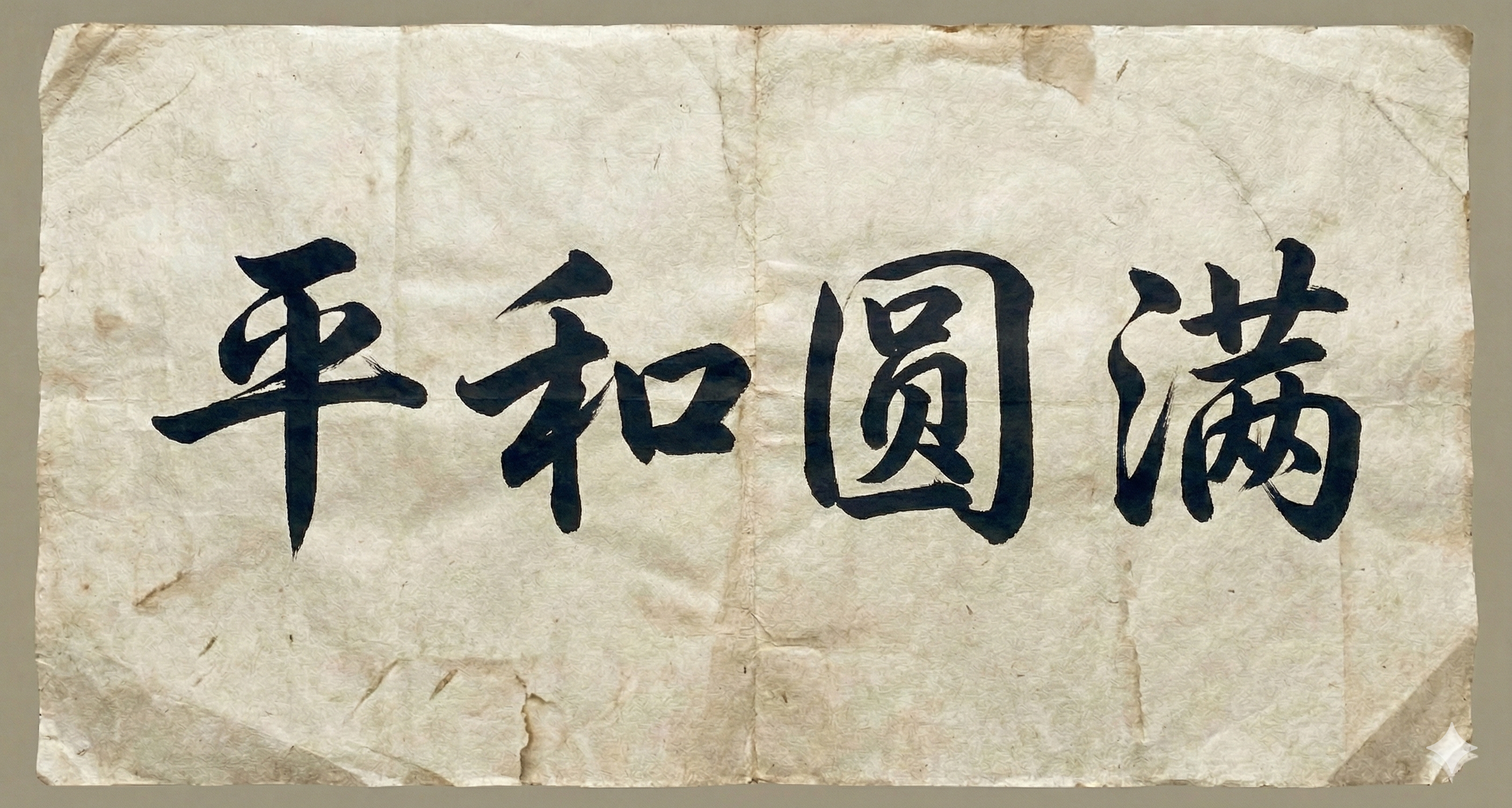
Image Healing: Guided Mandala Viewing - Lesson 172
Choose a mandala with a stable center and clear boundaries.
First gaze at the center, then observe the outer ring.
Experience the sense of security that exists simultaneously at the center and the periphery.
Mandala drawing is not about what you draw, but about observing. It's about practicing a mental space that you can retreat from or stay in while observing.
The theme of this lesson's mandala is "flexible boundaries," symbolizing that security comes from choice rather than escape.
◉ One gaze is sufficient; no repetition is required.

Lesson 172: Draw Your Mental Buffer Zone Map
①Draw a central circle and write "The area I can control" on it.
②Draw a second circle and write down "the area where I can stay briefly".
③Draw a third circle and write "The area I can observe from the corner".
This image shows the body for the first time that space is not all-encompassing or all-out, but rather has buffers, distances, and layers.
Please log in before submitting your drawings and feelings.
○ 172. Psychological Buffering & Journaling Guidance
- Where did I automatically become tense today? What made me feel like I "had to leave"?
- Write down a realistic "stop point" and a "return point".
- Observe your physical reactions (breathing, heartbeat, attention) while you are in a daze.
- After completing the exercise, write a self-affirming sentence: "I have a choice, I can stop, and I can retreat."“
- Set a gentler direction for the next practice session.
Please log in to use.
When you regain the freedom to move forward and backward, the original sense of danger will gradually transform into an adjustable sense of space.