

Lesson 194: The Physiological and Psychological Interaction of Dizziness and Imbalance
Duration:70 minutes
Topic Introduction:
Dizziness, lightheadedness, a feeling of unsteadiness in the feet, and a sense of imbalance are not just caused by the body itself, but are the result of the combined effects of "physiological reaction × psychological interpretation".
The body may only be temporarily lacking a stable reference, but the brain's danger prediction will amplify it into "I'm going to faint," "I can't stand up," or "I'm going to lose control."
This lesson will help you understand how dizziness and anxiety can reinforce each other, and teach you how to gradually regain your body's rhythm when feelings of imbalance arise.
○ Two sources of dizziness: How do physical and psychological factors amplify each other?
- ① Physiological triggers:Unstable vision, sudden changes in blood pressure, hyperventilation, and prolonged tension can all trigger temporary dizziness or a feeling of emptiness in the feet.
- ② Psychological amplification:Once initial instability occurs, the brain immediately "scans for danger," interpreting ordinary discomfort as "fainting" or "loss of control," further increasing anxiety.
- ③ Vicious cycle:Increased anxiety → loss of breathing control → worsening dizziness → increased risk prediction in the brain, creating a vicious cycle.
Lesson 194: The Physiological and Psychological Interaction of Dizziness and Imbalance (Click to listen to the reading and view the content)
During the recovery process from anxiety and spatial discomfort, dizziness and imbalance are often mistaken for simple physical problems. However, they are often the result of amplification between physiological systems and psychological alertness. The vestibular system is responsible for balance, the visual system for orientation, and proprioception for body position. When any of these systems is over-monitored due to tension, the brain enters a high-alert mode and amplifies subtle changes, resulting in dizziness or a feeling of floating. Psychological anxiety, in turn, prompts you to repeatedly check your physical condition, such as frequently turning your head to test or staring intently at the ground. This further disrupts system coordination, exacerbating discomfort. This interaction is not dangerous but rather a result of mislearning. The first step in understanding this interaction is to stop equating dizziness with impending loss of control. Slight physiological fluctuations are normal signals, but are misinterpreted as threats in the context of anxiety. The second key is to reduce monitoring rather than increase control. When you try to force yourself to stay still, you only make the system more tense. Relaxing your neck, breathing, and allowing your gaze to rest naturally can reduce alert input. The third point is to establish a consistent sensory rhythm, such as maintaining a steady pace while walking and keeping your gaze fixed, allowing multiple systems to resynchronize. The fourth stage is to accept residual discomfort without seeking its immediate disappearance. When you no longer interrupt your activity due to slight imbalances, the brain recalibrates its thresholds. It's important to understand that dizziness doesn't mean you're about to collapse; rather, it's the system relearning how to coordinate. As you repeatedly continue to act safely despite discomfort, the cycle of false alarms between your body and mind will gradually dissipate. True stability isn't the complete absence of feeling, but rather knowing that you are standing and walking steadily even when feelings arise.
○ AI Interaction: What type of dizziness do you experience?
Click to interact and answer three questions: "What is the most common situation that causes dizziness?"“
“"Where in the body does instability first?" "What is the first automatic thought that comes to mind?"”
AI will help you identify the type of dizziness you experience and the corresponding buffering strategy.
○ Voice practice: Prioritize stabilizing the body.
A light, steady rhythm can help the nervous system regain its sense of direction.
It is especially suitable for imbalances caused by visual drift, respiratory disturbances, or spatial compression.
It is recommended to spend 1–2 minutes calibrating your rhythm before going out for training.
○ Western Herbal Healing Tea - Lavender Tea
Recommended drinks:Lavender Tea
Recommended reasons:The purple aroma acts on the limbic system, relieving anxiety and headaches, and purifying the mind.
practice:Steep 2 grams of dried lavender buds in 90°C water for 3 minutes. Honey can be added.
○ Stable Nutrition - Tomato Feta Omelette (ID194)
During the recovery phase after dizziness and imbalance during exercise, the body needs gentle and structured nourishment. Tomato feta omelets, with their protein and moderate acidity and saltiness, provide clear but not overloaded support to help the nervous system transition from alertness to integration.
System Collaboration
Rhythm recovery
Open Recipe
◉ Greece – Mediterranean Diet: Tomato Feta Baked Eggs (Kagianas) (ID 194)
This dish is the soul of a Greek summer brunch. It's not the perfectly shaped Western omelet, but a more casual, moist "hybrid." In Greece, people believe the taste of the sun is stored in tomatoes. When we simmer ripe tomatoes until concentrated and then combine them with eggs and feta cheese, we're not just eating protein, but also a kind of "sunshine energy" that can brighten up gloomy moods.
Mood boost Brain nutrition Color Therapy
I. Recommended Dietary Therapy and Reasons
Recommended dishes:Greek tomato-flavored scrambled eggs (Strapatsada / Kagianas)
Recommended reasons:
1. Choline supplementation station:Eggs are an excellent source of dietary choline. Choline is a precursor to the neurotransmitter acetylcholine, which is directly linked to our memory and mood regulation abilities.
2. Lycopene bomb:Cooking tomatoes in olive oil increases the bioavailability of lycopene by four times. This powerful antioxidant can eliminate free radicals generated by stress and protect cerebrovascular health.
3. The triumph of minimalism:When anxiety makes you feel that "cooking is such a hassle," this dish, which only requires a frying pan and doesn't need to be neatly chopped, can give you a huge sense of accomplishment in 10 minutes.
2. Recipe and Method
Recipe (1–2 servings):
- 3 eggs (beaten)
- Use 2-3 ripe red tomatoes (or even slightly softer ones for a sweeter taste).
- Feta cheese 50–80g (crushed)
- 3 tablespoons of extra virgin olive oil (more oil makes the eggs tender)
- 1 teaspoon of dried oregano
- Freshly ground black pepper (as needed)
- (No need to add salt, as feta cheese is very salty)
practice:
- Processing tomatoes (key):Cut the tomato in half and grate the flesh into a puree using a grater (discard the skin); or chop it finely.
- Making the sauce:Heat olive oil in a skillet and pour in the tomato puree. Simmer over medium heat for 8–10 minutes.This is the most important step:The water must be boiled away until the tomatoes become thick like jam and release their red oil. If they are not boiled away, the eggs will become watery and have a fishy smell.
- Egg insertion:Pour the egg mixture into the pan, but don't stir it immediately. Let it sit for 10 seconds to allow the bottom to set.
- Stir-fry:Gently push the egg mixture from the edges towards the center with a spatula, allowing the uncooked egg to flow down. Keep the heat gentle; we want a smooth texture, not a tough, overcooked egg.
- Saffron:When the egg mixture has solidified but is still moist (80%), turn off the heat. Sprinkle in shredded feta cheese and oregano. Let the residual heat melt the cheese slightly.
3. Small rituals for body and mind
Color Meditation:Look at the vibrant red (tomatoes), bright yellow (eggs), and pure white (cheese) in the pot. These three colors correspond to the root chakra, solar plexus chakra, and crown chakra, representing vitality, confidence, and purification.
Wait patiently:During the 10 minutes of simmering tomatoes to reduce the juice, practice "non-action." Don't rush to stir; watch the steam evaporate and tell yourself, "Evaporate the unnecessary water (distractions), and what remains is the essence."“
4. Dietary Therapy Experience Record
- Spread this moist scrambled eggs on a crispy slice of bread and enjoy the sensation of the sauce seeping into the bread's pores.
- Record every bite of this savory cheese bomb. Does this unexpected salty and umami flavor break the monotony of the taste and bring a pleasant surprise?
- Eat it for breakfast and see if it makes you feel clear-headed and energetic throughout the morning.
V. Instructional Videos (approximately 3–5 minutes)
◉ Video Title:Not scrambled eggs with tomatoes! The concentrated secret of Greek Kagianas
6. Precautions
- Tomato selection:The success of this dish hinges on the tomatoes. You must buy those soft, fragrant "ugly tomatoes." The hard, unripe tomatoes from the supermarket won't produce that rich, flavorful sauce.
- About Feda:Must beAfter turning off the heatAdd cheese. Feta will harden and become tough if cooked at high temperatures for too long; we need it to maintain that semi-melted, soft texture.
- Do not add sugar:While Chinese-style scrambled eggs with tomatoes often includes sugar, the Greek version emphasizes the acidity of the tomatoes and the saltiness of the cheese. Try this more mature, deeper flavor combination.
hint:This is a very versatile dish. If you have leftover roasted vegetables (such as zucchini from Lesson 193), you can chop them up and add them in the stir-fry.
○ Suggestions for Chinese Calligraphy and Seal Carving Practice - Lesson 194
The seal carving exercises in this lesson are used to restore inner orientation amidst sensory fluctuations. When the body feels unstable, seal carving brings attention back to controlled movements.
- Introduction to the characteristics of seal carving:
The emphasis on fixed-blade technique and continuous blade movement allows the movement to form a stable rhythm, symbolizing the re-coordination of the symbolic system. - Writing words and seals:
Tai Shun Pan Dingyi's Calligraphy and Painting Record - Psychological Intention:
The inscription on the calligraphy and painting record by Pan Dingyi of Taishun is a training to adapt to change rather than rush to correct it, allowing stability to come from continuous action. - Knife skills:
Practicing slow, steady entry and unbroken cutting path corresponds to maintaining continuity amidst a sense of imbalance. - Emotional transformation:
Transform your worries about dizziness into trust in the rhythm and process.
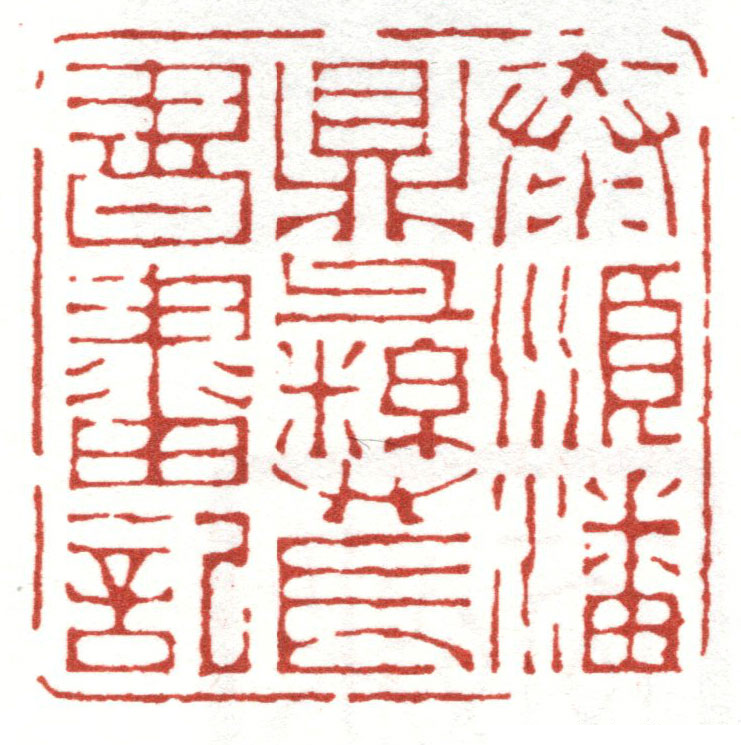
Image Healing: Guided Mandala Viewing - Lesson 194
Choose a mandala with a soft sense of rotation and a clear center.
Let your gaze slowly move along the structure and then return to the center.
Perceive the stable axis that still exists amidst change.
Mandala is not about drawing something, but about observing what you are doing and practicing abiding in the fluctuations.
The theme of this lesson's mandala is the stability of synergy, symbolizing the re-synchronization of physiology and psychology.
◉ One gaze is sufficient; no repetition is required.

Lesson 194: Draw your "Dizziness-Recovery" Cycle Chart
① Description of instability:
Draw a small vortex or a slightly tilted line on a piece of paper to symbolize dizziness, and mark the parts of your body that react first when you feel unsteady, such as "light feet," "irregular breathing," or "empty head."
The images realistically depict "where the instability begins," helping you see that discomfort is not systemic, but rather has a starting point.
② Enlarge the chain:
Draw three larger arcs outside the vortex to symbolize how the brain's dangerous predictions amplify instability.
Write down your common automatic thoughts next to each arc, such as "I'm going to faint," "I'm going to lose control," or "I can't hold on."
The purpose is not to criticize, but to show you how the mind participates in this cycle.
③ Stabilization path:
Draw a stable large circle on the outermost edge, symbolizing that "the body can return to the center".
Draw three lines inward from the large circle to represent the stabilization movements you are willing to practice: find visual focus, adjust the weight on the soles of your feet, and slow down your breathing.
The whole picture should show that instability has a trajectory, and stabilization also has a path.
Please log in before submitting your drawings and feelings.
○ 194. Dizziness—Stabilization: Log Guide
- Where did my dizziness start today? How long did it last? What triggered it?
- Before the discomfort worsened, did I find a stable point? What method was used?
- What is the "minimum recovery movement" I would like to incorporate into my next practice session? (e.g., weight on the soles of my feet, visual fixation, 3 slow breaths)
Please log in to use.
Dizziness is not dangerous; it is the body seeking a reference point. When you learn to guide it, the imbalance will gradually become a manageable fluctuation.