

Lesson 209: Memories and Re-experiencing of Early Attachment Breakdown
Duration:70 minutes
Topic Introduction:
Many adults“ separation anxiety and spatial unease do not arise now, but rather stem from one or more ”attachment breakdowns” experienced in their early years.
These moments are often accompanied by: being ignored, sudden separation, lack of response, and fear of losing support.
As adults, when faced with similar spaces, distances, and interpersonal dynamics, the brain may mistakenly believe that "things are going to repeat themselves."
This lesson helps you distinguish between the emotions and physical memories that were stuck in the past and the current triggers, providing direction for subsequent repair.
How to "re-experience" attachment breakdown in adult life“
- Hypervigilance:Whenever there is a brief loss of contact with an important person, or the other person's tone changes, the brain immediately triggers the old pattern of "I'm about to be abandoned again."
- Physical level anxiety:My heart was pounding, my stomach felt heavy, and I felt breathless—it was the same oppressive feeling I had back then when I couldn't express my needs.
- “A sense of impending doom quickly arose:Small uncertainties can be magnified into "they will leave" or "I can't hold on," which is a projection of old memories.
- Strong adhesion or rapid withdrawal:Some people cling desperately to relationships, while others quickly run away; both are continuations of early protective strategies.
Lesson 209: Memories and Re-experiencing of Early Attachment Breakdown (Click to listen to the reading and view the content)
At a deeper level of separation anxiety and relationship distress, many people's unease doesn't stem from current relationship events, but rather from the reactivation of memories of early attachment breakdowns. These memories are often not vivid images, but rather stored in the nervous system as bodily sensations, emotional fluctuations, and relational reactions. When similar separation cues reappear—such as being ignored, delayed farewells, or emotional distance widening—the brain automatically recalls old templates, making you feel as if you're back in that helpless moment. This re-experiencing isn't you remembering; it's the system replaying it. The first step in understanding this mechanism is distinguishing between the present and the past. The current relationship is not equivalent to an earlier loss, but the body may not have yet updated this distinction. The second key is recognizing the signals of re-experiencing. For example, a sudden, intense feeling of worthlessness, abandonment, or an urge to prove oneself often doesn't originate from real interactions but is an echo of old memories. The third point is establishing dual orientation. When discomfort arises, acknowledge that the body is experiencing past reactions while simultaneously using language and actions to confirm safety in the present moment—for example, looking around and touching real objects to allow the nervous system to receive new information. The fourth stage is allowing emotions to be seen rather than overwhelmed. The deepest damage from early attachment breakdown lies in the lack of emotional support. When you can gently accept these feelings without rushing to erase them, old memories gradually lose their power. The fifth key is to repeat new experiences. Each time you successfully return to the present moment without disaster in a similar trigger, your brain updates its connections. It's important to understand that re-experiencing is not regression but a sign of deeper healing. True repair is not erasing memories but allowing them to no longer dominate the present. As you repeatedly provide yourself with stable attachment in the present moment, early attachment breakdowns will gradually be covered by new connections.
▲ AI Interaction: How are my attachment memories affecting the present?
Describe a recent situation to the AI that made you feel "left behind," "ignored," or "uneasy," and answer:
“"Does this feel like a moment from my childhood?"”
AI will help you organize the chain of "early memory → current trigger" and point out small breaks that can be practiced.
Please treat this process as a gentle journey of self-understanding; you don't need to reveal everything, just a little bit.
○ Sound buffering • Low-frequency stabilization guidance
Early attachment breakdown is often accompanied by "physical shock memories." Low-frequency, slow-paced music can lower heart rate.
It helps the brain switch from "emergency mode of being abandoned" to "safe mode of being here".
Before reviewing memories or engaging in attachment-themed exercises, you can spend 2–3 minutes establishing a stable rhythm for your body.
○ Eastern Healing Tea: Licorice and Ginger Tea
Recommended drinks:Licorice Ginger Tea
Recommended reasons:This formula combines licorice for moistening the lungs and calming the mind with ginger for warming the middle and dispelling cold. It improves blood circulation, relieves discomfort and low mood caused by cold, and soothes gastrointestinal discomfort caused by anxiety.
practice:Boil a few slices of ginger and 1 teaspoon of licorice root in hot water for 10 minutes, then add honey. Repeat 2–3 times per week.
○ Stable Dietary Therapy - Black Sesame Walnut Porridge (ID209)
During the process of processing deep attachment memories and emotional regression, the body needs gentle and nourishing support. Black sesame seeds and walnuts help stabilize inner energy, symbolizing support even when memories are triggered. This nourishing dish is suitable to consume after emotional integration exercises to help the body return to the present moment.
Re-experience
Internal connection
Open Recipe
◉ Chinese Food Therapy: Black Sesame and Walnut Porridge (ID 209)
Traditional Chinese medicine believes that "the kidneys govern bones and produce marrow, and the brain is the sea of marrow." When anxiety depletes kidney essence, the brain becomes like a dried-up lake, becoming sluggish and forgetful. Black sesame seeds and walnuts are a perfect "brain-nourishing duo." Black sesame seeds nourish the kidneys, while walnuts, resembling the brain, also nourish it. This porridge is not only fragrant but also provides your brain with the high-quality oils it needs, making your thinking smooth and agile again.
Nourish the liver and kidneys Brain-boosting and intellectual development Hair darkening and skin moisturizing
I. Recommended Dietary Therapy and Reasons
Recommended dishes:Black Sesame & Walnut Porridge
Recommended reasons:
1. Brain lubricant:Walnuts and black sesame seeds are rich in unsaturated fatty acids (Omega-3) and lecithin. These are important components of brain cell membranes, which can repair damaged neurons and alleviate "brain fog" and mental stagnation.
2. Black energy:In Traditional Chinese Medicine's Five Elements theory, "black enters the kidneys." Anxiety and fear are most damaging to the kidneys (leading to hair loss, lower back pain, and timidity). This black dish can replenish kidney energy, enhance one's confidence and resilience.
3. Solving the "drying" problem:Anxiety can easily lead to depletion of body fluids, resulting in dry skin and constipation. These two oily foods can moisturize the intestines and nourish the body from the inside out.
2. Recipe and Method
Recipe (1–2 servings):
- 20g of roasted black sesame seeds (must be roasted, as raw sesame seeds are difficult to digest).
- 2-3 walnuts (broken into pieces)
- 60g of rice (or glutinous rice)
- 800ml of clean water
- Rock sugar or honey as needed
practice:
- Processing sesame seeds (key):Whole black sesame seeds have a hard outer shell and are difficult to digest and absorb if cooked directly. It is recommended to cook black sesame seeds first.mashedAlternatively, you can grind it into a coarse powder using a food processor. Or you can simply buy ready-made pure black sesame powder.
- Congee base:Wash the rice and break the walnuts into small pieces. Put them in a clay pot and add water. Bring to a boil over high heat.
- Slow cooking:Simmer over low heat for 20–30 minutes, until the rice grains have opened up and the porridge has thickened.
- Add sesame seeds:Pour the prepared black sesame powder (or crushed sesame seeds) into the porridge and stir well.
- Fusion:Continue simmering over low heat for 5 minutes. You will smell a rich nutty aroma, and the porridge will turn dark instantly.
- Seasoning:Turn off the heat. Add rock sugar and let it dissolve; or wait until the porridge has cooled slightly before stirring in honey (this will help with bowel movements).
3. Small rituals for body and mind
Olfactory arousal:The moment the black sesame powder is poured into the hot porridge, its unique caramelized aroma bursts forth. Close your eyes and take a deep breath; this rich nutty fragrance instantly brings a sense of security and satisfaction.
Chewing walnuts:The porridge is soft, but the walnuts retain a slight crunch. As you chew, imagine you're energizing your brain, with every neuron reconnecting and glowing.
4. Dietary Therapy Experience Record
- Record whether hair becomes shinier and less dry and frizzy after consuming it continuously for a week.
- Observe the bowel movements; this oily porridge is a gentle remedy for constipation in the elderly or caused by anxiety.
- Pay attention to your concentration when working or studying; do you feel that your brain is "working faster" than before?
V. Instructional Videos (approximately 3–5 minutes)
◉ Video Title:Using the principle of "like cures like," how to make a fragrant and not-too-greasy brain-boosting porridge.
6. Precautions
- Those with diarrhea should avoid the following:This porridge is high in fat and has a strong laxative effect. If you have diarrhea (loose stools), you should avoid it.Do not eatOtherwise, it will pull even harder.
- Calorie warning:Sesame seeds and walnuts are both high-calorie foods. A small bowl a day is sufficient; do not eat too much as a meal, as this may cause indigestion or weight gain.
- Freshly ground and eaten immediately:Black sesame powder and walnuts oxidize and rancid easily after being ground. It is recommended to grind only what you intend to eat, or store them in an airtight container in the refrigerator to maintain their fresh flavor.
hint:This is an energy porridge that's perfect for breakfast or afternoon tea. If you don't want to cook porridge, you can simply mix black sesame and walnut powder into milk or soy milk for an excellent "liquid brain-boosting meal."
○ Chinese Calligraphy: Clerical Script Writing Practice: Lesson 209
Through writing, we can provide light and direction to the inner parts that are touched.
Written words:
Light in the heart
Pre-writing advice:
Before writing, sit quietly for a moment, take three deep breaths, and feel the rise and fall of your chest and the temperature. Then slowly begin writing in the clerical script.
Writing Tips:
The horizontal strokes of the clerical script are expansive, while the vertical strokes are restrained, making it suitable for expressing a stable and continuous sense of illumination. When writing about light, the lines are steady, symbolizing inner reflection; when writing from the heart, the converging strokes remind us that security originates from the present moment and from self-acceptance. Each stroke is an anchor point that brings memories back to reality.
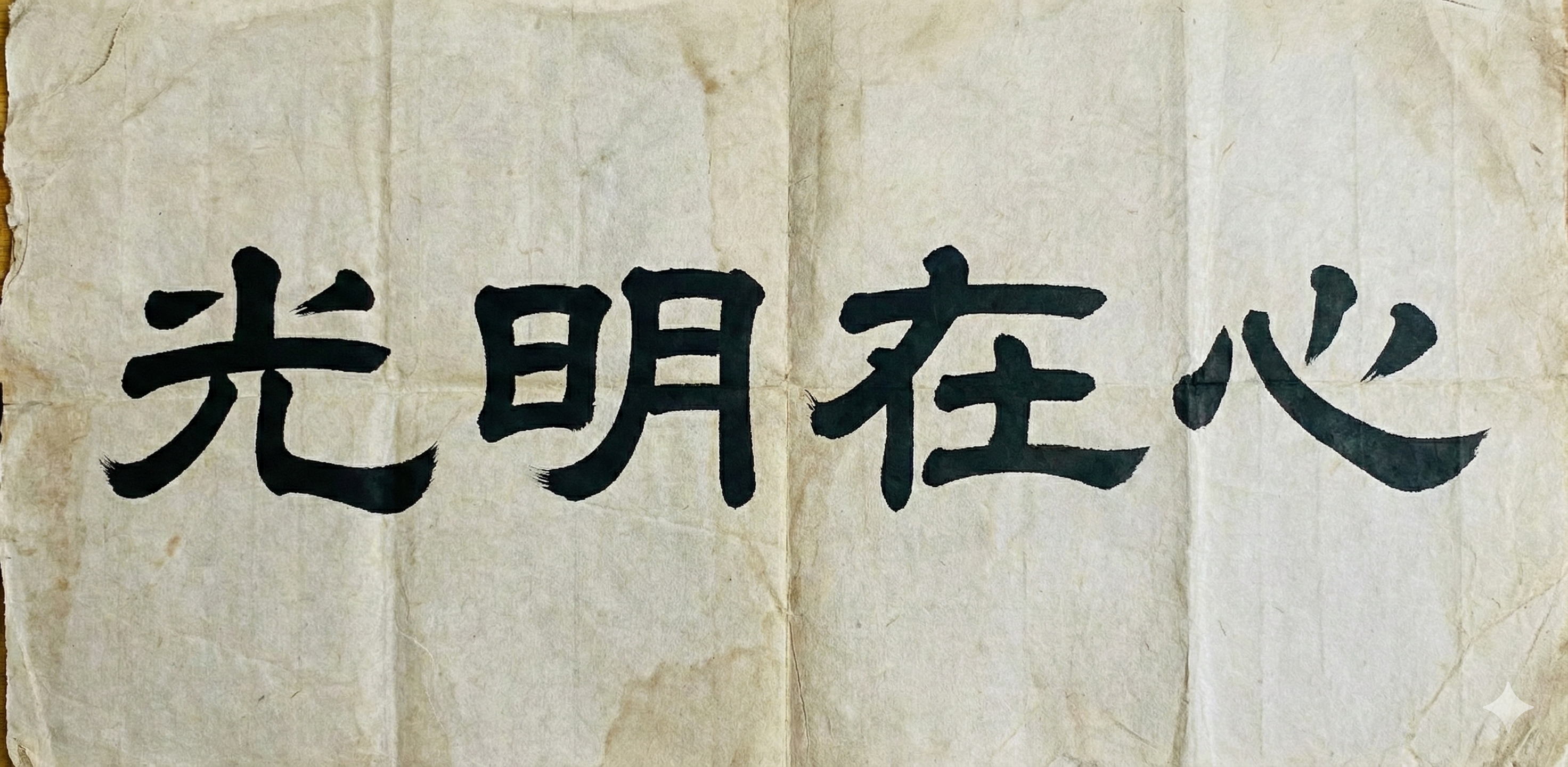
Image Healing: Guided Mandala Viewing - Lesson 209
Choose a mandala with a bright center and a soft outer circle.
Let your gaze linger slowly between the light and shadow.
The parts that are being touched are being illuminated.
Mandala drawing is not about drawing something, but about observing. In observing, you practice returning from memory to the present moment.
The mandala theme of this lesson is the Illuminating Ring, symbolizing how old memories are being integrated into new, safe experiences.
◉ One gaze is sufficient; no repetition is required.

Lesson 209: Draw Your "Attachment Re-experience Map"“
① The shadow of old memories:
Draw the outline of a scene from your childhood where you were "ignored or abandoned" on paper. You don't need to be specific; just draw the space, distance, and sense of location.
Let your brain know: This is a memory, not this moment.
② Current trigger point:
Draw a trigger point for you as an adult on the other side of the screen (the other person replies to a message late, a temporary separation, or a cold tone).
Connecting them with a thin line symbolizes how old experiences are projected into the present.
③ New response path:
Draw a new forked path from "now" to symbolize the choices you want to practice: pause for 10 seconds, talk to yourself, and anchor your breath.
Let painting serve as visual evidence that "I can stop repeating old reactions".
Please log in before submitting your drawings and feelings.
○ 209. Log Guidance
- Reflect on a recent separation that suddenly made you nervous or uneasy. Does it resemble an early memory? Write down the similarities.
- What small action can you take today to "build internal reliance"? Observe the change in body tension before and after.
- Next time you're triggered, which "new response path" would you like to try? (Pause, breathing, tactile anchoring)
Please log in to use.
Attachment breakdown taught you to cling and fear too early, but now you are learning a new way to connect.