

Lesson 210: Over-vigilance over loss of contact or coldness
Duration:70 minutes
Topic Introduction:
When the attachment system experiences neglect, hesitation, sudden departure, or emotional disconnection in early childhood, the brain develops a highly sensitive "disconnection monitoring mode" in adulthood.
If the other person's reply is even a little slow, their tone a little cold, or their eyes even slightly shift, your body will quickly go into alarm mode: your heart will race, your stomach will sink, and your mind will start searching for "what happened?"
This lesson helps you understand why your monitoring system is so sensitive, and how to gradually bring it back to a more realistic and gentler range.
Why does the brain overreact to indifference?
- The old alarm system will activate automatically:If children do not receive stable responses in childhood, their brains will subconsciously interpret "small changes = loss".
- Overreading clues:The other person's tiredness, busyness, or unconscious aloofness can be misinterpreted as "they no longer need me."
- The body enters a defensive state in advance:Physical reactions such as tension, acceleration, and numbness often appear before emotions.
- The urge to repeatedly confirm requirements:Seeking reassurance and asking "Are you unhappy?" are actually ways of calming a frightened nervous system.
Lesson 210: Overreacting to Disconnection or Coldness (Click to listen to the reading, view the content)
Overreaction to loss of contact or coldness is a common yet often misunderstood reaction among individuals with separation anxiety and attachment sensitivity. When messages are not responded to promptly, tone becomes brief, or interaction frequency decreases, the brain quickly enters a state of high alert, constantly scanning for signs of relationship breakdown. This alertness is not a rational judgment but rather the activation of past experiences with unstable responses. The first layer of the psychological mechanism is threat amplification. Brief silence is interpreted as a precursor to relationship breakdown, triggering intense anxiety. The second layer is impulse control. To alleviate unease, individuals repeatedly check messages, question reasons, or over-interpret; these behaviors reduce anxiety in the short term but strengthen the alertness system in the long term. The third layer is self-attribution bias. The other person's coldness is easily interpreted as one's own problem, triggering shame, self-blame, and people-pleasing behaviors. The key to understanding this pattern is distinguishing between signal and meaning. Loss of contact is a fact, but meaning is an inference quickly filled in by the brain, not a necessary conclusion. The second key point is delayed reaction. When alertness rises, intentionally create reaction time to give the nervous system room to slow down. The third stage is returning to real-world evidence. Actively list the ongoing connections in the relationship instead of focusing solely on the current void. The fourth key is establishing a stable anchor point within yourself. When internal stability increases, external changes are no longer perceived as a survival threat. It's important to understand that over-vigilance is not weakness, but rather a result of the system being overly conscientious. When you repeatedly fail to take control when indifference occurs and find that the relationship hasn't collapsed, the brain gradually updates its model. True security isn't about constantly receiving a response, but about remaining at peace even without one.
▲ AI Interaction: What am I monitoring? Where are the real risks?
Describe to the AI the most recent situation where "the other party responded slowly, their tone became cold, and they did not respond."
ask:
“"Is my reaction part derived from the present, or from past experiences of being out of contact?"”
AI will help you break down the trigger points and point out buffer steps you can practice, such as waiting 60 seconds before reacting, observing your body before judging your emotions, etc.
○ Sound buffering - slow-paced breathing music
Listen to a piece of music with a steady rhythm and clear breathing to lower your body's tension threshold.
Once your body has stabilized, you have the space to distinguish whether it is "genuine indifference" in the present moment or "anticipated indifference" in the brain.
○ Eastern Healing Tea - Green Tea and Jasmine Tea
Recommended drinks:Green tea jasmine tea
Recommended reasons:This product blends the refreshing taste of green tea with the aroma of jasmine. Green tea provides antioxidants, while jasmine offers relaxation and anti-anxiety benefits. It helps cleanse the body of toxins, uplift mood, and maintain mental and physical balance.
practice:Steep 1 teaspoon of green tea and a few dried jasmine flowers in hot water for 5–7 minutes. Drink 1–2 cups daily for a refreshing and relaxing experience.
○ Stable Dietary Therapy - Longan and Goji Berry Porridge (ID210)
During periods of relationship anxiety and emotional fluctuation, the body needs calming and gentle nourishment. Longan and goji berries help relieve mental tension and support emotional recovery. This nourishing dish is suitable for consumption while waiting for a response or experiencing emotional ups and downs, helping the body to achieve self-soothing.
Relational security
Mood decline
Open Recipe
◉ Chinese Food Therapy: Longan and Goji Berry Porridge (ID 210)
Traditional Chinese medicine says that "the liver opens into the eyes." Prolonged anxiety and stress deplete liver blood, directly affecting the eyes—causing dryness, soreness, and blurred vision. Longan (dried longan fruit) nourishes the blood of the heart and spleen, while goji berries nourish the yin of the liver and kidneys. This bowl of hearty, sweet porridge can moisturize parched meridians, restoring clarity and brightness to your eyes and replenishing the body's yin fluids.
Nourish the liver and kidneys Nourishing blood and improving eyesight Anti-fatigue
I. Recommended Dietary Therapy and Reasons
Recommended dishes:Longan & Goji Berry Porridge for Nourishing the Liver and Improving Eyesight
Recommended reasons:
1. Natural eye drops:Goji berries are rich in zeaxanthin and carotene, and are widely recognized as the king of eye health. Combined with the blood-nourishing properties of longan, they can improve eye fatigue caused by excessive eye strain and emotional stress.
2. Replenishing both essence and blood:Traditional Chinese medicine believes that "essence and blood share the same origin." Goji berries nourish kidney essence, while longan nourishes heart blood. The combination of the two can fundamentally resolve dizziness, tinnitus, and lower back and knee weakness caused by "deficiency of essence and blood."
3. Improve complexion:This is a "beauty porridge". When your Qi and blood are sufficient, the sallowness in your face will naturally disappear, and your skin will become rosy and radiant, making you more confident when you look in the mirror.
2. Recipe and Method
Recipe (1–2 servings):
- Dried longan pulp (about 10 pieces) 15g
- 10-15g of Ningxia wolfberries (a small handful, add at the end)
- Rice (japonica rice) 80g
- 1000ml of clean water
- (Optional) A little brown sugar (for a sweeter taste)
practice:
- Washing:Wash the rice; rinse the longan pulp briefly. Wash the goji berries and drain them.
- Congee base:Add water to a clay pot, then add rice and dried longan pulp. Bring to a boil over high heat.
- Slow cooking:Simmer over low heat for 25–30 minutes. During this time, the longan pulp will absorb water and swell, releasing a sweet aroma, and the rice porridge will become thick.
- Key step (adding goji berries later):Before the porridge is cooked Last 5 minutesThen add goji berries.
- reason:If goji berries are cooked for too long, their nutrients will be lost, they will taste sour, and they will become mushy. Adding them at the end will help maintain their bright red color and sweet taste.
- Remove from heat:Stir well, turn off the heat and let it sit for 2 minutes before serving.
3. Small rituals for body and mind
Red Gaze:Looking at the bright red goji berries and amber-colored longan in the porridge, you see vibrant colors. Imagine these red fruits, like rubies, brightening your tired eyes.
Grateful for the visual:While drinking porridge, close your eyes and rest for a while, then open them. Silently thank your eyes for helping you see the beauty of this world.
4. Dietary Therapy Experience Record
- Record whether the dryness in your eyes is relieved or feels more moisturized after drinking this bowl of hot porridge.
- Pay attention to your work performance in the afternoon; do you feel less dizzy or lightheaded than usual?
- Savor the subtle sweetness of goji berries bursting in your mouth; does this natural sweetness lift your spirits?
V. Instructional Videos (approximately 3–5 minutes)
◉ Video Title:Dry eyes and blurred vision? This bowl of porridge is the perfect "divine helper".“
6. Precautions
- Those with excess heat should avoid these foods:Both longan and goji berries are warming in nature. If you have a cold and fever, or symptoms of "excessive heat" such as tonsillitis or mouth ulcers,Please stop consuming.To avoid adding fuel to the fire.
- Use with caution if you have diarrhea.Goji berries have a warming and laxative effect, while longan is also nourishing. If you have diarrhea, this porridge may worsen your symptoms.
- Sugar content warning:Longan has a high sugar content, so diabetics should eat less longan pulp, or only use a small amount of goji berries to cook porridge.
hint:When buying goji berries, choose "Ningxia goji berries"—they are long, sweet, and float on water. If the goji berries are particularly red and taste bitter, they may have been treated with sulfur; please avoid buying them.
○ Chinese Calligraphy: Clerical Script Writing Practice: Lesson 210
Writing helps to shift attention from external reactions back to inner order.
Written words:
With a righteous heart, things will be accomplished.
Pre-writing advice:
Before writing, sit quietly for a moment, take three deep breaths, and feel the support of your spine on the ground. Then slowly begin writing in the clerical script.
Writing Tips:
The horizontal strokes of clerical script are steady, and the vertical strokes are restrained, making it suitable for expressing a balanced and impartial mindset. When writing with a focused mind, the strokes are upright, symbolizing inner alignment. When the writing is accomplished, the final stroke is firm, reminding us that there is no need to rush. Each stroke is an exercise in transforming alertness into composure.
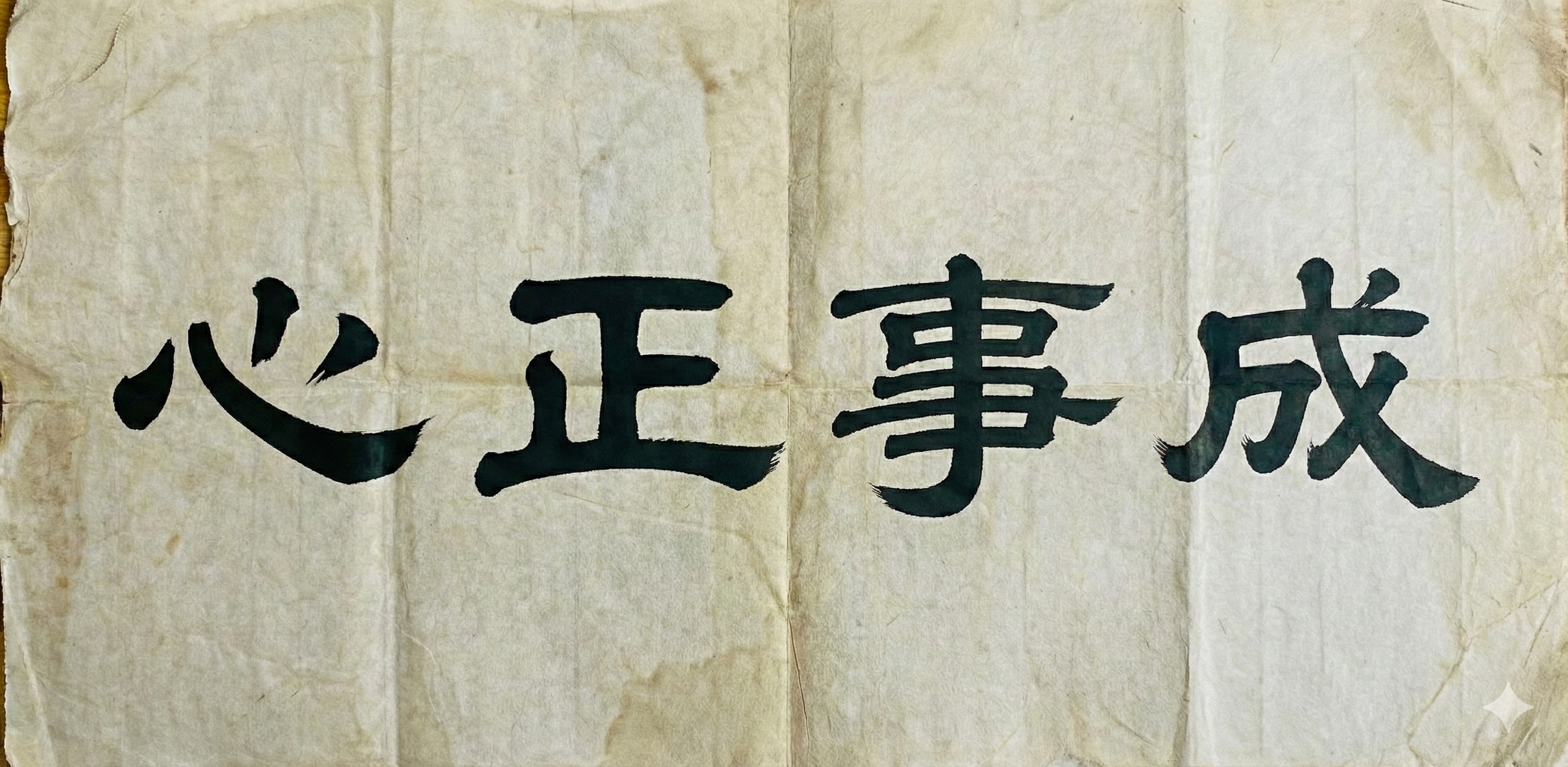
Image Healing: Guided Mandala Viewing - Lesson 210
Choose a mandala with a stable center and a simple outer circle.
Keep your gaze focused on the center and don't let it be drawn away.
Be careful to gently bring it back when it swims.
A mandala is not about drawing something, but about observing what you are doing and practicing returning to the center.
The theme of this lesson's mandala is the circle of tranquility, symbolizing that fluctuations in relationships no longer affect one's foundation.
◉ One gaze is sufficient; no repetition is required.

Lesson 210: Draw Your "Overvigilance Circuit Diagram"“
① At the moment of triggering:
Draw a small clue of change on the paper (such as a gray dot: late message, indifferent tone, wandering eyes).
Let it be the starting point of the loop, not the entire loop.
② Body Reaction Zone:
Draw the parts of your body that tighten first (chest, stomach, shoulders and neck) next to it, and use lines to express the "rapid tightening sensation".
It allows you to see the reaction occurring in your body, not in the other person.
③ New adjustment line:
Draw a line extending slowly outward from the body's reflex zone, symbolizing "pause," "take a deep breath," or "reality check."
Let your drawing become evidence of the new circuits you are building.
Please log in before submitting your drawings and feelings.
○ 210. Log-based guidance
- At what moment today did I feel particularly sensitive to the "disappearance"? Record specific clues.
- How much of this reaction comes from the present moment? And how much from past experiences? (Precision isn't required, just a general feeling.)
- What support would I like to provide for myself while waiting? (A word, a breath, a physical gesture)
Please log in to use.
You are moving from "danger monitoring" to "relational realism," and each step gives you more freedom.