

Lesson 1029: Trauma and Disorders in the Formation of Self-Worth
Duration:75 minutes
Topic Introduction (Overview):
The formation of self-worth is not an abstract concept, but rather begins in childhood and gradually grows from how a person is treated, understood, and accepted. However, when a person experiences trauma, neglect, humiliation, lack of stable responses, or a persistently high-pressure environment during their growth, the brain stores emotional information such as "dangerous," "not worth it," "it's all my fault," and "I must try harder to be accepted" as deep-seated beliefs. Thus, in acute stressful events in adulthood, these early latent beliefs can be rapidly activated, plunging the person into intense self-blame, helplessness, or self-doubt.
Post-traumatic loss of self-worth is not a superficial "I'm not good enough," but a deep structure etched into bodily rhythms, emotional responses, and relationship patterns. This course will guide you to see how these structures are shaped by early experiences and help you distinguish between current difficulties and echoes of old traumas. Through herbal healing teas, the stable daily routine emphasized by German whole grain therapy, self-care rituals, symbolic mandala viewing exercises, and the gentle rhythms of humanistic calligraphy, you will learn to gradually rebuild your inner sense of "I am valuable" amidst chaos. Mandalas are not about drawing something, but about seeing—seeing how those previously denied parts are rediscovered.
▲ AI Interaction: When the belief "I am the problem" is triggered
The loss of self-worth after trauma often manifests as an automatic thought: I must not be good enough, I did something wrong again, it's all my fault.
Please write down the moment you most recently felt "I am the problem" due to stress: What happened? What was your first reaction?
Then write down your second thought: What do you really need? Support, understanding, time, space, help?
Click the button below to deconstruct these old beliefs with AI.
○ Self-worth and the Body: Music Therapy
Choose a slow, flowing piece with gentle piano or strings, and treat it as a "reaffirming rhythm".
Close your eyes and focus your attention on your chest and stomach area—this is the area where self-worth trauma is most likely to "contract."
Every time the melody plays, ask yourself: What would I be like now if I didn't have to prove myself?
🍵 Herbal Healing Tea: A Gentle Drink to Rebuild Your Self-Worth
Recommended combination:Rose petals + lemon balm + trace amounts of licorice.
Roses help restore the inner sense of "I am worthy of being loved," lemon balm regulates self-blaming anxiety, and licorice symbolizes recovery and support.
While brewing, silently repeat to yourself: "I don't exist to perform; I am worthy of it."“
○ German Whole Grain Therapy: Building a "Stable Foundation" for a Sense of Value“
When a person's self-worth structure is damaged, they will repeatedly exhibit behaviors of "ignoring themselves" in life: not eating, not sleeping, making do with whatever they can, and putting their needs last.
German whole grain therapy emphasizes rebuilding the body's sense of stability with foods that "stable and continuously release energy," such as whole grains, coarse grains, sprouted grains, nuts, and rye.
You can start with a whole-grain breakfast once a day, using a fixed ritual to tell yourself: "My body deserves to be well taken care of."“
A stable diet can reduce over-vigilance in the nervous system, improve emotional resilience, and support the restoration of self-worth on a physical level.
Healing Recipes
/home2/lzxwhemy/public_html/arttao_org/wp-content/uploads/cookbook/kao-hong-shu-pei-hei-dou.html(Please confirm that the file has been uploaded: kao-hong-shu-pei-hei-dou.html)
🎨 Dream Mandala Healing · Mi Xiangwen 1029 · Broken Mirror and Center
You dream that you are standing in front of a cracked mirror, each shard reflecting a different version of yourself: a fearful you, a you struggling to prove yourself, a weary you, a you wanting to run away. You reach out and touch one of the shards; it is cold and sharp, making you instinctively back away.
Then, you place this mirror on the paper and circle the fragments one by one—without erasing or repairing them, just observing. A mandala isn't about drawing anything, but about observing: observing how the past has cut you into different parts, and observing how you, in the present, are trying for the first time to put those parts into the same circle. You don't need to become perfect; you just need to be willing to approach this center, and it will slowly lead you home.

○ Humanist Calligraphy: Practice of Self-Worth
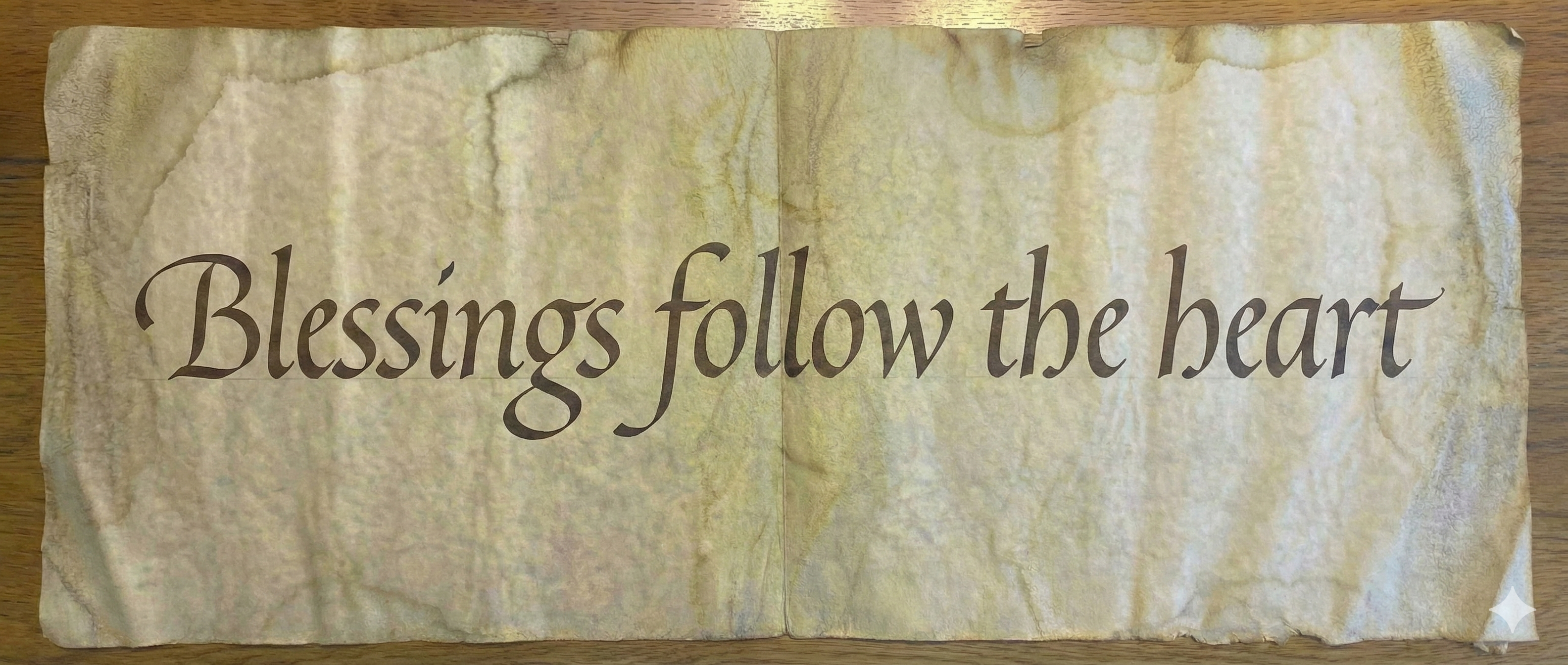
Humanist Script, with its natural lines and balanced rhythm, is the most suitable writing system for rebuilding a sense of self-respect.
- Sentence writing:I am worthy of care.
- It is recommended to use a wide-tipped fountain pen or dip pen to slowly draw out each transition, making the connection between letters as even as breathing.
- Observe your body while writing: Do you tense up when you write "worthy"? Do you relax when you write "care"? These are your psychological cues.
Lesson 1029: Self-Worth Restoration - Guided Drawing
Objective: To demonstrate how a "broken self" can be reconnected.
step:
● Draw a circle on a piece of paper to symbolize your true value, without judgment;
● Draw fragments of varying sizes around the center, representing parts of your past that have been hurt or doubted;
● Do not piece the pieces together; simply ensure they all fall within the circle.
● Finally, write a sentence outside the circle: "You are here, I see you."“
This is a symbolic process of putting the "broken" back into the whole; it requires no logic, only permission.
Please log in before submitting your drawings and feelings.
○ 1029. Trauma and Impaired Self-Worth: Journaling Guidance Suggestions
① Write down a memory of the first time you felt "I'm not good enough". It doesn't have to be very significant, just real.
② What misconceptions were implanted in you at that moment? (For example: I must be perfect to be worthy of love)
③ How would you reinterpret that situation now? Write a new narrative.
④ List one "small but steady good deed" that you would like to do for yourself today.
⑤ End with a self-affirming statement: "Even if I am not perfect, I still have value."“
Please log in to use.
Trauma may diminish your self-worth, but it won't erase it. You are gradually regaining your sense of wholeness.