

Lesson 1100: Recovery and Self-Care from Complex Psychological Trauma
Duration:75 minutes
Topic Introduction (Overview):
Recovery from complex psychological trauma is never linear, nor is it a single path from "injury" to "healing." Instead, it's a recurring cycle: stabilization, triggering, reconstruction, regression, and re-stabilization. The core of the recovery process is not suppressing the past, nor forcing oneself to "get better quickly," but learning how to find oneself again amidst triggers. This course focuses on the deeper concept of self-care—it's not simply about rest and relaxation, but about establishing a daily system that allows the body, emotions, and life structure to gradually return to stability.
Recovery requires you to learn to distinguish between "I am being hurt again" and "I am re-experiencing, but it is safe in this moment"; to learn to listen to your body's limits; to learn to stabilize your life with rhythm, diet, sleep, and boundaries; to learn to find anchor points in flashbacks; and to learn to establish new order in chaos. A mandala is not about drawing something, but about observation—observing how triggers come and go; observing how emotions transform from chaos to a traceable path; observing how you gradually detach yourself from the past and regain possession of the present.
▲ AI Interaction: Reconstructing the Rhythm of Trauma Recovery
Triggering does not equal failure; it is the trauma system telling you, "This area still needs care."
Please write down three questions and let the AI help you explore them:
① What was the most recent trigger? (Describe it in one sentence)
② What changes did your body experience at that time? (Chest tightness, numbness, rapid heartbeat, etc.)
③ If you were allowed to slow down, what would be the first safety step you would want to take next time?
Recovery is not a one-time event, but a continuous process of learning to create small footholds for oneself amidst the chaos.
Click the button below to guide your recovery process with AI.
○ Self-care and music therapy
Choose a piece of music that creates the feeling of being "gently lifted up." It doesn't need too many melodic variations, but it should have a steady sense of breathing rhythm.
While playing, keep your feet firmly planted, gently close your eyes, and slowly inhale and exhale along with the music.
If random images appear in your mind, don't try to banish them. Just tell them in your heart, "I see you."“
This way, the body can relearn that "security is not given from the outside, but can be built from within."
○ Eastern Healing Tea: Black Date and Longan Warming Tea
Recommended drinks:A calming and soothing tea made with black dates, longan, and a small amount of ginger.
Black dates warm and nourish the blood and qi, longan calms the nerves and aids sleep, and a trace amount of ginger can stabilize the stomach and improve a cold constitution or low energy caused by trauma. People with complex trauma are often in a state of "constant sympathetic alertness" for a long time, so the focus of this tea is not on strong supplementation, but on "slow repair" to allow the body to cope with daily stress.
Usage: After brewing with hot water, let it sit for 5 minutes. When taking the first sip, exhale slowly to give your body a signal that "I can stop now".
○ Chinese Food Therapy: Lotus Seed and Lily Bulb Soup for Calming the Mind
Lotus seeds have the effect of strengthening the heart and calming the mind, while lily bulbs can clear the heart and moisten dryness. The combination of the two is very suitable for the complex trauma recovery period of long-term anxiety, sleep fluctuations, and restlessness. Trauma is not just psychological trauma; it can affect the digestive system, sleep structure, and energy levels. Therefore, "soup therapy" is a deep self-care method from the East—it allows the body to settle down first, so that the mind can slowly recover.
It's recommended to drink this at least twice a week as part of your "stable life ritual." While it's simmering, try quietly watching the tiny bubbles slowly rise to the surface, as if your body is gradually releasing tension. The mandala isn't about drawing anything; it's about observation—watching a pot of soup slowly become clear, which is also watching your own rhythm of recovery.
Healing Recipes
/home2/lzxwhemy/public_html/arttao_org/wp-content/uploads/cookbook/ye-zi-shui-bo-he-cha.html(Please confirm that the following has been uploaded: ye-zi-shui-bo-he-cha.html)
○ Dream Mandala Healing · Mi Xiangwen 1100 · Finding Stability Amidst Chaos
Imagine you're standing in a constantly changing landscape: the sky flickers between light and dark, the ground is sometimes solid and sometimes loose, and distant buildings seem like fragments of memory, pieced together and then crumbling. You don't rush to find a way out; you simply stop and feel the ground beneath your feet. Though imperfect, it's enough to bear your weight in this moment.
Let this scene be the image of a mandala: the center is the moment you stand, and the outer circle represents the chaotic landscape. You don't need to change them, nor do you need to understand them; simply observe—observe how the wind passes through you, observe how the broken lines reconnect somewhere. A mandala is not about drawing something, but about observing: in observing, you find your place, "I am still here."

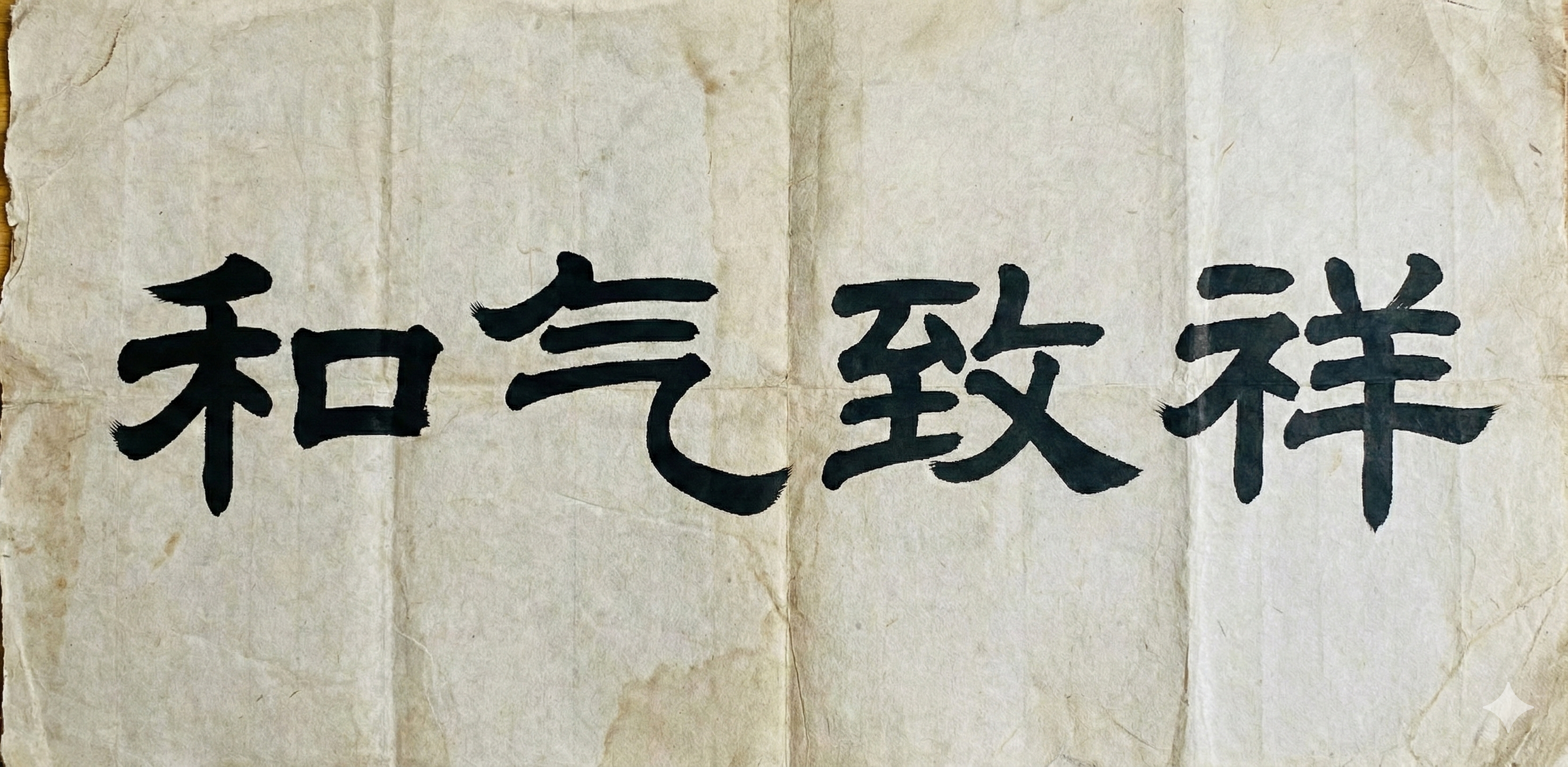
○ Running script - Writing self-care sentences
The rhythmic flow of running script can help you find calming lines amidst complex emotions.
- Written words:Self-protection and recovery.
- English equivalent:I return to stability with gentle self-care.
- Practice Tips:When writing "self-protection," slow your strokes slightly, as if you are covering yourself with a soft layer of protection; when writing "restoration and stability," lengthen the horizontal strokes smoothly, symbolizing that you are restoring the foundation of your life. After writing each word, pause for 2 seconds, look at the handwriting, and let the act of looking itself become a practice of calming down.
Lesson 1100: Recovery and Self-Care - Guided Drawing
Objective: To visually organize inner chaos and find "a small area that I can take care of first".
Steps: Draw a large circle on a piece of paper to symbolize your living space. Divide the circle into three areas: ① Physical needs; ② Emotional needs; ③ Structural needs. In each area, place one small thing you most want to take care of at that moment. You don't need to write a sentence, just a few words, such as: "sleep," "drink water," "don't blame yourself," "walk for 10 minutes," "reduce noise," "eat at a fixed time every day."
Once finished, draw a lighter line around the outside of the large circle to symbolize a "safety boundary." Quietly observe your drawing, without judgment or analysis, simply observe: "My life has these needs, and I am finding a place for them." This is the beginning of restoration.
Please log in before submitting your drawings and feelings.
○ 1100. Recovery and Self-Care from Complex Psychological Trauma: Journaling Guidance Suggestions
① Write down what part of your body needs the most care today? (Stomach, neck and shoulders, sleep, appetite, etc.)
② Write down what part of your emotions needs the most care today? (fear, anger, fatigue, numbness, etc.)
③ Write down "one lifestyle structure" (sleep, routine, diet, boundaries) that you most want to fix first.
④ Looking back on the past year, have you noticed any small changes? List three details.
⑤ Write yourself a simple promise: "I allow myself to recover slowly."“
⑥ Write a concluding sentence on the last line: Even though I am not yet stable, I still deserve to be cherished.
Please log in to use.
There is no end to the recovery from complex trauma, but every act of self-care is a glimmer of light you ignite for your life.