

Lesson 1106: Psychological Reactions After Disasters and Accidents
Duration:75 minutes
Topic Introduction (Overview):
When sudden events such as earthquakes, fires, car accidents, explosions, and collapses occur, people's minds do not immediately "recover rationality." Instead, they experience a period of confusion, numbness, and excessive alertness: some people tremble and become speechless, while others remain unusually calm and busy caring for others; some are repeatedly awakened by flashbacks and nightmares at night, while others work during the day as if nothing has happened, yet are highly alert to any slight noise. This lesson will help you understand that these reactions are not equivalent to "collapse" or "vulnerability," but rather the nervous system's instinctive protective mechanisms in the face of extreme threats.
We will trace the stages of psychological reactions after disasters and accidents: from acute shock and dissociative numbness, to guilt, self-blame, anger, and regret, and finally to belated grief and helplessness. At the same time, you will learn how to distinguish between normal acute reactions and persistent symptoms that may develop into acute stress disorder or post-traumatic stress disorder. Mandalas are not about drawing something, but about observing—this course invites you to practice quietly observing your own inner fluctuations, watching how those unbearable images repeat, distort, and gradually become understandable in your mind, thus slowly and authentically rebuilding a sense of security after the disaster.
▲ AI Interaction: Self-Assessment of Post-Disaster Psychological Reactions
After a sudden disaster or major accident, many people's first reaction is: others are in worse shape, I shouldn't be so sad, so they hurriedly suppress their feelings.
First, acknowledge that you were also present, that you were also startled, and that your reaction was justified, not just "being dramatic."
You can start by writing down the three most noticeable changes in you recently:
- For example: shallow sleep, vivid dreams, being awakened by nightmares;
- Or: Exceptionally sensitive to sound, light, and smell;
- Or: Emotions fluctuate wildly, suddenly break down or become completely numb.
Then write down the reaction you are most afraid of being misunderstood: Is it "looking too calm" or "looking too vulnerable"?
Click the button below to let AI analyze these reactions: which are normal post-disaster responses, and which require further attention and support.
○ Sound Grounding: Post-Disaster Sense of Security Music Exercise
A common experience after a disaster is that "I feel like I'm suspended in mid-air." Although my body is sitting in a chair, my mind is still stuck in that moment of loud noise, impact, or scream.
Please select a piece of instrumental music with a stable rhythm and no sudden bursts, and keep the volume at a low to medium level.
Do a short exercise:
- Close your eyes and focus your attention on the most stable rhythmic point in the music, as if you were counting a safe rope.
- While counting the rhythm, gently place your feet on the ground, reminding yourself, "I am in this moment, not at the moment the accident happened."
- If a flashback scene suddenly appears, don't try to get rid of it. Just let the music and the ground beneath your feet exist simultaneously, as if you are watching two paintings at the same time.
Mandala drawing is not about drawing something, but about observing; in this exercise, you simply observe the overlap of music and memories in your body, rather than forcing yourself to forget.
Aromatherapy Drinks - Formula for Relieving Post-Disaster Fright
Recommended drinks:A calming and aromatic hot drink made with lemon balm and orange blossom.
In the days following a disaster or accident, the nervous system is often in a state of constant "high alert": even the slightest noise can cause immediate tension and a sudden increase in heart rate. Lemon balm is widely used to relieve anxiety, palpitations, and gastrointestinal tension after fright, while the aroma of orange blossom helps to soothe the "suspended" chest and allow breathing to gradually settle down.
Usage suggestions:Take about 3 grams of dried lemon balm leaves and a small amount of orange blossom. Pour in hot water, cover, and steep for 5–7 minutes. Do not drink immediately. First, breathe slowly over the cup, allowing the aroma to circulate between your nasal cavity and chest several times, then sip slowly.
Each inhale, exhale, and swallow seems to tell the nervous system, "The danger has passed, and I am slowly returning."“
○ American Natural Diet: Warm Root Vegetable Recovery Bowl
American naturopathic diets emphasize natural, minimally processed foods rich in fiber and micronutrients to help the nervous system recover from stress. This lesson recommends a "Warm Root Vegetable Recovery Bowl": featuring baked sweet potatoes, carrots, and a small amount of squash, paired with a handful of cooked quinoa and a few nuts. Root vegetables help provide a sense of stability, while the protein and healthy fats in quinoa and nuts provide the brain with gentle, sustained energy.
In the aftermath of a disaster, people often don't eat properly; they either have no appetite at all or just eat some sugary snacks to get through it. By providing a hearty and gentle meal, you are sending a message to your body: life can still be taken care of slowly, and recovery is not an abstract matter, but rather a process of repeatedly returning nutrients to the body and keeping your body warm.
Healing Recipes
/home2/lzxwhemy/public_html/arttao_org/wp-content/uploads/cookbook/a-yu-fei-tuo-xiang-liao-nai.html(Please confirm that the following has been uploaded: a-yu-fei-tuo-xiang-liao-nai.html)
Dream Mandala Healing · Mi Xiangwen 1106 · A Quiet Center in a Fragmented Scene
In your dream, you return to the accident scene: the lights flicker, debris is scattered on the ground, and people are talking in the distance, but you can't make out what they're saying, only intermittent sounds remain. Your instinct is to run away, but your feet seem glued to the ground, and you can only stand there, watching everything unfold repeatedly in slow motion.
Suddenly, you notice the fragments slowly moving towards the center, as if someone is silently tidying them up. Glass, stones, paper, scattered objects—all follow unseen paths, circling round and round. You don't reach out to piece them together, nor do you force yourself to forget; you simply watch quietly as the fragments return to their places. A mandala isn't about drawing something, but about watching—watching how memories, from chaotic scattered points, gather into visible, named, and placed patterns. At this central point, you don't need to bear responsibility for anyone, nor do you need to immediately forgive or let go; simply allow yourself to be a witness.
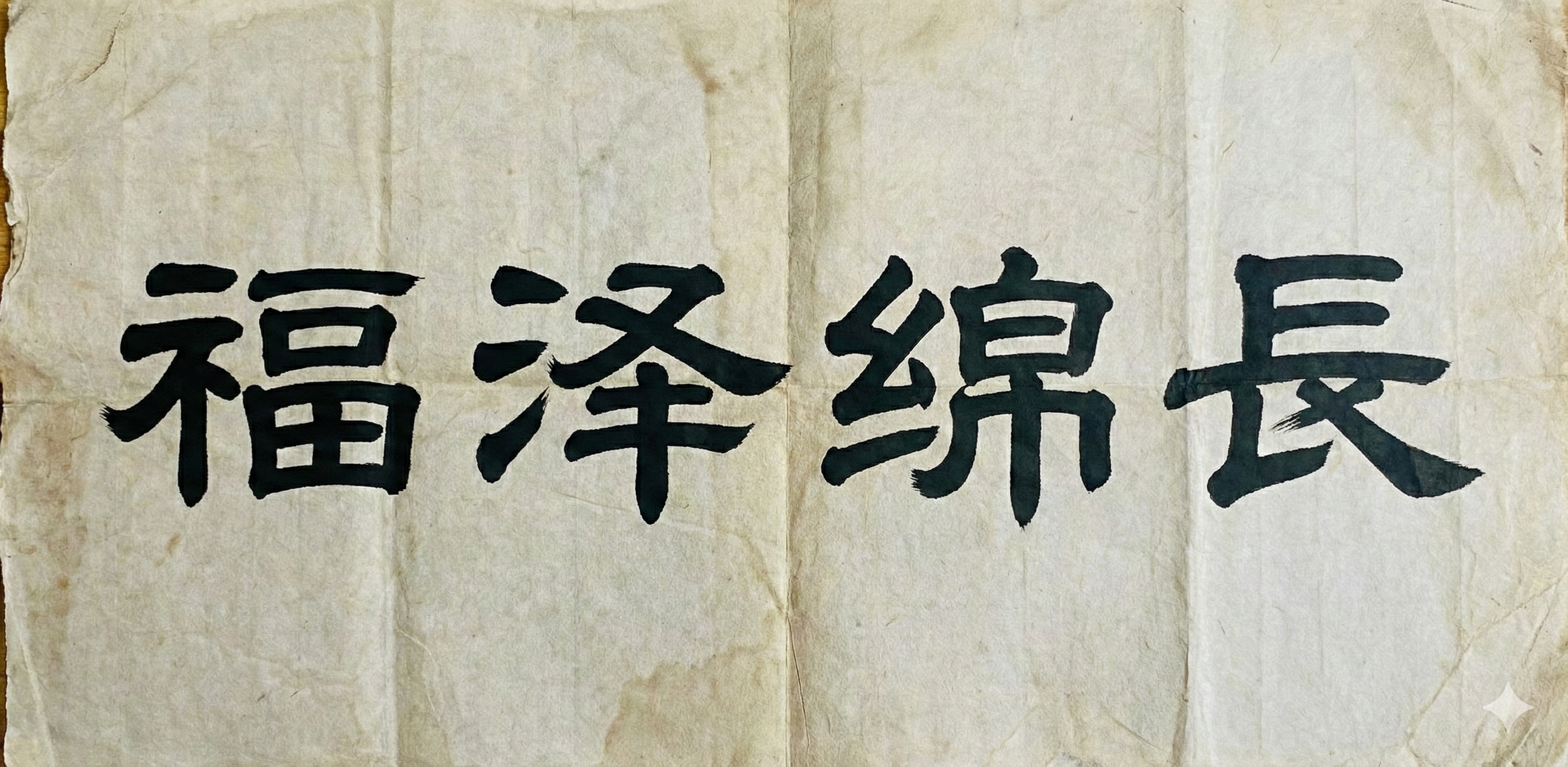
○ Medieval Gothic calligraphy: “I survived, I am still here.”
Gothic calligraphy, with its firm lines and tight structure, is suitable for practicing a sense of "stability with boundaries" after a disaster. You can prepare a slightly thicker sheet of paper and slowly write sentences:
- English sentences:I survived; I am still here.
- Chinese equivalent:I've been through all of this, but I'm still here.
- hint:As you finish each vertical stroke, let your breath fall softly, as if you're marking a small "I'm still here" mark on the paper.
As you watch these black lines line up neatly on the paper, stroke by stroke, you are also watching your own ability to reorganize your life.
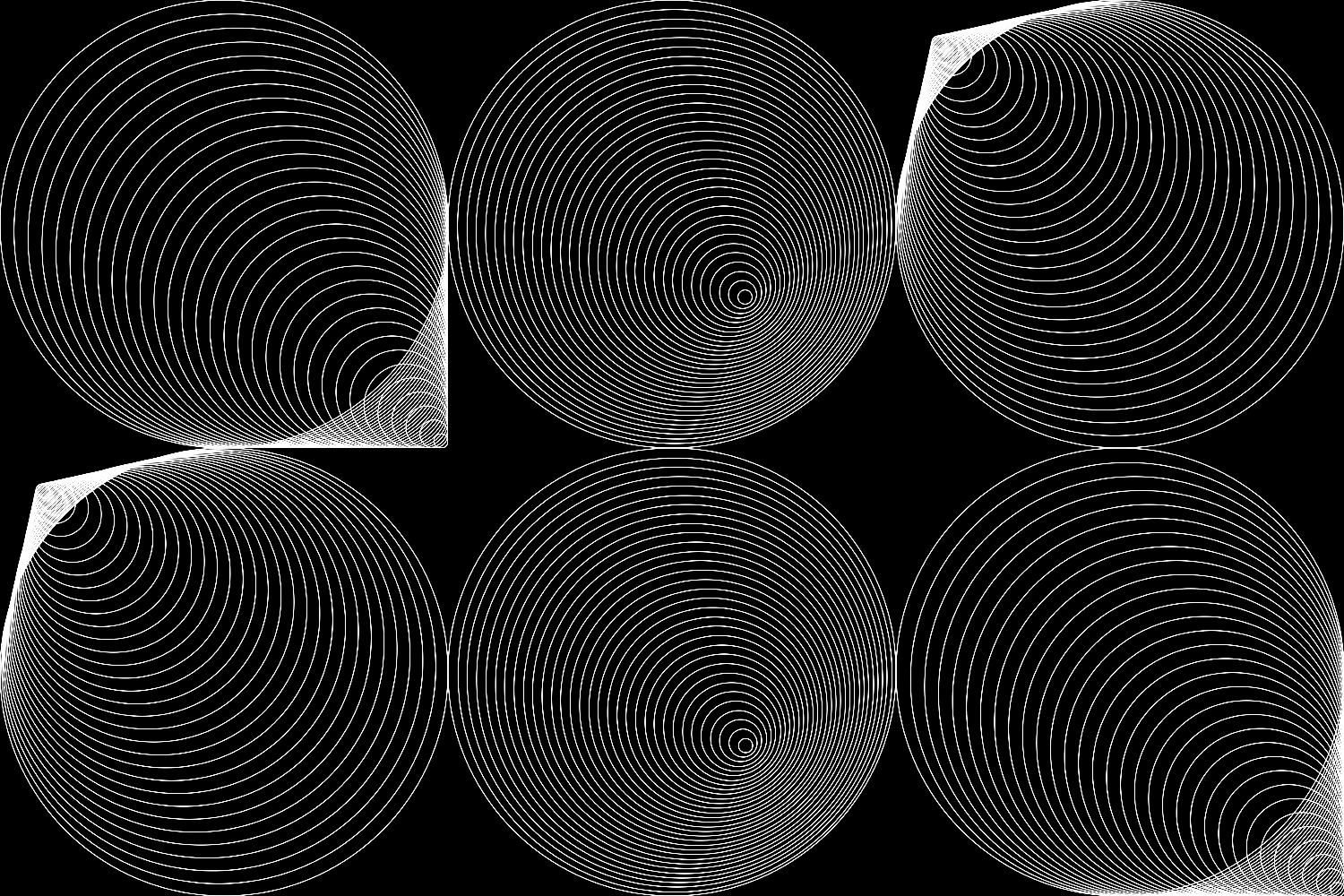
Lesson 1106: Post-Disaster Psychological Reactions - Guided Mandala Viewing
Purpose:By observing mandalas, one can transform inner fear, numbness, and slow recovery into an observable rhythm, rather than suppressing or forcibly forgetting them.
step:
Find a mandala image that gradually extends outwards. First, focus your gaze on the center, noting whether it is quiet and empty, or full of chaotic details. Then, slowly move your gaze along a line you like: notice which circle your body begins to tense slightly, your breathing becomes shallow, or images related to disaster surface in your mind.
There's no need to judge. Just mentally mark it: "This is the circle where I feel most uncomfortable." Then, move your gaze to the outer layers of the pattern, looking for the shape or color that makes it a little easier for you to breathe. A mandala isn't about drawing something; it's about observing—you're simply observing which layers you feel stuck at, and which layers you slowly find a little bit of room to maneuver.
If possible, jot down your observations: which ring resembles the debris at an accident scene, which ring resembles the people helping afterward, and which ring resembles you now. Observation itself is a gentle form of sorting out.
Please log in before submitting your drawings and feelings.
○ 1106. Psychological Reactions After Disasters and Accidents: Journaling Guidance Suggestions
① Was there a moment today that suddenly reminded you of that disaster or accident? Please write down the trigger (sound, image, smell, news, etc.).
② What are the three most common psychological reactions you've had lately? For example: spacing out, irritability, being prone to crying, being unusually rational, or being overly busy.
③ Of these reactions, which is most likely to be misunderstood? How will it be misunderstood? And what are you really trying to express?
④ Write down a detail that you still regret or feel guilty about, and then add a sentence: "In that situation, I did my best because...".
⑤ Imagine an ideal supporter sitting across from you right now. What three things would they say to you? Write them down truthfully, without judgment.
⑥ Finally, to summarize today's state in a sentence or two: "My current reaction is not strange; it just tells me how important this matter is to me."“
Please log in to use.
Disasters and accidents leave behind not only visual images, but also slow and complex psychological ripples. May you discover, in understanding these reactions, that you are not "malfunctioning," but rather striving to survive and gradually moving towards recovery.