

Lesson 1108: Public Health Events and Collective Trauma
Duration:75 minutes
Topic Introduction (Overview):
When a public health emergency occurs—a pandemic, an outbreak, prolonged isolation and lockdown, strained medical resources, and persistent death and infection numbers—people experience not only fear of the disease itself, but also a shattered sense of normalcy and a collapse of collective security. You may not be directly infected, but the prolonged bombardment of news, social distancing, economic pressures, and interpersonal distrust can slowly lead to exhaustion, numbness, irritability, and a loss of faith in the future. Collective trauma, like an invisible fog, envelops the entire society and quietly seeps into the body and mind of every individual.
This course will guide you through understanding the mechanisms of "collective trauma" in public health emergencies: not only the fragmentation of individual memories, but also the tension in group relationships, the erosion of trust, and complex emotions towards institutions and others. We will explore how information overload, rumors, stigmatization, and controversies surrounding epidemic prevention can deepen psychological trauma, and we will also help you identify which feelings are "normal collective reactions" and which signs indicate the need for further assistance. A mandala is not about drawing something, but about observing—this course invites you to observe how you are caught up in massive collective fluctuations, and also to observe how you still possess small but real choices and connections within these fluctuations.
▲ AI Interaction: From "Everyone's Having a Hard Time" to "I Also Deserve to Be Seen"“
During public health emergencies, it's easy to hear voices like, "Others are having a harder time, I shouldn't complain." or "This is a global problem, I need to be strong." So you quietly suppress your sadness, anxiety, and anger deep inside.
Now give yourself some space and write down your true feelings from three perspectives:
- ① What were you most afraid of during the event? (The illness itself, losing loved ones, financial support, being isolated, being blamed, etc.)
- ② Among epidemic prevention measures, information disputes, and the behavior of others, which scene hurt or confused you the most?
- ③ When you say "I don't want to watch the news anymore" or "I'm so tired," how do people around you usually respond? How does this make you feel?
Finally, add a sentence that begins with "Although everyone is having a hard time, I am also..." to extricate yourself from being a mere "bystander".
Click the button below to let AI analyze how to simultaneously see "us" and "myself" in collective trauma.
○ Information Noise and Quiet Rhythm: Voice Adjustment Exercises
During public health emergencies, news feeds, social media, and group chat messages act like endless noise, keeping the nervous system in a state of constant alert. If you constantly feel like your "brain is always running and can't stop," it might not be that you're overthinking it, but rather that your brain is being forced to process the constant influx of information at a high capacity.
Practice suggestions:
- Choose a simple piece of music with pure instrumental music and a steady rhythm, or natural ambient sounds (rain, breeze, stream).
- Set a 10-15 minute timeframe during which you should turn off push notifications and mute messages.
- Let your attention follow the slowest, most repetitive rhythm in the music, as if you are emptying your mind of all the news of the day;
- If feelings of unease or guilt arise (such as "I should be more concerned about the pandemic"), tell yourself, "I am not running away, but restoring my ability to process information."“
Mandala drawing is not about drawing something, but about observing; you are simply observing yourself taking a step back from the flood of information and allowing your inner rhythm to reappear.
Aromatherapy Drinks: Soothing Support Amidst Collective Anxiety
Recommended drinks:A soothing and aromatic hot drink made with lavender and lemon verbena.
During the ongoing public health crisis, people often experience a sense of unease, with numbers changing daily, policies constantly shifting, and plans frequently disrupted. Prolonged uncertainty can keep the sympathetic nervous system in control, leading to shallow sleep, muscle tension, irritability, and fatigue. Lavender helps soothe nervous tension and improve sleep quality, while the refreshing aroma of lemon verbena can gently uplift the mood and alleviate feelings of depression and stagnation.
Suggested use: Take about 1–2 grams of dried lavender flowers and 2–3 grams of lemon verbena leaves, steep in hot water at 80–90 degrees Celsius, cover and let stand for 5 minutes. Before drinking, slowly inhale three times near the tip of your nose, observing which parts of your body slightly relax as the aroma enters. A mandala is not about drawing anything, but about observation—at this moment, you simply observe how the aroma passes through your nasal cavity, trachea, and chest cavity, allowing yourself a brief escape from numbers and news, returning to this still-persistent body.
○ American Natural Diet - Stress-Relieving Vegetable and Grain Energy Bowl
During the prolonged public health crisis, many people's eating habits have shifted to "eating whatever," "making do with takeout," and "using snacks and coffee to cope with fatigue." The American naturopathic diet emphasizes whole grains, high-quality protein, and plenty of vegetables to stabilize blood sugar and hormone fluctuations, allowing the brain to maintain energy for clear judgment even under high pressure. This lesson recommends a "Stress-Resistant Grain and Vegetable Energy Bowl": a base of brown rice or quinoa, topped with steamed broccoli, carrots, and chickpeas, and then garnished with a small amount of avocado or olive oil.
Brown rice and quinoa provide slow-release carbohydrates, helping to prevent mood swings caused by large fluctuations in blood sugar; broccoli and carrots are rich in vitamins and antioxidants, supporting immune and brain function; chickpeas and avocados provide plant-based protein and healthy fats, prolonging satiety and reducing the vicious cycle of anxiety-induced overeating or "no appetite." When you prepare a bowl of food like this for yourself, it's not just about "survival," but about firmly putting your body back in the realm of care during a public crisis.
Healing Recipes
/home2/lzxwhemy/public_html/arttao_org/wp-content/uploads/cookbook/a-yu-fei-tuo-xiang-liao-tang.html(Please confirm that the following has been uploaded: a-yu-fei-tuo-xiang-liao-tang.html)
Dream Mandala Healing · Mi Xiangwen 1108 · Concentric Circles Above the City
In your dream, you stand above a vast, empty city, the streets seemingly paused: streetlights are on, shop signs are dark, and shadows flicker behind windows. Some windows emit coughs, others whispers of television news, and still others are utterly silent. Suddenly, you see the city lights begin to flicker rhythmically, as if spreading outwards in concentric circles of light from the center.
Then you realize that each circle of light represents a different emotion: fear, anger, confusion, mutual blame, mutual care, weary perseverance… They are not mutually exclusive, but rather collectively form the texture of this collective trauma. You don't try to erase any circle, but simply stand quietly at a high vantage point and observe: which circle is closest to you, which resonates with you most strongly. The mandala is not about drawing something, but about observing—observing how the city emits a faint yet resilient light in the darkness, and observing how you simultaneously belong to "the vast majority of people" and "that breathing individual." You are no longer just a submerged dot, but a clear line in this circle of light.
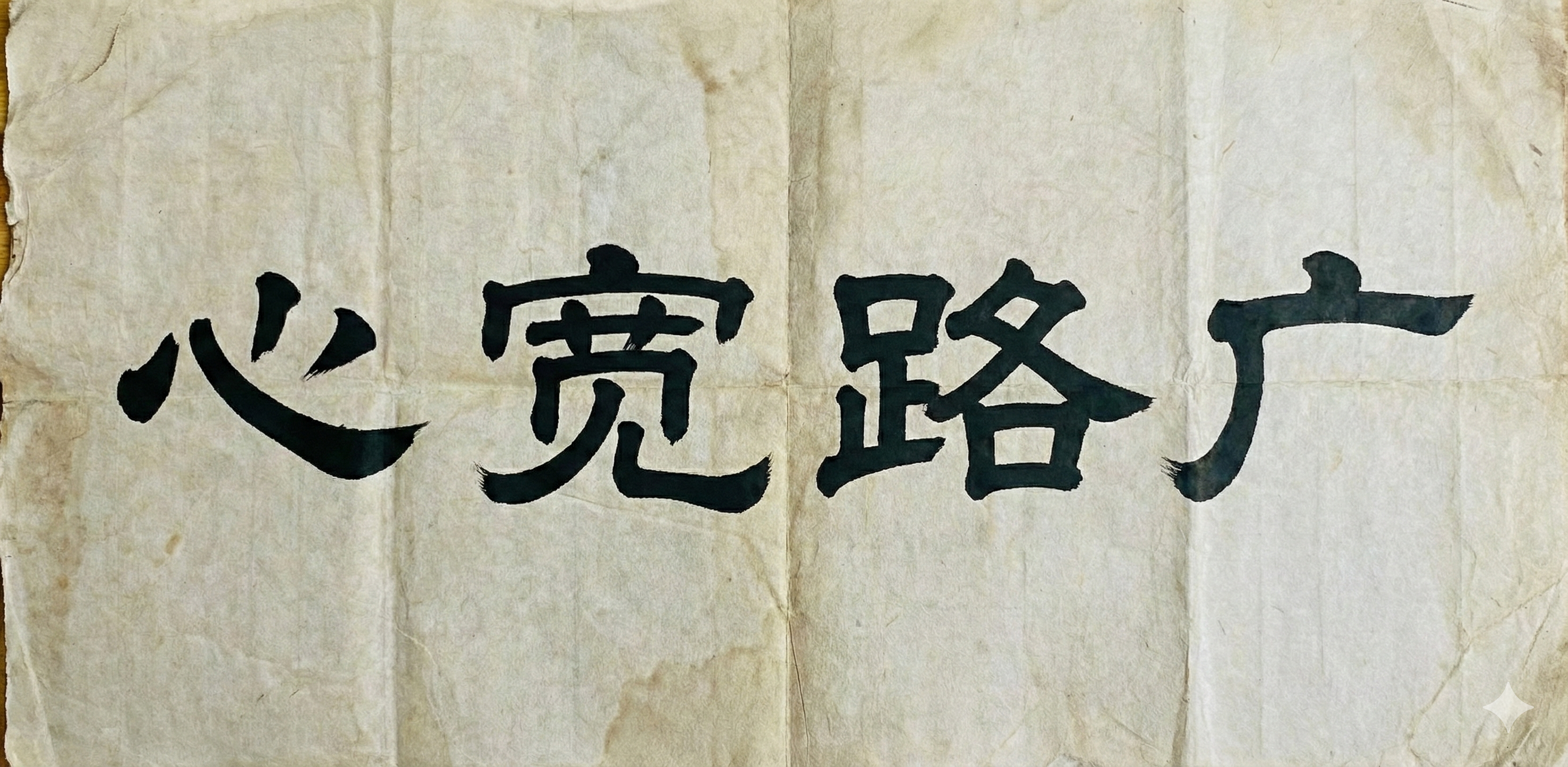
○ Medieval Gothic calligraphy: “I am not alone in this.”
The sense of isolation brought about by a public health crisis can easily make people feel like "only I can't hold on" or "only I'm secretly collapsing." Gothic calligraphy, with its compact structure and distinct rhythm, is suitable for practicing a feeling of "standing shoulder to shoulder with others while still maintaining one's individuality."
- English sentences:I am not alone in this.
- Chinese equivalent:I am not alone in this incident.
- Writing Tips:Try writing this sentence repeatedly on the same line, making each word like a closely packed brick, yet with small gaps between them. After each line, stop and look at the overall shape of the line, not just individual letters—as if watching "many selves" lined up, supporting each other.
As you watch these black, square characters appear line by line, you are also practicing: I can still see my own outline in the crowd.
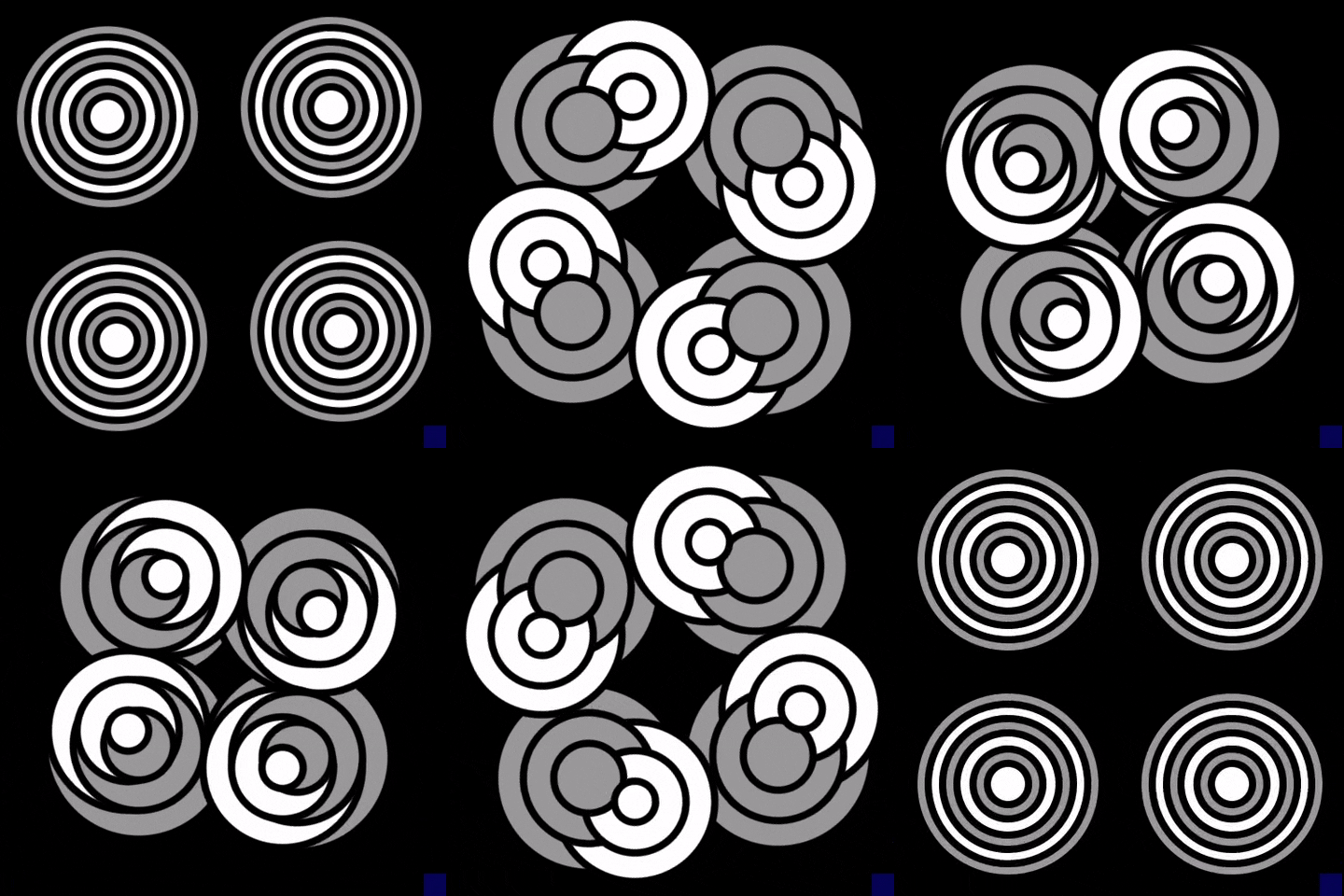
Lesson 1108: Public Health Events and Collective Trauma - Mandala Viewing Guide
Purpose:By viewing mandalas, one can transform the "massive collective event" into a layered and distant image in their mind, rather than an overwhelming fog.
step:
Find a mandala image radiating outwards from the center, with multiple concentric rings. First, focus your gaze on the center, imagining it as a simple timeline: daily life before the event. Notice how you feel about this point—nostalgia, distance, unfamiliarity, or reluctance to look too closely. Then slowly move your gaze outwards, asking yourself with each ring: If this ring represents a phase of a public health event, when does it resemble? Is it the initial panic? The mid-term exhaustion and debate? Or the later numbness and fading of awareness?
There's no need to force yourself to "give meaning" or draw lessons. Just honestly describe: "This circle reminds me of...that circle makes me feel..." A mandala isn't about drawing something, but about observing—observing how you simultaneously contain fear, anger, sadness, and hope in the same image, and also observing that you've already gained the ability to step back from the center and become a witness to this collective trauma, instead of just being one of the people swallowed up by it.
Please log in before submitting your drawings and feelings.
○ 1108. Public Health Events and Collective Trauma: Log-Based Guidance Suggestions
① Write down three of your most unforgettable images: these could be news footage, street scenes, family moments, hospitals, face masks, or empty cities, etc.
② In these three scenarios, what role do you play? Observer, caregiver, person being cared for, executor, or simply a silent witness?
③ Throughout this experience, whose attitude hurt you the most? And whose actions supported or warmed you the most? Please give one example for each, and be as specific as possible.
④ Write down a question that you are still struggling with, such as "Should I have done more back then?" Then try to respond to yourself with "Given the information and conditions at the time, I had already..."
⑤ Imagine a child or younger relative asking you in the future, "What did that public health event leave you with?" How would you answer in three sentences? It doesn't have to be lofty, just truthful.
⑥ Finally, I'll end today's writing with a sentence that begins with "In this collective trauma, I began to learn...", so that I can see the little bit of strength that has been quietly honed.
Please log in to use.
The collective trauma caused by public health events will resonate in various ways for a long time. But in the process of observing, writing, and gently caring for yourself, you have the opportunity to transform these echoes from mere oppression into a new understanding of life and connection.