

Lesson 1188: The Illusory "Function Enhancement" and Risk Identification
Duration:75 minutes
Topic Introduction (Overview):
Many people experiencing bipolar II disorder have moments like this: suddenly feeling more energetic, sleeping less but not feeling tired, having a plethora of ideas, increased work efficiency, and more proactive socializing—all of this seems like "finally returning to normal or even becoming better." This phase is often mistaken for improved condition, even seen as "being your best self," but clinically, it often corresponds to hypomania. The danger of hypomania lies not in how badly one behaves at the moment, but in the fact that it uses the guise of "functional improvement" to quietly mask the high risks of impaired judgment, impulsive decision-making, and subsequent emotional downturn.
This lesson will help you identify the "illusory boost" of hypomania: Why do you feel smarter, more confident, and braver than usual during that phase, only to later feel regret, burnout, and interpersonal conflict? We will break down the signs of hypomania from four dimensions: sleep, consumption, commitment, and emotional rhythm, and learn how to set gentle yet clear safety boundaries for yourself without stifling your vitality. Mandala drawing isn't about creating something, but about observation—observing whether that seemingly "exceptionally capable" version of yourself is a genuine recovery or a warning sign of an underlying illness.
▲ AI Interaction: Is this a genuine recovery, or just a false sense of calm?
Think back to the last time you felt "especially capable and especially excited":
① How was your sleep during those days? What changes occurred in your sleep onset time, total sleep duration, and how did you feel upon waking?
② Did you make any decisions during that period that you wouldn't normally make, such as suddenly enrolling in a lot of courses, taking on a lot of work, making impulsive purchases, or engaging in intensive social interactions?
③ When that high-energy period ends, are you feeling relaxed and stable emotionally and physically, or do you experience significant fatigue, depression, or regret?
Write down these details, then click the button below to work with AI to distinguish between "realistic restoration" and "hysterical illusion," and build a gentler, safer observation framework for yourself.
Identifying Light and Restless Rhythms: Music Therapy Exercises
Choose a song that starts upbeat, gradually speeds up, and ends with a slightly tiring feeling, and listen to it all the way through.
On the first listen, focus only on the rhythm: when do you start to feel "a little too much" or "a little out of breath"?
On the second listening, treat the first half as "healthy vitality enhancement" and the middle and latter half as "light restlessness and transgression": Ask yourself - which part am I familiar with? Where do I usually tend to stop?
Music doesn't need to tell you right or wrong; it simply helps you practice in a safe space how to identify the subtle dividing line between "becoming more energetic" and "starting to lose balance."
Herbal healing teas: refreshing teas that balance excitement and tranquility.
Recommended recipe:A small amount of green tea + chamomile + lemon balm.
Green tea provides a gentle, non-overly refreshing feeling, perfect for a mild boost during a "recovery period"; chamomile helps relax the nervous system and prevents sudden energy spikes; lemon balm helps relieve anxiety-like tension, allowing for clear thinking without over-excitement. The combination of these three is more like a "balancing tea" than a purely energizing drink.
When you feel significantly better and are more inclined to "do a lot of things at once," it is recommended to slowly sip a cup of this herbal healing tea, focus your attention on your breathing and the taste, and tell yourself: "I welcome the energy, but I also need to take care of myself tomorrow."“
Canadian Maple Diet: The Maple Breakfast Bowl for a Stable Rhythm
During periods of hypomania, people often skip meals and replace whole meals with sugary snacks, further amplifying energy and mood fluctuations. Drawing inspiration from the Canadian Maple Diet, a "small amount of pure maple syrup" can be placed on a fiber- and protein-rich base: first oats or other whole grains, then plain yogurt, nuts, and a small amount of fruit, and finally just a thin layer of maple syrup on top.
Instead of pushing yourself to a state of heightened alertness with excessive coffee and sweets, try this calming maple breakfast bowl to allow your blood sugar to rise and fall slowly and steadily. A stable eating rhythm will help you better discern whether the "functional boost" you experience is sustainable energy or just a prelude to a short-lived surge and eventual depletion.
Healing Recipes
/home2/lzxwhemy/public_html/arttao_org/wp-content/uploads/cookbook/maple-1188(Alternatively, you could try relaxed="1" or use an existing filename.)
Psychological Mandala Healing · Mi Xiangwen 1188 · Acceleration in the Aperture
Imagine a mandala: at its center is a gentle lamp, its light steadily spreading outwards. At a certain moment, the light in the outer ring begins to subtly accelerate, its colors becoming brighter, hotter, and sharper. You feel as if you're standing at the edge of the halo, being propelled forward—to speak more, make more plans, and agree to more promises. In that moment, you feel incredibly clear-headed and efficient, as if you've finally become the person you've always wanted to be.
But when you sit quietly and simply observe this mandala, you'll discover that the light at the center never demands you run so fast; it's the acceleration of the outer rings that creates the illusion of "having to be this way." A mandala isn't about drawing something, but about observation—observing whether that "seemingly brighter" light is consuming your center, observing whether you can take a step back and return to that unchanging, quiet, and warm center.

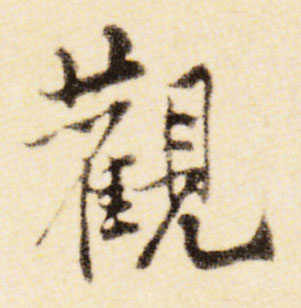






Chinese Calligraphy – Running Script: Writing "Not Excessive Clarity"“
The characteristic of running script is its fluidity with restraint: it is neither as restrained as regular script, with each stroke carefully controlled, nor as unrestrained as cursive script. It is very suitable for conveying themes about "being awake but not excessive" and "being active but not out of control".
- Written words:Sober and measured, without losing balance
- English equivalent:Bright, yet within bounds.
- Writing Tips:When writing "clear-headed," you can let your brushstrokes move slightly faster to convey vitality; when writing "moderation" and "balance," you should intentionally slow down and pause slightly, pausing briefly at the turning points. Through variations in the rhythm of your brushstrokes, you practice a new state on the paper: allowing yourself to shine, while also practicing not being dragged along by the speed of your light.
Lesson 1188: The Illusion of Enhanced Functionality Due to Restlessness · Guided Drawing
Objective: To draw out the "seemingly capable" self and the subsequent costs, making it easier for the brain to recognize the pattern.
Steps: Draw two adjacent scenes on a piece of paper. On the left, write "Now" and draw a seemingly organized figure with a full schedule of tasks. You can add multiple to-do lists, meeting icons, and social media chat boxes next to the figure. On the right, write "Afterwards" and draw the same person sitting wearily in a chair, surrounded by unfinished tasks, overdue bills, or a dejected expression. Finally, draw a small arrow between the two images and write "Illusory Functionality Improvement?"
After you finish, don't rush to judge whether it's right or wrong. Just quietly look at these two paintings and ask yourself: If I encounter a similar "super-efficient period" again, would I be willing to give the person on the right a little more space and care in advance?
Please log in before submitting your drawings and feelings.
Lesson 1188: The "Illusory Functional Enhancement" of Hypoactivity - Log Guidance Suggestions
① Recall a period when you felt "you were in a particularly good state and highly efficient", and describe its specific performance in three sentences.
② Try to describe the objective changes in sleep, consumption, number of commitments, and interpersonal interactions during that period.
③ Record how you feel "afterward": whether you experience compensatory fatigue or stress in your body, emotions, interpersonal relationships, or work.
④ Write down a safety rule you can try, such as: "When I start thinking about three important things to do in a day, I reduce it to one first."“
⑤ Say something gentle to yourself: I'm not denying my own vitality, but learning to take care of the part of myself that needs to go the distance.
Please log in to use.
The "functional enhancement" during hypomania may seem like a gift, but it could also be a warning sign of a disease progression. Learning to recognize this illusion is not about becoming conservative or repressed, but about helping you enjoy vitality while protecting long-term balance and security.