

Lesson 1203: Early Repair Techniques for Daily Rhythm Imbalance
Duration:75 minutes
Topic Introduction (Overview):
For those experiencing bipolar II disorder, while the intensity of mood is important, what's more insidious and easily overlooked is the gradual deviation from their daily rhythm: sleep time slowly shifts from a stable 11 PM to the early morning, meals change from regular to alternating between overeating and skipping, the line between work and rest becomes blurred, and phones and messages keep the brain in a state of high arousal. What may seem like just a few days of disrupted sleep is actually paving the way for the next cycle of hypomania and depression. This course focuses on "early repair": how to identify the first signs of rhythm imbalance before a severe episode occurs, and how to gently and practically adjust lifestyles to get back on track.
We don't expect ourselves to instantly revert to a "perfect sleep schedule." Instead, we use small meals of porridge and tiny time anchors to gradually adjust: shifting our wake-up time forward by 15 minutes instead of skipping two hours; replacing the early morning scrolling with a cup of warm tea and a few pages of a physical book; drawing the line between "beginning" and "end" of the day within the stable lines of Roman script. A mandala isn't about drawing something, but about observation—by observing the images and records of daily rhythms, you'll discover that slight deviations can be gently pulled back, without always having to wait until emotions are completely out of control to realize it.
▲ AI Interaction: Discovering Rhythm Repair Points That Are Still Possible
First, honestly admit: In which three areas of your life have you "gone off balance" the most recently? Is it sleep, diet, or the work-rest boundary?
- ① Write down your ideal "day rhythm sample" (approximate times for waking up, three meals, work/study, relaxation, and falling asleep).
- ② Write down your most recent day, put the timelines side by side, and circle the three periods with the biggest differences.
- ③ Mark the point that you think is "the easiest to adjust first" (for example: reduce your phone time before bed from 2 hours to 30 minutes).
Click the button below to let AI help you translate these "rhythm shifts" into early warning signals: which are the warning signs of hypomania (less sleep, sudden increase in social interaction or ideas), and which are the warning signs of depression (procrastination, staying up late, loss of time awareness). Then, together we can design three "small, feasible" corrective actions, instead of unrealistic "fully returning to an ideal sleep schedule tomorrow".
An imbalanced rhythm isn't a sign of "lack of willpower," but rather your brain's way of telling you that you need a gentler, more suitable time structure. You don't have to be perfect; you just need to start fine-tuning.
○ Daily Rhythm Restoration · Music Guidance
Please choose a piece of music with a steady tempo and a length of about 8 to 12 minutes, and define it as your "morning start song" or "bedtime slow-down song". Play the same song at the same time every day, using music to help your body remember: "This is the signal for the start/end of today".
For the first half of the listening session, you only need to do very simple, repetitive actions: make the bed, tidy the table, and prepare a cup of black tea or a small bowl of porridge; for the second half, sit quietly for 2-3 minutes, feel your breathing and heartbeat, and silently repeat in your mind: "Now is the time to switch states." If you repeat this over a long period of time, your brain will gradually establish new conditioned connections between music and rhythm, helping the rhythm to shift from chaotic to predictable.
When you find yourself too lazy to even play this song, it's a warning sign: it means your rhythm is rapidly becoming unbalanced, and it's time to stop and take better care of yourself.
Chinese Tea Therapy: Rhythmic Anchor Point Exercises with Black Tea
Recommended reasons:Strong coffee and energy drinks often exacerbate irritability and anxiety, while gently brewed black tea is more suitable as a "rhythm cue"—not to completely energize you, but to help you rediscover the boundary between morning and afternoon in a hazy day.
I recommend choosing a black tea that you enjoy but isn't overly stimulating: such as Yunnan black tea, Qimen black tea, or lightly fermented Lapsang Souchong. Establish fixed drinking time windows, such as one cup between 9:00–10:00 AM and another between 3:00–4:00 PM, avoiding evening consumption. Each time you brew tea, silently repeat to yourself, "This is a time of clarity without excess." Treat brewing, holding the cup, and sipping as a gentle, self-communicating signal—I'm helping you remember the structure of your day, not pushing you to a higher and more chaotic pace with the tea.
○ Chinese Dietary Therapy: Millet and Red Date Morning Porridge
Drinking coffee on an empty stomach or skipping meals altogether in the morning is the starting point for many people's circadian rhythm imbalance. Millet and red date porridge, with its gentle complex carbohydrates and moderate sweetness, provides stable energy to the brain, preventing drastic fluctuations in blood sugar and reducing the likelihood of emotional outbursts and breakdowns at the start of the day. For those experiencing bipolar II disorder, this is a bowl of predictable stability that helps prevent hypomania from over-activating and depression from over-procrastinating.
You can make a simple commitment to yourself: during periods of blurred rhythms, don't demand elaborate meals, just make sure to prepare a small bowl of porridge for yourself every morning—even if you get up a little later, try your best to complete this step. This is not formalism, but rather using a consistent taste, temperature, and chewing rhythm to redraw a starting point for life that won't be swayed by your emotions.
Healing Recipes
/home2/lzxwhemy/public_html/arttao_org/wp-content/uploads/cookbook/zhou-xiao-mi-hong-zao-02(Alternatively, you could try relaxed="1" or use an existing filename.)Psychological Mandala · Power Thoughts 1203 · Repairing the Broken Time Loop
Imagine a mandala: the outer ring is a time circle composed of 24 small squares, each representing an hour of the day. You notice that some squares are painted too brightly—those are the times when you were overly excited and couldn't stop; some squares are almost blank—those are the hours when you were completely "out of control." The center, however, maintains a gentle halo, rotating unhurriedly.
Please simply observe this mandala, rather than rushing to "fill in all the blanks" or "darken all the bright squares." A mandala isn't about drawing something; it's about observation—observing how you, amidst the imbalances of daily life, still maintain a slowly rotating center. Perhaps you can choose one or two squares and gently paint a color slightly softer than the surrounding areas, symbolizing a small restoration "from extremes to moderation." Let your eyes follow the circle, then return to the center, and tell yourself: rhythm can be restored little by little, rather than being either perfect or out of control in black and white.
Ancient Roman script – used to mark the "start" and "end" points of a day.“
Ancient Roman script is upright and clearly proportioned, like a row of columns standing quietly in the corridor of time. In a period of imbalance where day and night are mixed together, practicing this script can help you re-mark things visually and with your hands: "Here is the beginning, there is the end."“
- Sentence 1:Rhythm before speed.
- Sentence 2:Small steps, steady days.
- Practice Tips:At a fixed time in the morning, write the first sentence, making sure the letters are straight and evenly spaced, reminding yourself: rhythm comes first, efficiency comes later; before resting in the evening, write the second sentence, slightly elongating the end of each stroke, as if saying to the day: "That's enough, you can stop now." Through repeated writing, you are not pursuing perfect letter shapes, but training your body to remember new daily boundaries.
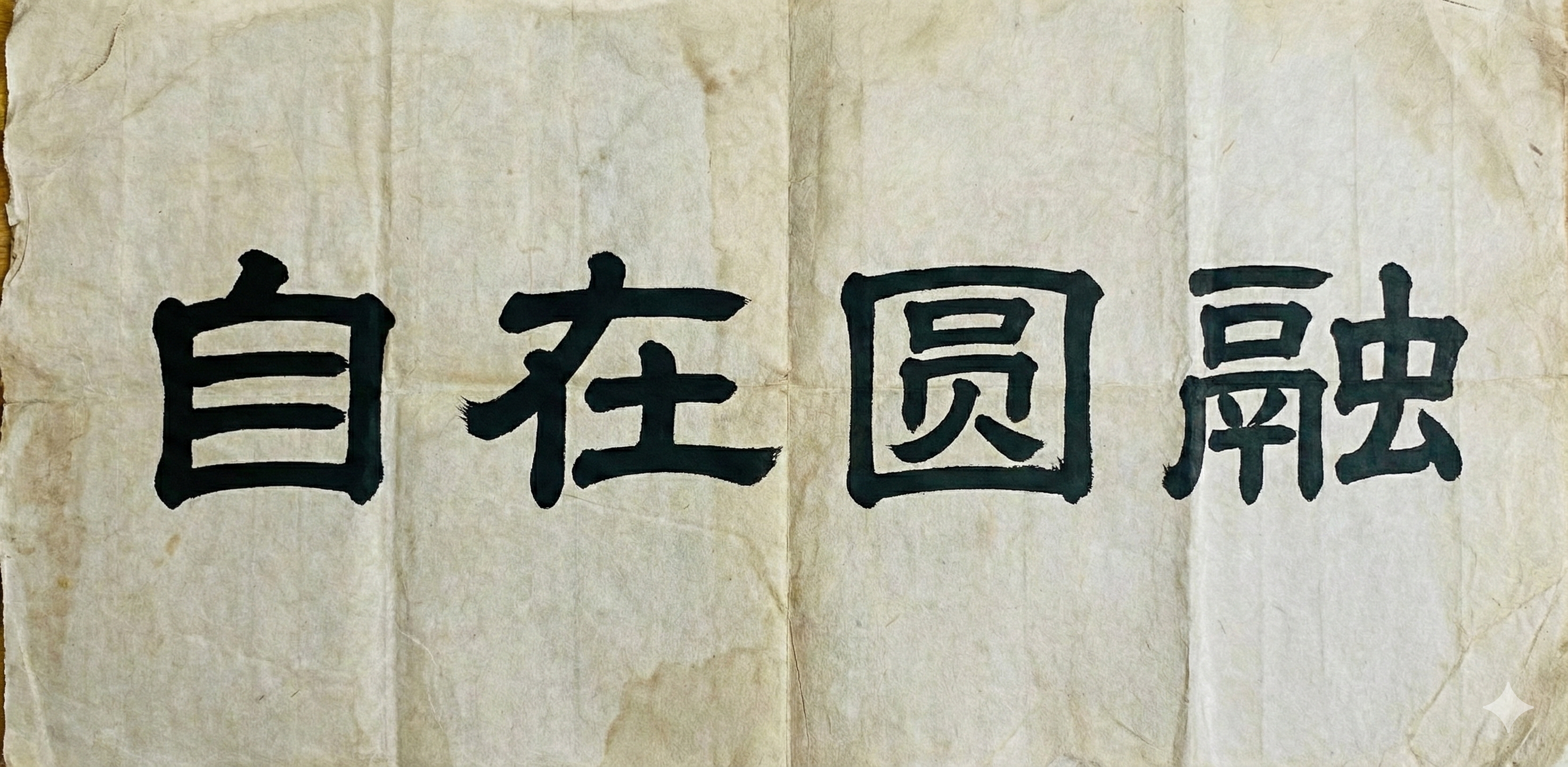
○ Early repair techniques for daily rhythm imbalances: art-guided suggestions
This set of drawing exercises helps you transform the vague feeling of a "disordered rhythm" into a visible image—when you can see on paper where it's too crowded, too empty, or completely out of bounds, it's easier to find the first step to make minor adjustments, instead of simply blaming yourself for "losing control again."
I. My Day - Striped Timeline
- Draw a horizontal bar on a piece of paper and mark it from left to right as 0:00–24:00.
- Use different shades of color to depict a typical day of yours recently: dark colors represent high intensity or high alertness (working, rushing to meet deadlines, scrolling through your phone nonstop), and light colors represent rest or relaxation.
- Observe whether there are sections that are "crowded together in dark colors" or "blank for a long time without any breaks". Draw a small question mark on the edge and write: "Can something be removed or added here?"“
II. Rhythmic Traffic Lights: Early Warning Map
- Draw a simplified traffic light, with three sections from top to bottom: red, yellow, and green.
- Write down specific behaviors related to your circadian rhythm in each cell: such as "sleeping past 2 a.m. for three consecutive nights", "eating only one meal a day", "scheduling too many tasks at once", etc.
- The key is to write down "early repair actions" in the yellow light zone, such as: halve the time spent scrolling through social media before bed tonight, make sure to eat a simple porridge for lunch tomorrow, and postpone a non-essential task for a week.
III. Island and Bridge Supporting the Rhythm
- Draw several small islands on a piece of paper, each island representing a "rhythmic pivot": a fixed wake-up ritual, a bowl of porridge in the morning, a cup of black tea in the afternoon, writing in a diary for 10 minutes before bed, etc.
- Connect these small islands with thin lines to form a route, symbolizing your ideal rhythm of day.
- Next, draw out the route you've actually taken recently, and see which islands you skipped and which bridges were stretched too long. Write down "small actions that allow you to re-enter the shore" in the corresponding locations.
Reminder: You don't need to repair all the islands at once. Just choose the one closest to you and try landing on it once a day. In long-term care for biphasic rhythms, these seemingly small actions are often more powerful than a single, grand decision.
Please log in before submitting your drawings and feelings.
○ 1203. Early Repair Techniques for Daily Rhythm Imbalance: Journal-Guided Suggestions
① Write down your most typical daytime timeline from the past week (wake up, work/study, eat, relax, fall asleep), only the approximate time periods are needed.
② Circle three moments when you are most dissatisfied or most likely to lose control, and write down how you felt at that moment (excitement, irritability, emptiness, numbness, etc.).
③ For each of these three time points, write down a "small fix that you can try starting tomorrow", such as turning off the screen 15 minutes earlier, having a simple meal of porridge, making a phone call, or sending a message for help.
④ Record your common self-evaluations (such as "I'm useless again" or "I can't maintain a regular lifestyle"), and write a gentler alternative for one of them.
⑤ Finally, to summarize in two or three sentences: If you consider rhythm as a tree rather than a task, what did you do for this tree today, such as watering or loosening the soil?
Please log in to use.
An imbalance in your daily rhythm doesn't mean you've failed; it simply tells you that you need to redesign a safer, more authentic time container for yourself. Through tea, porridge, writing, and mandala contemplation, you are practicing slowly pulling your life back from extremes to a bearable midline, allowing more space to accommodate the bipolar fluctuations instead of sweeping you away time and time again.