

Lesson 1217: Collaboration within a Medical Team: Psychiatry, Psychological Counseling, and Family Physician
Duration:75 minutes
Topic Introduction (Overview):
In the long-term care of bipolar II disorder, many people encounter different roles at different times: the psychiatrist prescribing medication, the therapist providing talk and psychological support, and the family doctor responsible for physical indicators and daily disease management. If these three parties operate independently with fragmented information, patients are prone to wavering between different suggestions and may even be unsure of whom to listen to. However, if basic coordination and communication can be established, treatment is no longer a one-way effort but a mutually supportive network.
This course will help you understand: the division of labor and complementary functions of psychiatrists, psychotherapists, and family physicians in bipolar II disorder; how to provide key information to different professionals during appointments and consultations; how to delegate authority and encourage communication among them when needed; and how to organize your questions and build a framework for "shared decision-making" when advice is inconsistent. You will no longer be just a person being treated, but an active member of this team, learning to coordinate resources for yourself instead of fighting alone.
▲ AI Interaction: Draw Your Own "Healthcare Support Map"“
Try out your support network in writing first, then refine it with AI:
- ① Write down the psychiatrists, psychologists, family doctors, or other professionals you have encountered so far.
- ② Write a sentence for each person: What role do I hope he/she will play in my life?
- ③ Write down the one aspect of collaboration you would most like to improve (e.g., making your family doctor better understand bipolar disorder; or making your psychiatrist better understand your work stress).
Then click the button below to bring this "support map draft" into the conversation and work together to develop actionable communication steps.
○ Music Therapy: A Listening Exercise with Triple Support
Choose a piece of music with a clear structure and distinct parts: you can imagine the low register as the rhythm of a family doctor stabilizing your physical indicators, the mid register as the melody of psychological counseling accompanying you in speaking and feeling, and the high register as the structure and safety boundaries brought by psychiatry at critical points.
When listening, take turns focusing your attention on different parts of the voice and feel how they support each other rather than compete with each other.
When the music ends, ask yourself: In real life, can I also allow voices from different professions to coexist, instead of having to choose one and discard the other?
Chinese Tea Therapy: Black Tea – A Cup for "Preparation Time" Before Your Medical Visit“
Before seeing a psychiatrist or mental health professional, brew a cup of warm black tea and give yourself 10 minutes to process your thoughts.
While drinking, briefly write down in your mind or on paper: three recent changes you want to report, two main points of confusion, and one question you want to ask.
This cup of tea isn't meant to "suppress emotions," but rather to help you pull a clear path out of the chaos, making communication more focused and making it easier for professionals to work alongside you.
Sesame, Walnut, and Black Rice Porridge: Nourishes the brain and boosts endurance.
Black rice paired with sesame seeds and walnuts is rich in healthy fats and vitamin E, which helps maintain the homeostasis of the brain and nervous system.
During periods when frequent medical visits and coordination of treatment plans are required, having a bowl of warm black rice porridge as part of breakfast or dinner can provide stable energy and also serve as a ritualistic reminder that I am not taking care of a "disease," but rather the whole person.
Healing Recipes
/home2/lzxwhemy/public_html/arttao_org/wp-content/uploads/cookbook/zhou-heimi-zhima-hetao-11(Alternatively, you could try relaxed="1" or use an existing filename.)
🎨 Psychological Mandala · Mi Xiangwen 1217 · “Three interlocking rings”
Imagine a mandala composed of three interlocking rings: one symbolizing psychiatry, one symbolizing psychological counseling, and one symbolizing a family doctor.
The rings don't overlap perfectly, and no one is in the very center; rather, they surround a small circle in the middle: that is yourself.
You simply observe quietly how these lines intertwine, instead of rushing to "choose the most important one".
A mandala is not about drawing something, but about observing it—and in observing it, you might discover that when you put yourself back in the center, the outer circle is no longer so chaotic.
Please gaze at this image in your mind three times and allow yourself to believe: I am entitled to be supported by a truly collaborative team, rather than shouldering all the decisions alone.
[spiritual_mandala_v3_525-532]
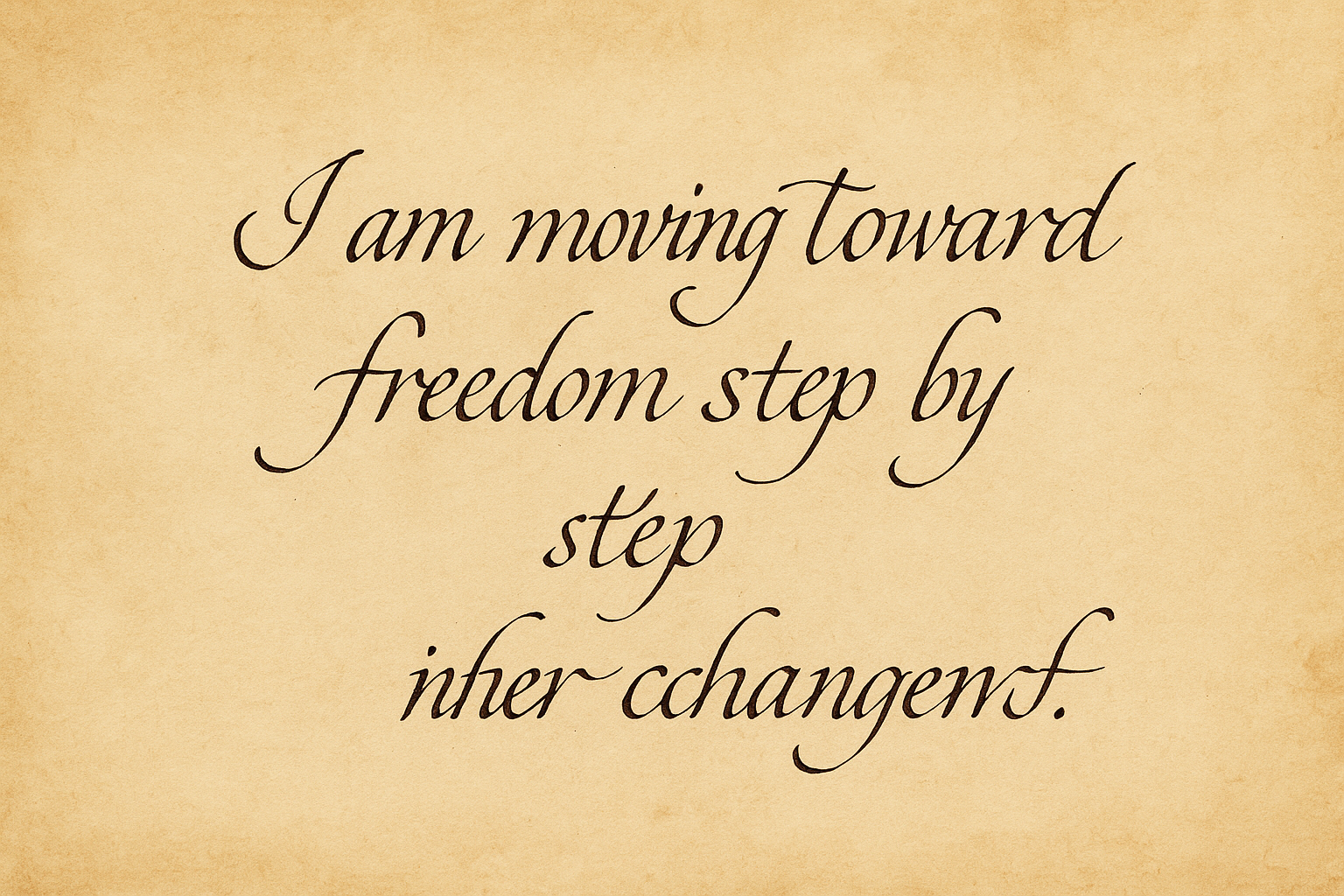
Ancient Roman script - Collaborative sentence writing
The balanced proportions and upright structure of Roman script make it a suitable symbol of "cooperation and clarity".
When you feel frustrated or confused about the healthcare system, you can write these sentences in Roman Script:
- Write sentences:
- “"I don't have to do this alone."”
- “My care is a shared work.”
- Writing Tips:The characters are deliberately made upright but not overly rigid, retaining a moderate curvature, symbolizing flexible space within clear boundaries.
○ Drawing guidance: Draw "My Medical Collaboration Map"“
I. Central Character and Three-Way Connection
- Draw a circle in the center of the paper and write "I" on it.
- Draw small circles on three sides: psychiatry, psychological counseling, and family doctor, and connect them to the center with lines.
- Write down the type of support you expect them to provide next to the online list, such as "medication structure, sense of security", "emotional understanding, practice", or "physical indicators, long-term health".
II. Information Flow Arrows
- Use arrows to indicate how information flows: from you to every professional, from outpatient records back to your daily routine.
- Next to the arrow between you and them, write down the "key information" you want to convey: recent mood curve, sleep changes, life events.
- Leave a blank space on the diagram and write down "Potential future supporters" (e.g., group therapy, social workers, etc.).
III. Collaborative Wish Statements
- Write a message expressing your wish for collaboration below the image:
- For example: "I hope that I will no longer just be told what to do, but be cared for with a sense of participation."“
- Or: "I allow myself to ask questions, and I also allow myself to gradually learn to work with the team."“
This image isn't meant to demand that reality be perfect immediately, but rather to help you first make room in your mind for "being supported."
Please log in before submitting your drawings and feelings.
○ 1217. Medical Team Collaboration: Log-Guided Suggestions
① Write down two types of professional support you currently have, and what you are most grateful for about them.
② Write down a scenario in which you felt most confused or powerless during collaboration (e.g., disagreement, poor communication).
③ Try to organize your concerns into three sentences that you can ask during your consultation.
④ Write down a reminder to yourself: "I have the right to be explained and discussed, not simply arranged."“
⑤ If possible, set a small goal for the coming year: such as "fixed attending psychiatrist" or "complete 10 psychological counseling sessions".
Please log in to use.
Treatment of bipolar II disorder is not a solo effort by any one person, but a long-term project that requires collaboration from multiple parties.
When you begin to understand and participate in this collaboration, you are no longer just passively enduring fluctuations, but learning to work with the team to gradually shape your own stable rhythm.