

Lesson 1220: Course Summary: Understanding Fluctuations, Coexisting with Emotions Rather Than Fighting Them
Duration:75 minutes
Topic Introduction:This course, serving as a summary of the Bipolar II Disorder course, will guide you through a review of the core threads of previous chapters: from understanding the illness itself, to recognizing the subtle shifts between depression and hypomania, from medication and psychotherapy, to daily rhythms, goal planning, and self-care. We will no longer view mood swings as an "enemy," but rather try to understand them from a perspective of "coexistence"—emotions are like ocean waves, with highs and lows, and what you can learn is to: understand the tides, avoid being swept away, and prepare your own life preservers and lighthouses. This course will help you integrate what you've learned, create a personalized "mood map," build a gentler relationship with yourself, and transform life from a continuous struggle into practicing standing steadily and moving slowly through the waves.
○ Key Course Summary: From Confrontation to Coexistence
- Rename mood swings:Bipolar II disorder is not the same as "bad personality" or "weak will," but rather a state of constant fluctuation in the emotional regulation system. Instead of blaming yourself for "why is it happening again," it's better to acknowledge that this is a psychological and physiological state that requires long-term management.
- Understanding the structure of fluctuations:Hypomania, depression, and a relatively stable intermediate period each have their own characteristics and rhythms. This course helps you identify early warning signs, such as changes in sleep patterns, thought speed, and spending and social impulses, helping you to apply the brakes before your emotions completely spiral out of control.
- From "suppressing" to "seeing clearly":Suppressing emotions often makes a breakdown more intense, while gently acknowledging "I am currently at a peak or trough" and asking yourself "What small thing can I do to take care of myself?" is more likely to bring about real relief.
- Circadian rhythms and support systems:A stable work-rest schedule, appropriate medication, psychotherapy, understanding from family and friends, and a moderate workload are all "scaffolding" to support emotional fluctuations. You don't need to fight alone; instead, you should gradually build your own support network.
- Allow yourself to be imperfect:True long-term management is not about never experiencing fluctuations, but about reducing self-blame, self-abandonment, and impulsive destructive behaviors during fluctuations, treating relapses and ups and downs with a gentler attitude, and viewing each imbalance as a recalibration exercise.
▲ AI Interaction: Write down your version of "reconciliation" with your emotions
If this entire course is doing one thing, it's helping you gradually shift from "fighting your emotions" to "learning to live with them."
You can work with AI to complete the following organization steps:
- ① Write a sentence in your own words: “My new understanding of bipolar II disorder”.
- ② Review your three most frequent fluctuation signals and give them names (e.g., "High-speed mode" or "Shutdown mode").
- ③ Imagine two "coexisting actions" that you can stick to for the next six months (e.g., regular check-ups, consistent sleep schedule, and keeping a daily journal).
- ④ Write a sentence you want to say to yourself in the future: "When the next wave comes, I hope I will remember..."
Click the button below to tell the AI your summaries, doubts, and expectations, and let it help you string together your scattered feelings into a personal storyline of "coexisting with emotions," instead of leaving only fragmented pieces and self-blame.
○ Course Summary • Music Therapy: Listening to the Waves, Not Suppressing the Surface
Please choose a piece of music that you feel is "neither too sad nor too exciting," with a steady rhythm and a gentle melody.
In this music, imagine your emotions like ocean waves, rising and falling, receding and surging. Instead of trying to make the sea completely flat, practice standing on the shore and watching the waves come to your feet one after another, and then slowly recede.
While listening, you can silently repeat to yourself:
“"I am not a wave, I am someone who sees the waves."”
When the music ends, take three deep breaths and write down your new understanding of the word "coexistence" for today.
○ Chinese Tea Therapy - Black Tea: A Gentle Finish to a Wave
Recommended reasons:In the concluding phase of the course, black tea is no longer just a refreshing or warming drink, but can become a "ritualistic conclusion." The warm black tea soothes the body's tension as it travels down through the throat and stomach, allowing you to reflect on the course content not only with your mind but also by taking care of your body's temperature and texture.
Suggested usage:Choose a Chinese black tea you are familiar with, such as Qimen black tea or Zhengshan Xiaozhong. Take an appropriate amount of tea leaves, pour in boiling water, and wait a moment before drinking. Try to drink slowly: with each sip, think of a phrase in your mind, for example, the first sip corresponds to "This is a journey I have been through", the second sip corresponds to "I am learning to live with my emotions", and the third sip corresponds to "I will continue to live and take care of myself slowly".
Rhythm suggestions:You can schedule this "summary tea" on a fixed day each week, such as Sunday evening or any time when you're willing to stop, to review the emotional fluctuations and coping strategies of the week. This allows the lesson to go beyond just words and become a gentle, repeatable ritual.
○ Lily Bulb, Lotus Seed, and Millet Porridge - Calming and Repairing
Lily bulbs nourish yin and calm the mind, lotus seeds clear the heart and soothe the nerves, and millet strengthens the spleen and stomach. When these three are cooked into a soft and delicate porridge, it can gently replenish physical strength and provide a "buffer embrace" for the nervous system after long-term fluctuations. For people who have experienced repeated emotional ups and downs, a bowl of predictable and recurring calming porridge is itself a symbol of stability and security.
You can choose to treat yourself to lily bulb, lotus seed, and millet porridge the morning after a significant emotional fluctuation, or on a tiring night when you want to start afresh. While cooking the porridge, you can tell yourself, "This isn't a reward, but basic nourishment; I deserve to be well fed."“
Healing Recipes
/home2/lzxwhemy/public_html/arttao_org/wp-content/uploads/cookbook/zhou-bai-he-lian-zi-xiao-mi(Alternatively, you could try relaxed="1" or use an existing filename.)Psychological Mandala: The Ring of Coexistence
Psychological Healing: Psychological Mandala - Thoughts and Reflections 22
Please gaze quietly at the mandala as a whole, rather than rushing to understand its meaning. You will find that the pattern contains both outward-spreading lines and inward-curving arcs; some colors are intense, while others are light. They don't clash but rather form a complete circle. Just like your emotional ups and downs: there are highs, lows, confusion, and clarity. If you only focus on one intense color, it will feel overwhelming; but when you step back and look at the whole, you'll find that the intense parts don't occupy the entirety; they are just part of the pattern. You don't need to "organize" the mandala; simply allow yourself to breathe slowly while observing, acknowledging: "I and my fluctuations can coexist."“
Mandala drawing isn't about what you're drawing, but about observing. Please observe it slowly three times: first, look at the overall structure; second, look at the color you dislike the most; and third, look at the whole picture again, asking yourself, "How does my feeling change when I'm no longer just staring at a particular area?"“
Watch Healing Mandala Animations

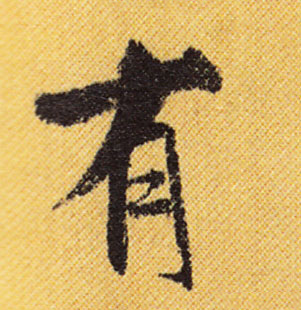



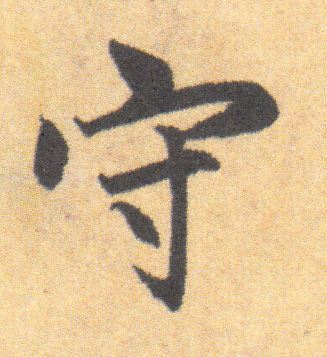


○ Ancient Roman script · Inscribed the word "coexistence" on stone.“
Each letter in ancient Roman script looks like a shape carved into stone: stable, symmetrical, and weighty. By practicing Roman Script, you can symbolically inscribe your new understanding of emotional fluctuations onto your "inner stone tablet," rather than letting it linger in fleeting thoughts.
- Write words and phrases (in Chinese and English):
- Coexisting with emotions, no longer fighting them.
- Living With the Waves, Not Against Them
- Writing Tips:
- After writing each word, pause for a moment to feel the "weight" of your fingers touching the paper, as if slowly carving a sentence into stone, rather than hastily writing it down.
- In the word "Waves," the strokes are allowed to undulate slightly, symbolizing waves; in "Living" and "Not Against," the lines are deliberately kept smooth, symbolizing your standing amidst the waves.
- After writing it, read the whole sentence aloud, and gently put down the pen, saying to yourself, "I can stop focusing all my energy on fighting and start taking care of others."“
○ Course Summary: Understanding Fluctuations, Coexisting with Emotions Rather Than Fighting Them · Drawing Guidance Suggestions
This drawing guide aims to help you transform the core of the entire course—"understanding the structure of fluctuations and learning to coexist rather than fight"—into visual images. You don't need to draw beautifully; simply let these images become tools for you to have a dialogue with yourself, so that when you look back in the future, you can instantly recall this learning journey.
I. The Sea of Emotions and the Safe Haven
- Draw a sea surface on paper and use wavy lines to represent different emotional fluctuations: some waves are small, some are large, and occasionally there are higher wave peaks.
- Draw a small island in the middle or on one side of the sea and write "Safe Island" on it. This can represent: your regular routine, trusted people, professional support, or some kind of comforting ritual (such as drinking tea, eating porridge, or writing in a journal).
- Use simple arrows or lines to draw a path from the waves to the island, symbolizing "when the waves appear, I can move here."
- Write a sentence in one corner of the picture, for example: "The waves may continue to rise and fall, but I am learning how to get ashore."“
II. The Balance Between Self-Blame and Understanding
- Draw a balance scale. Write "self-blame and confrontation" on the left pan and "understanding and coexistence" on the right pan.
- Write down a familiar phrase below the left side, such as: "Why am I like this again?" or "Am I really that bad?"
- Write down any new phrases you learned from the course below the right-hand panel, such as: "This is a state that requires long-term management" or "I can advocate for more help for myself."
- Use a pen to tilt the scale slightly: let the side of "understanding and coexistence" sink a little, indicating that you hope to make that side more weighty in the future.
III. Coexistence Toolbox
- Draw an open toolbox and write "My Coexistence Toolbox" on the lid or body of the box.
- Draw a few simple icons inside the box, such as: a small alarm clock (representing a daily routine), a teacup (representing a black tea ceremony), a bowl of porridge (representing dietary therapy and taking care of the body), a small booklet (representing psychological education and notes), and a heart (representing a supportive relationship).
- Write a short description next to each icon, such as: "When I stay up late, I will remember this alarm clock" or "When I'm about to skip a meal, I will remember that bowl of porridge was a way to replenish myself."
- Finally, write a note next to the toolbox: "Things I can continue to add later," to remind myself that this is not a story that can be completed in one go, but a journey that can be continuously updated.
Note: These images are not meant to "cure" you, but rather to provide tangible reminders for when you feel lost, exhausted, or want to give up in the future. Remember this process you've been working to understand yourself and learn to coexist. If drawing triggers strong emotions, consider pausing, drinking some warm water or tea, and contacting a professional if necessary, rather than trying to cope alone.
Please log in before submitting your drawings and feelings.
○ 1220. Course Summary: Understanding Fluctuations, Coexisting with Emotions Rather Than Fighting Them • Journaling Guidance Suggestions
① Use 3–5 sentences to recall the three concepts that impressed you most during the entire Bipolar II disorder course (e.g., rhythm, yellow light warning, self-care, coexistence). Write down what each of them means to you.
② Honestly write down what you are still confused or worried about: such as fear of relapse, doubts about medication, worries about future relationships or work. You don't need to solve them immediately, just put them on paper first.
③ Compile a “mini coexistence guide” for yourself: List three specific actions (which can be very small) that you intend to actually implement, such as going to bed at a fixed time, reviewing your emotions once a week, and having a professional or supportive conversation once a month.
④ Write down your "tea time" and "porridge time": When and how often do you want to use these eating rituals to remind yourself "I deserve to be taken care of"?
⑤ Write a short letter to your future self during a period of ups and downs: acknowledge that you may feel tired, confused, or even want to give up, and give you one or two specific and feasible suggestions instead of vague encouragement.
⑥ Conclusion: Use a sentence to conclude this course, for example: "I will no longer see emotions as enemies, but as someone who is learning to coexist with the waves."“
Please log in to use.
Through this lesson's summary, you've moved beyond simply "knowing" the name of Bipolar II disorder; you've gradually learned to see your own fluctuating patterns, understand the underlying structure, and build a supportive and nurturing network. May the warmth of black tea, the gentleness of porridge, the stable lines of ancient Roman calligraphy, and the moments of quiet contemplation of mandalas become small anchors on your long journey—reminding you: you don't need to be perfectly calm; you just need to continue living and take care of yourself amidst the fluctuations.