

Lesson 1276: Attachment Style and Early Experiences: Their Impact on Emotion Regulation
Duration:75 minutes
Topic Introduction:
In the mood swings of cyclothymic disorder, the attachment system is often the earliest and deepest regulatory foundation. Many people's mood swings are not simply due to current interpersonal relationships, but are closely related to childhood care experiences, early emotional patterns, and ways of establishing a sense of security. This course will help you understand how four common attachment styles influence your responses to mood swings: the anxious type tends to intensify its pursuit of closeness during hypomanic periods and fear abandonment during depressive periods; the avoidant type tends to withdraw and maintain distance when stress increases; and the disorganized type oscillates between closeness and avoidance. We will use concrete examples to illustrate how early experiences shape your "emotional regulation template" and teach you how to build more stable, secure connections, so that when mood swings occur, you are no longer led by automatic reactions, but can gradually learn to reshape your emotional rhythms using the power of adulthood.
○ The performance of the four attachment styles in emotion regulation
- Safety type:They are more likely to remain stable during periods of volatility and can simultaneously experience emotions and maintain realistic judgment.
- Anxious type:During periods of hypotension, one tends to get too close to others, while during periods of depression, the fear of rejection is amplified.
- Avoidant type:They tend to detach themselves before emotions escalate, using "disconnection" as a protective mechanism.
- Disordered type:Their emotions shift rapidly, often oscillating between needing closeness and fearing closeness.
Why do early experiences affect the adult emotional system?
- Emotional Template:Childhood care patterns shape early beliefs such as "Am I worthy of being loved?"
- Adjusting habits:The stability of your caregiver affects your response pace during a crisis.
- Threat perception:Early chaotic environments make the brain more susceptible to triggering "dangerous assumptions".
○ Establishing "secure relearning" in adulthood“
- Stable Relationship Script:Practice expressing your needs in a gentle yet clear manner.
- Body regulation method:Reduce threat perception through breathing, touch, and steady movements.
- Attachment repair exercises:Replace "impressions of the past" with "today's reality".
▲ AI Interaction: Identifying Your Attachment-Based Emotional Responses
Tell the AI: When you feel insecure in a relationship, do you usually move closer? Distance away? Or waver back and forth?
AI will assist you:
- Infer your possible attachment patterns;
- Provides a stable script corresponding to your mode;
- Design a "return to safety" training program.
○ Attachment Repair & Music Therapy
Attachment trauma is often accompanied by chest tightness and intermittent breathing. It is suitable to choose gentle, layered, and gradually unfolding music, such as piano pieces with strings as the base, to allow the body to rediscover a "stable rhythm".
Practice method:
- When listening with your eyes closed, focus your attention on the "return point of the melody";
- Every time the melody returns to the original motif, I remind myself: "I can also return to a stable point."
○ Eastern Healing Tea: Longan and Licorice Warming Tea
Recommended reasons:Longan nourishes the heart, while licorice harmonizes the body, providing a gentle "feeling of being supported" after attachment is triggered. It's a suitable comforting drink after emotional ups and downs in a relationship.
usage:Steep 3-4 longans and 2-3 slices of licorice root in hot water for 6 minutes. Before drinking, inhale the aroma three times to allow your body to slowly enter a safe rhythm.
Lotus Seed and Lily Bulb Soup
Lotus seeds nourish the heart and calm the mind, while lilies moisten the lungs and soothe the heart. Adding red dates and wheat can help to gradually calm emotions that are triggered by attachment.
This soup focuses on restoring mental stability and allowing the body to regain a sense of rhythm, making it especially suitable for drinking after relationship disputes, misunderstandings, or recurring anxiety.
Tender Heart
Soup therapy
Healing Recipes
/home2/lzxwhemy/public_html/arttao_org/wp-content/uploads/cookbook/quan-mai-yi-da-li-mian-qing-jiang.html(Please confirm that the following has been uploaded: quan-mai-yi-da-li-mian-qing-jiang.html)
Psychological Mandala
Psychological Healing: Psychological Mandala Imagery 16
A mandala is not about drawing something, but about observing it.
Imagine a mandala: the outer circle has uneven lines, symbolizing the chaos of early attachment experiences; the closer to the center, the more orderly the lines and the more stable the rhythm.
Please watch quietly, letting your gaze follow the lines from the outer circle to the center.
When you focus on the center, whisper to yourself, "I am learning a new way."“
The center of the mandala symbolizes "the adult me," who doesn't need to be perfect, but can slowly heal and gradually find peace.
Watch it three times to bring the sense of stability back to your body.
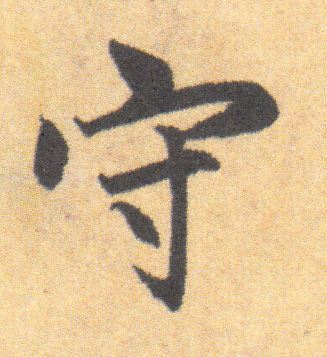
○ Chinese Calligraphy - Running Script
The flowing rhythm of running script symbolizes "approaching and retreating in relationships." Writing in running script is an exercise in finding one's "place" amidst the fluctuations of relationships.
Every stroke tells you: I can move closer, or I can retreat; I have a choice.
- Written words:“"Stability and Connection" and "Softness and Proximity".
- Writing Tips:Pause for half a second at the turning point of each stroke, feeling "I am adjusting my own rhythm".
- Practice method:When signs of restlessness or depression appear, write it down three times. It's not for the sake of appearance, but for the sake of stability.







○ Drawing guidance: Attachment map
Draw a large circle on a piece of paper and write "Me in the Relationship" on it;
Draw three branches on the outside of the circle and write them as: "Me when I'm getting close", "Me when I'm withdrawing", and "Me when I want to get close but am afraid".
Write down your actual reactions or thoughts under each branch. It doesn't have to be pretty, just be real.
Then please look at the whole picture and feel that these are not mistakes, but emotional patterns that you have learned in the past and are now relearning.
Finally, write a sentence at the center: "I can relearn how to feel safe."“
Watch it three times, let this sentence sink into your body.
Please log in before submitting your drawings and feelings.
○ 1276. Attachment and Emotion Regulation: Journaling Guidance Suggestions
① Write down your most frequent automatic reactions in relationships (approaching, withdrawing, or wavering).
② Recall the specific situation that triggered this reaction and write down your thoughts at that time.
③ Write a practice sentence on "safe relearning" as a stable anchor point for the future.
Please log in to use.
Attachment is not destiny, but a rhythm that can be relearned.
When you learn to understand your early patterns, you can create new emotional paths for yourself now.