

Lesson 1354: The Synergy of Body Tension, Pain, and Sleep
Duration:75 minutes
Topic Introduction:
Many people suffer from insomnia not because they "think too much," but because their bodies are in a state of constant tension: their shoulders and neck feel like they're being suspended by strings, their backs are stiff, their jaws are clenched, their chests feel tight, their stomachs are tense, and their limbs feel cold or numb. This cycle of pain and tension makes the body mistakenly believe it's still in a dangerous or stressful environment, thus preventing it from shutting down its alert system. This lesson will explain, starting with the interaction between the body, the nervous system, and sleep, why pain can prolong the time it takes to fall asleep, why nighttime aches and pains cause the brain to constantly scan for threats, why the more you try to relax, the stiffer your body becomes, and how chronic stress alters muscle tension baselines, making the whole body feel like a tightly wound spring.
We will learn how to establish a pathway of "relaxation first, sleep naturally follows" using breathing techniques, gentle pressure relaxation, muscle scanning, warm soups, herbal healing drinks, and temperature regulation. We will also use Gothic calligraphy practice to help slow down the nervous system and establish a deep sense of stability through mandala visualization. The goal of this course is to help you regain control over the cycle of tension and pain in your body, so that sleep is no longer a constraint on the body, but rather forms a mutually supportive and synergistic relationship with it.
[arttao_Healing_Course_tts_group1354]
▲ AI Interaction: Your "Body Tension - Sleep Impact Index"“
Write down how you feel physically over the past three days, and AI will help you identify the most critical areas of tension:
- ① Which parts of the body are most prone to stiffness or pain?
- ② When does tension typically occur during the day?
- ③ What are some of the body's "unstoppable" reactions before falling asleep?
- ④ Is the pain related to stress, diet, or posture?
After submission, you will receive your personalized "Tight Path Analysis".
○ Music Therapy: Body's Blood Pressure Lowering Frequency
When muscles are under high tension, using slow-paced music at 60–70 BPM can help the body relax in sync with the rhythm.
It is recommended to listen while lying down or semi-lying down, allowing your body to slow down along with the rhythm.
- Take deep breaths to add rhythm, letting each exhale take away a little tension.
- Allow pain to be "seen" rather than suppressed.
- After the music ends, stay for at least 2 minutes and feel the changes in your body.
○ Herbal Tea Healing Drink: Lemon Balm Relaxing Tea
Recommended reasons:It is especially suitable for those who have difficulty falling asleep due to muscle tension, as it can reduce nerve excitability and muscle tension.
usage:Drink 40 minutes before bedtime, and can be accompanied by gentle stretching.
○ Ayurvedic Spice Soup - Warming and Relaxing Soup
A gentle simmering with ginger, nutmeg, and fennel can improve stiff neck and shoulders, abdominal tightness, and cold extremities.
Allow your body to enter "nighttime metabolic mode" in advance to reduce the awakening caused by pain.
Circulation Improvement
Warm night
Psychological Mandala (Viewing)
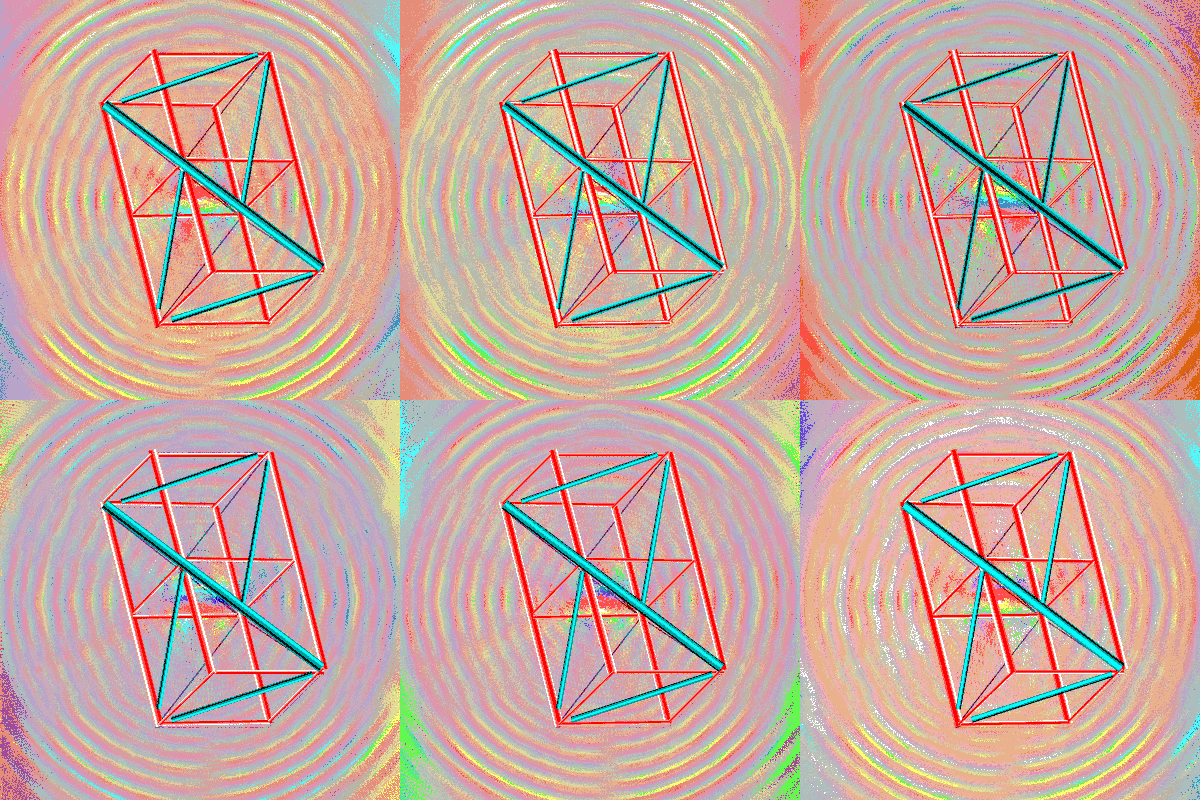
Psychological Healing: Psychological Mandala Power Text 100
The tension in the body often stems from old memories of "I have to hold on".
Please look at the center of the mandala; do not explain or try to understand it.
Let your vision guide your muscles from a state of "constant alertness" to a state of "relaxing a little".
The act of watching itself is a process of gradually letting go of the body.
○ Medieval Gothic calligraphy: Write down your relaxation declaration
The rhythm and structure of Gothic form can help the nervous system move from chaos to order, making the body more relaxed.
- I allow my body to soften.
- I'm no longer forcing myself; I'm allowing myself to let go gradually.
- Pain is a signal, not a threat.


Lesson 1354: The Synergy of Body Tension, Pain, and Sleep: Guiding Suggestions for Art Therapy
This page contains "“Where it hurts, where it's tense”It becomes a map of your body. You no longer just vaguely say, "I feel uncomfortable all over."
Instead, it's about knowing specifically which areas are being overworked and which have been neglected for a long time. The goal is to see that insomnia doesn't just happen in the mind, but involves the whole person.
1. "Nighttime Body Tension Map"“
- Draw a simplified human silhouette (front or side view is fine), it doesn't need to be precise, just something you can understand.
- Use different colors to color your neck, shoulders, back, chest, stomach, jaw, thighs, calves, etc., to mark the areas that are most prone to tightness or pain before bed or at night.
- Write a feeling word next to each color area, such as: "like being strangled", "aching", "dull pain", "like a rope being pulled too tight".
- Once this map is complete, you can more intuitively tell yourself, "No wonder I can't sleep well, because my body is constantly fighting," instead of just blaming yourself for "overthinking."
II. Schematic diagram of the "Collaborative Relaxation Channel"
- On the same or another sheet of paper, draw arrows from the 1-2 most sensitive areas to the relaxation techniques you can use: hot compresses, foot baths, gentle stretching, slow breathing, massage balls, etc.
- Then draw arrows from these relaxation methods pointing to a flower.“Sleep Cloud”The symbol is that when these parts of the body relax slightly, sleep has a better chance of coming closer.
- Write a reminder in the blank space of the diagram: "When I take care of pain and tension, I am not delaying sleep, but making room for sleep."“
- Let this picture be your bedtime "care list" instead of just another task list to complete.
Please log in before submitting your drawings and feelings.
○ 1354. Body tension, pain, and sleep working together: Journal-guided suggestions
① Where is the most tense part of your body today?
② When tension arises, what is your first automatic reaction? (Treat it, ignore it, feel anxious...)
③ Write a comforting sentence you would like to say to your body.
④ Summary: What did you do today that made your body relax a little?
Please log in to use.
You don't need to completely relax all at once, just a little bit more than before. That's synergy, and that's recovery.