

Lesson 58: I'm afraid of meeting new people
Duration:70 minutes
Topic Introduction:
Many people get nervous when they hear "meet new people":
Am I saying something wrong?
Will they dislike me?
Will the atmosphere be awkward?
Can I hold my own in this conversation?
This fear of interacting with strangers is not actually related to your abilities, but rather to "how the brain perceives the unfamiliar."
This lesson will help you understand why meeting new people makes you anxious and teach you how to take a steady step forward without forcing yourself.
Why do I feel scared when I meet new people?
- The brain's wariness of the "unknown":Strangers bring a sense of unpredictability, and the brain tends to perceive the unknown as a potential threat.
- Fear of judgment and rejection:They worry that they are not good enough, not interesting enough, or that they are not performing well.
- Past experiences that were ignored or misunderstood are activated:Past wounds will automatically resurface in new relationships.
- Insufficient social energy:Building connections with new people requires a lot of effort, and introverted or sensitive people are more prone to exhaustion.
Lesson 58: I'm afraid of meeting new people. Click to listen to the reading.
The fear of meeting new people is a deeply felt yet often unspoken emotion for many with social anxiety. You might start feeling nervous before even meeting them, repeatedly imagining how they'll perceive you, whether they'll dislike you, and what you should say to avoid awkwardness. But when you actually stand before the new person, your mind suddenly goes blank, the prepared words vanish, and all that remains is the urge to end the interaction as quickly as possible. This fear isn't because you don't crave connection; quite the opposite, it's because you're overly concerned about the safety of this potential relationship. Psychologically, strangers represent a high degree of uncertainty. You can't predict their reactions, attitudes, or boundaries, so your brain automatically interprets this unknown as risk, triggering a defense mechanism that makes you vigilant, tense up, and minimize exposure. For some, past experiences of rejection, neglect, or denial are reactivated when facing new relationships, making the fear feel particularly real. You might mistakenly believe that only by performing well can you gain acceptance, but this pressure makes it even harder to be yourself naturally. What needs to be recognized is that you're not afraid of the new person themselves, but rather the possibility of being hurt again. Your brain tries to protect you through avoidance, preventing a recurrence of past pain. The key to alleviating this fear isn't forcing yourself to immediately become extroverted or talkative, but rather reinterpreting the meaning of meeting new people. Every encounter isn't a test of your worth, but simply an exchange of information and a process of experience. You don't need to build intimacy on the first try; just allow yourself to stay in the present moment and engage in basic communication. When you stop demanding immediate liking from new people, your tension will gradually ease. You have the right to take your time, the right to be cautious, and the right not to over-expose yourself before you feel secure. Meeting new people doesn't mean losing yourself; it means giving relationships a chance to grow naturally.
▲ AI Interaction: What are you most afraid of when you meet new people?
What you fear is not the "new people," but the "unknown reactions."
Your brain will preemptively sound out warnings: What will the other person think of me? Will I seem weird? Will there be an awkward silence?
But you don't need to become extroverted or enthusiastic all at once.
You can choose to proceed in small steps: observe first, then get closer, and then communicate a little bit more.
You don't need to be liked, you just need to allow yourself to exist.
Click the button below to practice methods for "reducing anxiety about meeting new people" with AI.
Meeting new people makes it easiest to breathe shallowly and tighten your chest.
Music can help you bring your body back from a "tense, combative state" to a natural rhythm.
Give yourself a few minutes of space to be "soothed" by sound before entering a new scene.
○ Eastern Healing Tea - White Tea
Recommended drinks:White tea (such as Shoumei or Baihao Yinzhen)
Recommended reasons:Light and gentle, it helps reduce the nervousness of "first meeting" and makes the body more flexible.
practice:Brew gently with hot water at around 80℃, allowing the aroma of the tea to naturally enhance the depth of your breath.
○ Kidney-Nourishing and Brain-Boosting Black Sesame and Walnut Vitality Porridge
This is a bowl of deeply nourishing porridge, hailed as "black gold".
The intense roasted aroma of black sesame blends with the oily fragrance of walnuts, making every bite feel like an energy boost.
Traditional Chinese medicine believes that "black enters the kidneys," and this porridge can not only nourish dry hair and skin, but also "recharge" a tired brain, bringing a solid and warm sense of security.
Brain-boosting and intellectual development
Lubricates the intestines and promotes bowel movements
Open Recipe
◉ Kidney-Nourishing and Brain-Boosting Black Sesame and Walnut Porridge (ID 58)
Black sesame and walnut porridge is a "brain power booster" that combines deliciousness and health benefits. Black sesame seeds are rich in oils and vitamin E, which can nourish the five internal organs and moisturize the skin; walnuts, shaped like the brain, can replenish kidney essence. This porridge has a smooth texture and a unique nutty aroma, which can effectively relieve symptoms such as lower back and knee pain, dizziness, tinnitus, and dry skin caused by kidney deficiency. It is the perfect companion for people who stay up late in autumn and winter or for those who frequently stay up late.
Nourish the liver and kidneys Enhance memory Moisturize and nourish skin
I. Recommended Dietary Therapy and Reasons
Recommended dishes:Black sesame and walnut porridge (ID 58)
Recommended reasons: Traditional Chinese medicine says that "the kidneys govern bones and produce marrow, connect to the brain, and their health is reflected in the hair." When you experience declining memory, dry and brittle hair, and dull skin, it is often a sign of kidney essence deficiency. Black sesame seeds and walnuts are a natural "golden combination." By consuming them in warm rice porridge, their essence is released, making them easily absorbed and nourishing the "battery" of life from the root.
2. Recipe and Method
Recipe (1–2 servings):
- 20–30 g of roasted black sesame seeds (it is recommended to grind them into a fine powder)
- 3–4 walnuts (broken into pieces)
- 50–80 g of white or black rice (black rice is better for kidney health, but it needs to be cooked for a longer time).
- 800–1000 ml of clean water
- Rock sugar or honey as needed
- (Optional) A small handful of goji berries
practice:
- Pre-processing ingredients:If you bought raw sesame seeds and raw walnuts, I recommend dry-frying them in a pan over low heat (without oil) until fragrant, then remove them from the pan. Roasted nuts make porridge more flavorful.
- Crushing (key technique):Place the roasted black sesame seeds and walnuts into a plastic bag and crush them with a rolling pin, or grind them into coarse powder using a grinder.The crushed oils and nutrients are more easily absorbed by the body, and the porridge base is more fragrant and rich.
- Congee base:Rinse the rice thoroughly, put it in a pot with water, bring it to a boil over high heat, then reduce to low heat and simmer for 20 minutes.
- mix:When the rice porridge is about 70-80% cooked, add the prepared black sesame and walnut pieces.
- Cook together:Continue simmering over low heat for 10–15 minutes, stirring constantly to ensure the nut oils are fully incorporated into the rice water.
- Seasoning:Add rock sugar to melt before serving, or drizzle with honey after serving.
3. Small rituals for body and mind
While crushing sesame seeds and walnuts, you can smell the rich, nutty aroma that bursts forth and feel the powerful vitality that comes from plant seeds.
Watching the white rice porridge gradually turn into a deep gray-black color is not just a change in color, but also an increase in energy density.
When you drink porridge, feel the smooth and moisturizing sensation brought by the oil, and imagine that it is nourishing every dry corner of your body.
4. Dietary Therapy Experience Record
- Pay attention to whether your skin feels moisturized or your bowel movements become smoother after consuming it (because the oil lubricates the intestines).
- Observe whether your attention is more focused than usual when you are working in the afternoon.
- Continue consuming this product for a period of time and observe the changes in the amount of hair falling out when combing your hair.
V. Instructional Videos (approximately 3–5 minutes)
◉ Video Title:Black Sesame and Walnut Porridge: A bowl of black porridge that your hair and brain will love.
6. Precautions
- Those with diarrhea should avoid the following:Both black sesame seeds and walnuts are rich in oils, which have a laxative effect. If you have diarrhea or loose stools, do not consume them, as they may worsen your symptoms.
- Calorie reminder:Nuts are high in calories, making them a great choice for breakfast or a snack, but they should not be consumed in excess at dinner to avoid indigestion.
- Do not add sugar if you have a sore throat or other heat-related symptoms.If you are prone to getting a sore throat or fever, it is recommended to use less sugar or add some lily bulbs to help clear the heat.
hint:This is a classic food therapy that uses black to nourish black, and the effect is better if you persist with it for a long time.
○ Seal Carving Practice Suggestions - Lesson 58: I'm Afraid of Meeting New People
This lesson uses seal carving practice to overcome the psychological barrier of "difficulty in getting started." Facing a complete stranger is like facing a smooth, uncarved stone. We are afraid of disrupting the status quo, afraid of ruining the first stroke. Seal carving teaches us how to break the deadlock when facing a blank space through the decisiveness of the first stroke.
- Introduction to the characteristics of seal carving:
The most difficult part of seal carving is often the "initial cut." Facing a smooth stone surface, the first cut must disrupt its integrity and establish a new order. Similarly, getting to know new people is a form of "ice-breaking"; we need to break the silence and establish connections. - Written words (seal text):
May you live a long and healthy life. - Psychological Intention:
We fear newcomers often because we presuppose that they will "judge me" or "dislike me." Writing "humility" is a reminder to empty our minds, like a valley, to accept new people and things. It means seeing others without preconceived notions, rather than only seeing our own fears. - Knife skills:
Practice the "single-stroke method." Carve each stroke with only one cut, without retouching or refining. This symbolizes the "straightforwardness" of a first encounter. Don't repeatedly draft or revise your lines in your mind (returning the stroke); instead, approach it with your most authentic state. Even if the first cut isn't perfect, it is still genuine and powerful. - Emotional transformation:
Transform the defensive stance you take when facing a stranger into an exploratory mindset when carving a fine stone. Treat the other person as an unopened book, not a bomb waiting to be detonated.
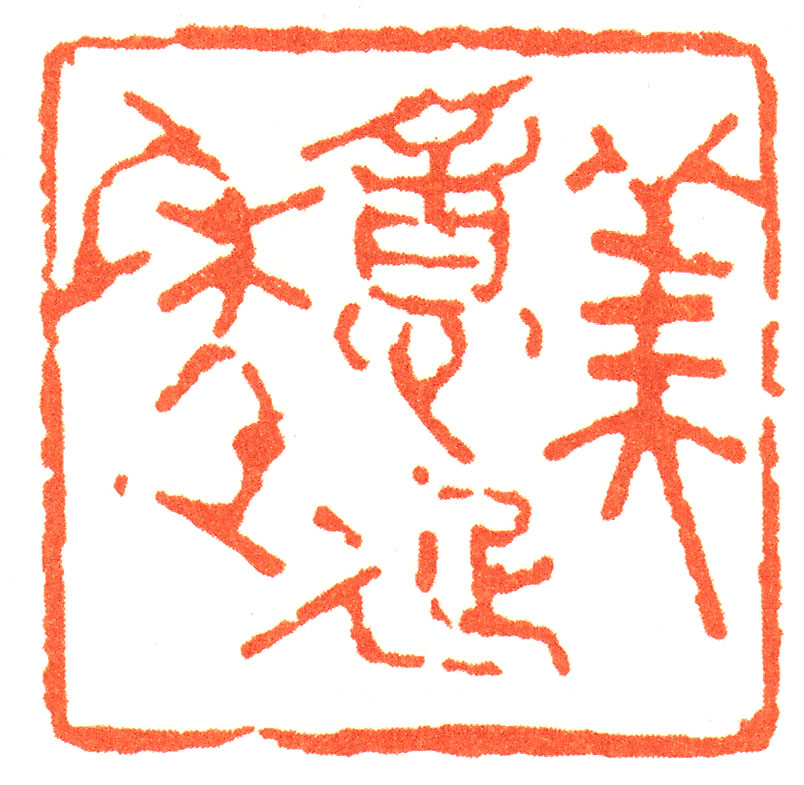
Image Healing: Mandala Stability Guidance 58
Imagine you are a circle at the center of the picture, and the new person you meet is another circle floating in from the outside. Your edges gently touch. Don't rush to merge, nor rush to repel. Observe the point where these two circles are tangent. That point is called the "boundary." You have your integrity, and he has his. The new relationship is not an invasion, but a gentle touch between two independent planets.
Traditional mandalas typically feature a harmonious and intricately varied circular structure, symbolizing the wholeness of the universe and the cycle of life. By viewing mandala images, individuals can perceive inner peace and strength, achieving psychological balance.
◉ Gaze at the mandala twice, while taking deep breaths.

Lesson 58: A Security Map for "Getting to Know New People"
Purpose: Through drawing, to help you find "where I can begin to connect with others".
step:
① Draw a small "safe spot" in the picture, symbolizing a familiar and comfortable part of you.
② Draw an "unknown area" around the perimeter, using a lighter color and without clearly defined boundaries.
③ Draw several arcs between the safe point and the unknown area to symbolize "I can slowly walk out".
Write a reminder next to it: "I can get close to others; I don't need to arrive all at once."“
Please log in before submitting your drawings and feelings.
○ 58. Fear of meeting new people - Journal guidance suggestions
① What is the part of me that makes me most nervous when meeting new people?
② What are the things I fear will happen? How likely are they to be true?
③ Were there any interactions today that were "easier than I expected"? What made them easier?
④ Evaluate today’s “anxiety about meeting new people” using a scale of 0–10.
⑤ Is there a small action I'd be willing to try? For example, nodding to a stranger or saying thank you.
⑥ Tomorrow's practice: Choose a safe, small setting and practice a gentle, proactive greeting.
Please log in to use.
Meeting new people doesn't require innate boldness or pretense. You can start at your own pace and slowly and gently approach the world.