

Lesson 1511: Self-monitoring and Symptom Recording

Duration:70 minutes
Topic Introduction:The course title and introduction are designed to gently guide you into "Self-Monitoring and Symptom Recording." Learn to record functional trends, situations, and recovery progress, rather than tracking every second's fluctuations, so that the record truly serves recovery. This content is for psychological education and self-care reference only and cannot replace doctor's diagnosis, psychotherapy, rehabilitation training, or emergency treatment. The important thing is to be more stable. There's no need to rush to change yourself.
○ Course topic audio
Lesson 1511: Self-monitoring and Symptom Recording
Click to view the read-aloud text
Please sit still and give yourself some quiet time. Today we'll learn about "Self-Monitoring and Symptom Recording." Self-monitoring isn't about tracking every fluctuation in seconds, but rather recording functional trends, situations, triggers, coping mechanisms, and recovery. Today, we'll help you shift your recording from "staring at symptoms" to "seeing the pattern." This way, your journal won't become a new source of anxiety, but rather a recovery map. If you feel tense, confused, ashamed, or have an urge to immediately verify the truth of your symptoms while listening, please pause for a few seconds, touch the table, chair, or the hem of your clothing, and remind yourself: I'm learning, not being judged. Don't push yourself too hard while learning. You can focus on understanding just one concept, recording just one trigger point, or trying just one small functional exercise. If you experience significant discomfort, an attack, a risk of falling, or a sudden deterioration in function, please follow your doctor's medical advice first. If it's just increased anxiety, slow your breathing and give your body some time to confirm it's safe. Finally, write down the most impactful point of today, and then write down a small, specific action you can try today. If you experience acute danger signs, severe attacks, suicidal thoughts, or a sudden and significant deterioration in function, please contact a doctor, emergency room, or trusted person immediately. Take it slow; stability is more important than perfection. You can silently remind yourself: stabilize first, then practice; be safe first, then move forward. Every time you're willing to stop, you're paving the way for new physical experiences. Don't rush to overcome your fears; simply bring your attention back to a small, actionable movement. Allow yourself to gently and professionally relearn how to cooperate with your body, little by little. When you're willing to complete a small exercise, you're giving your body room to recover. Take it slow, be calm first. Take it slow, be calm first. Take it slow, be calm first. Take it slow, be calm first. Take it slow, be calm first. Take it slow, be calm first. Take it slow, be calm first. Take it slow, be calm first. Take it slow, be calm first. Take it slow, be calm first. Take it slow, be calm first. Take it slow, be calm first. Take it slow, be calm first. Take it slow, be calm first.

AI Healing Q&A
Self-recording should focus on functional trends, context, and recovery, rather than fixating on every second of symptom fluctuations. You can ask AI to create a simple template for you: what you can accomplish today, what triggered your symptoms, and what helped your recovery. The AI will remind you that the recording is for tracking progress, not for new check-up behaviors. Focusing on functional changes is more supportive of recovery than repeatedly tracking symptoms.

○ Music therapy guidance
Before you start recording your symptoms, listen to a short piece of music to prevent the recording from becoming a mere focus on symptoms. After listening, review what you accomplished today, what situations triggered the recovery, and what methods helped. The music reminds you to focus on functional trends, not every second of fluctuation. A good record should show you progress, not trap your attention in symptoms. Your body needs to be observed and trusted.

○Eastern and Western Healing Teas
○ Western Healing Tea - Lavender Lemon Tea: Lavender has relaxing and calming properties, and when combined with the refreshing taste of lemon, it can alleviate anxiety and mood swings caused by insomnia. Lavender lemon tea helps improve sleep quality and relieves tension caused by stress. Instructions: Add 1 tablespoon of dried lavender flowers to warm water and steep for 5-10 minutes. Add lemon juice and honey and stir well. Suitable for evening consumption to help relax the mind and body. When used in conjunction with the course "Self-Monitoring and Symptom Recording," the process of brewing tea, waiting, and slowly sipping can be seen as a small exercise to calm the nervous system and pause excessive focus on symptoms. Gentle Reminder: This tea recipe is for daily dietary and emotional well-being reference only and cannot replace doctor's diagnosis, neurological evaluation, psychotherapy, rehabilitation training, medication, or emergency treatment. Pregnant women, breastfeeding mothers, children, those with chronic diseases, allergies, or those currently taking medication should consult a professional first.
○ Healing Recipes
○ Chinese Dietary Therapy · Porridge · Motherwort Porridge
Recommended dishes:Motherwort porridge Recommended reasons:Self-monitoring should focus on functional trends rather than minute fluctuations. Recording the time, portion size, symptoms, context, and recovery progress of your porridge experience makes the record more objective. This recipe, based on the principles of gentleness, stability, and low irritation, helps the body gain some sustainable support. It cannot replace medical evaluation, nor can it directly treat conversion disorder or functional neurological symptoms, but it can be used as part of regular eating, rhythm management, and mind-body observation. Recipe (1–2 servings): practice: Before preparing this dish or drink, please stop and observe your body: are you experiencing weakness, tension, numbness, tremors, pain, post-ictal fatigue, or worry about the symptoms? Please do not blame yourself; simply treat these reactions as signals that need to be gently recorded. Before eating or drinking, take three slow breaths and observe your eyes, head, shoulders, neck, chest, stomach, hands, feet, and gait. If there is a risk of falling, swallowing, driving, operating equipment, using fire, or caring for others today, prioritize safety arrangements before eating. Take your first bite slowly. Daytime diets can be combined with sunlight, short breaks, and rehabilitation exercises; evening diets should be portion-controlled to avoid overeating, excessive sweetness, or drinking too much water that may affect sleep. Video Title:Motherwort Porridge: A gentle dietary approach to support functional observation and stable rhythms in self-monitoring and symptom recording courses. hint:If the conversion symptoms continue to worsen, significantly affecting walking, speaking, swallowing, studying, or working, or are accompanied by intense fear, trauma response, depression, or self-harming thoughts, please contact an in-person doctor, psychologist, rehabilitation therapist, or emergency resources immediately.Click to view healing recipes
◉ Chinese Food Therapy · Porridge · Motherwort Porridge
I. Recommended Dietary Therapy and Reasons
2. Recipe and Method
3. Small rituals for body and mind
4. Dietary Therapy Experience Record
V. Instructional Videos (approximately 3–5 minutes)
6. Precautions

○Mandala Healing
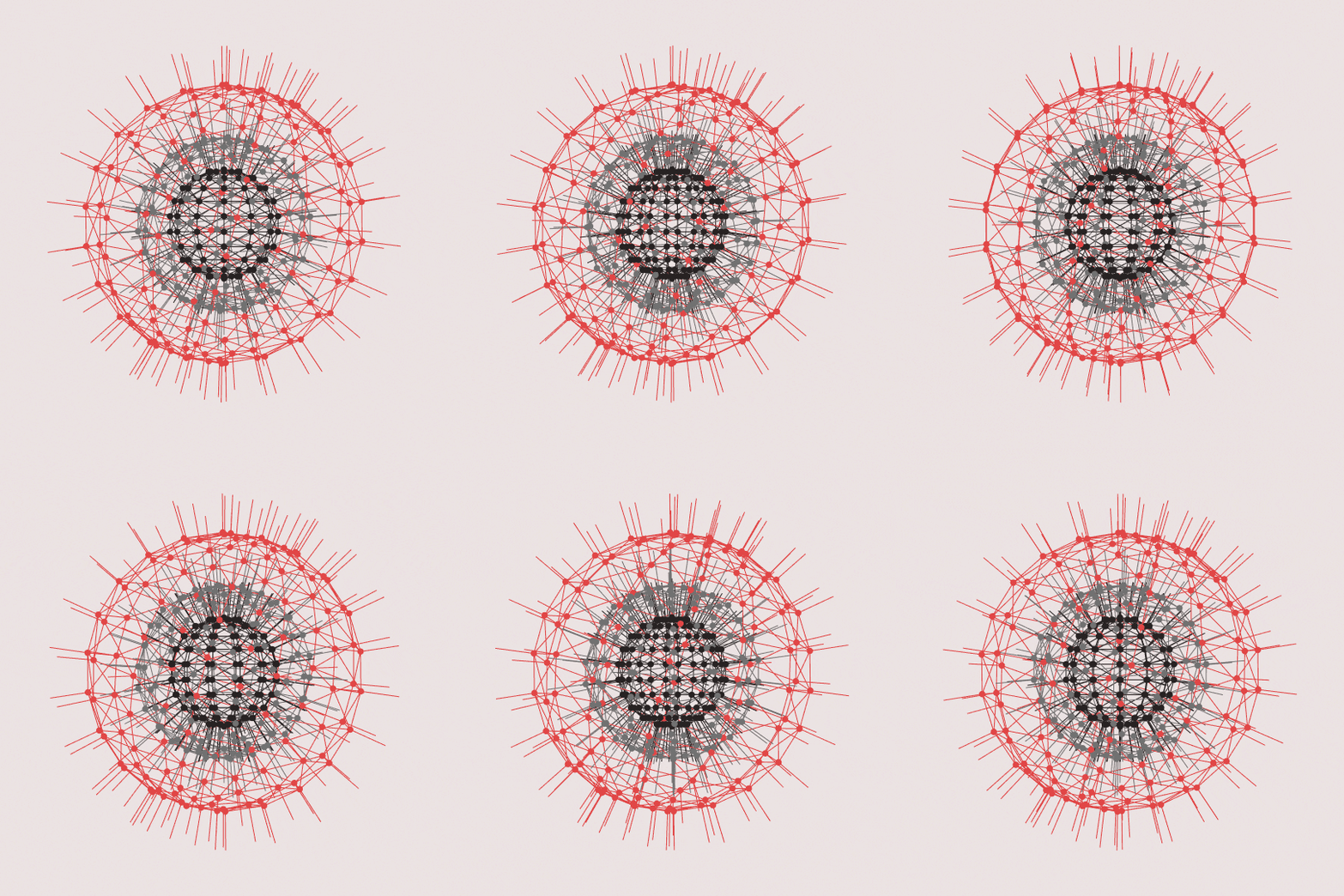
Before you start recording your symptoms, look at a mandala to prevent the recording from becoming a mere focus on symptoms. Place your daily physical state in the center, and the outer ring with what you accomplished, what triggered it, and what helped with recovery. Don't track every second's fluctuations; that will strain your nervous system. The pattern reminds you that the recording is for observing functional trends and progress. Focusing on what you can do will better support recovery.
● AI Balance Psychological Simulation Engine ●
AI Balance Psychology Simulator
AI Mandala Color Healing EngineAZ Image Coloring · 40 Colors
○ Calligraphy and engraving therapy practice
Before self-recording, writing inscriptions helps prevent the recording from becoming a mere focus on symptoms. Practice doesn't require specific wording; simply stabilize your hands, breathing, and attention first, then review what you accomplished that day, what triggered it, and what aided recovery. Please don't track every second's fluctuations; that will only make your body more tense. Focus on functional trends and small improvements; only then will the record truly support recovery.


○ Art Therapy Guidance
Self-recording can be presented as a functional trend chart, not a chart of symptoms down to the second. Use colors to mark what you accomplished today, what triggered symptoms, what helped recovery, and where things were more stable than yesterday. Please don't turn the chart into a new checking tool. The record is to see progress, not to make you more obsessive about your body. Focusing on function and engagement will better support recovery.
Please log in before submitting your drawings and feelings.

○ Diary Healing Suggestions
The journal section is designed to help you write down the most impactful point from today's lesson, along with a small action you'd like to try, after the "Self-Monitoring and Symptom Recording" section. You can record today using functions, contexts, triggers, coping mechanisms, and recovery methods, rather than tracking every second of symptom fluctuations. Please write in an authentic, concise, and manageable way. There's no need for deep analysis, and you don't need to write it for anyone else; the important thing is to let your feelings be gently seen. Take your time. After you're finished, gently close the journal and take a slow breath. It doesn't need to be complete, nor does it need to appear strong.
Please log in to use.
May you gradually return to a more stable, clear-headed, and gentler version of yourself through today's practice.