

Lesson 205: Practical Preparations for the "Moment of Parting"
Duration:70 minutes
Topic Introduction:When faced with the end of a relationship, separation, or farewell, we often feel confused, empty, or even panicked. This lesson will lead you into the practice of "parting rehearsal," through emotional labeling, activating support systems, and symbolic farewells, to build a more stable psychological channel for each loss.
○ Common reactions to separation
- Anticipatory anxiety:I started to worry and fear repeatedly before we even separated.
- Strong sense of dependence:Trying to ease the feeling of loss by "holding on".
- Emotional reversal:When leaving, there may be outbursts of anger, indifference, or sudden silence and withdrawal.
Lesson 205: Practical Preparations for Facing Parting Moments (Click to listen to the reading and view the content)
Parting is often one of the most likely scenarios to trigger separation anxiety and relationship unease. Whether it's a short separation or a phase of farewell, when the continuity of the relationship is about to break, the nervous system rapidly amplifies uncertainty, generating intense reluctance, panic, or uncontrollable fantasies. Practical preparation for parting isn't about becoming calm and indifferent, but about maintaining the ability to act even when emotions arise. The first step is to name the parting in advance. Much pain comes from suddenness; when you mentally acknowledge the impending separation and give it a clear time boundary, the brain doesn't have to compensate for the unknown with catastrophic reactions. The second key is to establish a parting process. Parting shouldn't be the end of an emotional outburst, but an orderly process. For example, agreeing on the way to say goodbye, the words used, and the first action afterward lets the nervous system know that there's still a path after separation. The third point is to shift attention from grasping to supporting. During parting, the body instinctively wants to cling; you can bring energy back into your body by pressing your feet to the ground, breathing rhythms, or holding an object. The fourth stage is distinguishing between emotions and decisions. Strong reluctance doesn't mean you have to change your decision; when you allow emotions to exist without acting on them, the intensity of fear gradually decreases. The fifth key point is the first hour after parting. Don't let yourself get caught up in replaying the events; instead, immediately engage in a pre-prepared, stable activity, such as walking, eating, or writing to conclude the farewell. It's important to understand that parting doesn't destroy relationships; what's truly destroyed is your trust in your own stability. As you repeatedly prepare for parting, your brain relearns that separation is bearable and that the connection hasn't disappeared. True maturity isn't the absence of pain, but the ability to stand firmly even amidst pain.
▲ AI Interaction: Have you ever prepared for "departure"?
The moment of parting always brings a sense of tightness and uneasiness.
Before doing so, you can prepare a small ritual, such as a goodbye blessing or a hug.
These small actions will make the parting gentle.
Please remember that separation does not mean the end, but another continuation of the relationship.
Click the button below to practice the "Psychological Separation Drill" with the AI and learn to establish a stable anchor point during emotional fluctuations.
○ Practical preparation for the "moment of separation" · Music guidance
Perform a "transition ritual" before leaving: set the alarm, play pre-selected music, and make the ending predictable.
Write down what you want to say in three “light farewell words”, which will be easier to say with the accompaniment of music.
After separation, set up a "settling period": three minutes of slow-paced music + four rounds of breathing to help emotions calm down safely.
Tell yourself: pause is not termination, the connection continues in another way.
○ Herbal Tea· Ginseng Lemon Tea
Recommended drinks:Ginseng lemon tea
Recommended reasons:It helps clear the mind and strengthen courage, and is a soothing drink when practicing farewell.
practice:Boil 3g of ginseng slices for 10 minutes. After cooling, add fresh lemon slices and appropriate amount of honey to drink.
○ Stable Dietary Therapy: Pumpkin Millet Porridge (ID205)
During periods of separation and emotional turmoil, the body needs warm and comforting nourishment. Pumpkin and millet porridge, with its gentle texture and stable energy, helps the nervous system recover from contraction and regain support. This nourishing dish is suitable as a safe anchor point after saying goodbye or during emotional ups and downs.
Emotional support
Stable transition
Open Recipe
◉ Chinese Food Therapy: Pumpkin and Millet Porridge (ID 205)
On the Chinese dining table, millet porridge is synonymous with "comfort." Its golden, thick broth exudes the simple aroma of grains. Traditional Chinese medicine believes that millet "harmonizes the stomach and promotes sleep," making it the most suitable calming food for dinner. When the natural sweetness of pumpkin infuses the millet's oil, this porridge not only repairs the stomach lining damaged by anxiety but also, like a mother's hand, soothes your tense nerves and lulls you into a sweet dream.
Stomach-nourishing and membrane-protecting Sedative and sleep-inducing Repair ulcers
I. Recommended Dietary Therapy and Reasons
Recommended dishes:Golden Pumpkin & Millet Porridge
Recommended reasons:
1. Natural Ginseng Substitute Soup:As the saying goes, "millet oil is better than ginseng." The "millet oil" (porridge oil) that is extracted during cooking is rich in vitamins B1 and B12, which can effectively protect the gastric mucosa and relieve the pain of gastritis and gastric ulcers.
2. Tryptophan Champion:Among all grains, millet has one of the highest tryptophan contents. Tryptophan is a raw material for the synthesis of serotonin and melatonin, and can significantly improve insomnia caused by anxiety.
3. Adsorption and detoxification:Pumpkin is rich in pectin, which has a strong adsorption capacity. It can bind and eliminate bacterial toxins in the body and protect the gastrointestinal tract from the irritation of rough foods.
2. Recipe and Method
Recipe (Serves 2):
- 50-60g of high-quality yellow millet (newly harvested millet is preferred for its rich oil content).
- 150g of old pumpkin (red-skinned sweet pumpkin) (peeled and cut into small pieces)
- Add 800–1000 ml of clean water (add enough water at once).
- (Optional) A few goji berries (to add color)
practice:
- Rice washing principles:Do not scrub the millet vigorously; just rinse it gently 1-2 times. Otherwise, the water-soluble vitamins on the surface will be lost.
- Boiling water in a pan (secret to getting oil):Bring water to a boil in a clay pot, then add millet. Bring to a boil over high heat, then reduce to a simmer. This will quickly break down the outer layer of the millet grains, releasing the rice oil.
- Cook together:Add the chopped pumpkin chunks and cook together with the millet.
- Stir:During the cooking process, stir clockwise every few minutes to prevent sticking to the bottom and also to promote oil extraction.
- Slow cooking:Simmer over low heat for 25–30 minutes, until the pumpkin is soft and partially melted into the porridge, and the porridge turns golden and thick.
- Let it stand (key):After turning off the heat, do not serve immediately. Cover and let it sit for 5–10 minutes. When you lift the lid, you will see a thick layer of "rice oil" floating on the surface.
3. Small rituals for body and mind
Golden Vision:I ladled out a bowl, gazing at its golden color. Yellow is associated with the spleen and stomach; just looking at this warm color can help relax tense, spasming stomach muscles.
Rice oil nourishes:When you take your first sip, make a point of sucking out the layer of rice oil floating on the surface. Imagine that this layer of oil is coating your esophagus and stomach lining with a protective film, isolating you from all irritation and pain.
4. Dietary Therapy Experience Record
- Record the warm, fuzzy feeling in my stomach after finishing the porridge.
- Observe whether it becomes easier to fall asleep that night and whether you no longer toss and turn in bed.
- Pay attention to whether your breath is fresher the next morning (a sign that your stomach heat has subsided).
V. Instructional Videos (approximately 3–5 minutes)
◉ Video Title:How to make a thick layer of rice oil in millet porridge? The golden rule of millet porridge.
6. Precautions
- Old rice doesn't produce oil:When buying millet, be sure to buy fresh, seasonal millet (bright yellow in color and fragrant). Old millet is whitish and dull, and when cooked, the water separates from the grain; it also has no stomach-soothing effect.
- Avoid cold food:Millet porridge must be drunk while it's hot. Once it cools down, the porridge will harden and become difficult to digest, instead of being good for the stomach.
- Those with a cold constitution:Millet is slightly cooling. If you have a severe case of stomach cold (stomach pain when drinking cold water), it is recommended to add two slices of ginger or a little brown sugar to the porridge to balance it out.
hint:If the pumpkin is sweet enough, this porridge doesn't need any added sugar. Enjoying the natural sweetness of the ingredients is a good start to cutting back on sugar and achieving emotional stability.
○ Chinese Calligraphy: Clerical Script Writing Practice: Lesson 205
Writing helps stabilize one's inner balance in situations of parting, giving emotions a place to go without causing chaos.
Written words:
Blessings lasting
Pre-writing advice:
Before writing, sit quietly for a moment, take three deep breaths, and feel the rise and fall of your chest and abdomen. Then, slowly begin writing in the clerical script.
Writing Tips:
The broad horizontal strokes and restrained vertical strokes of the clerical script are suitable for expressing the strength that can still bear the weight of emotions. When writing "virtue," the strokes are steady, symbolizing a solid foundation; when writing "blessing," the spacing between lines is spacious, reminding us that the connection can continue without relying on the present. Every stroke builds inner support for the moment of parting.
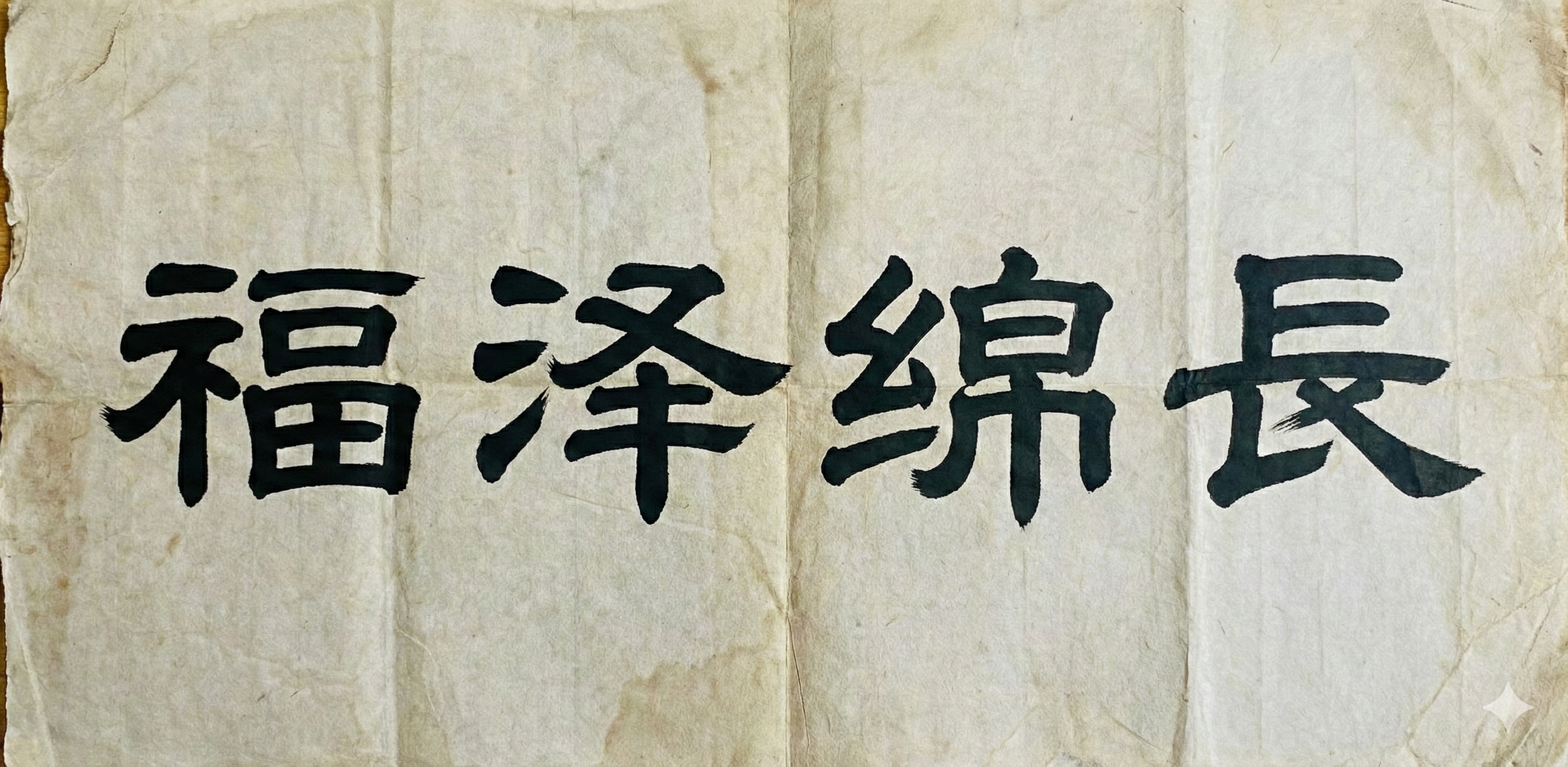
Image Healing: Guided Mandala Viewing - Lesson 205
Choose a mandala with a gentle center and a continuous outer circle.
Let your gaze move outward from the center and then back to the center.
The feeling of connection does not disappear when separated.
A mandala is not about drawing something, but about observing what you are doing. It is about practicing peace in farewell through observation.
The theme of this lesson's mandala is a continuous ring, symbolizing that even in separation, there is still continuity.
◉ One gaze is sufficient; no repetition is required.

Lesson 205: Practical Preparations for the "Moment of Parting"
Objective: To rehearse safety procedures before parting to reduce peak anxiety levels.
Steps: Draw two scene pictures: before saying goodbye → after leaving, and write a comforting sentence and an action (hug, send a blessing, take a deep breath) for each scene to form a "psychological transition script".
Please log in before submitting your drawings and feelings.
○ 205. Practical preparation log suggestions for facing the "moment of parting".
① Rehearse the farewell scene: location, time, relationships, and lines. Write down the three moments you worry about most and prepare gentle scripts for them in advance.
② Current SOP: Pause for three breaths → Make a neutral statement ("I am uneasy, but I am still safe") → Anchor your attention → Express your needs or make an agreement.
③ Prepare a “portable connection”: a small card, a commonly agreed expression/gesture, and a time to report safety.
④ Self-placement after the end: Go back to the room/street corner/station, feel the soles of your feet + drink warm water + write three sentences of review, and slowly bring yourself back to the present.
⑤ Allow your emotions to fluctuate: If there are gaps or tears, write down what they want to express and give yourself a safe hug.
⑥ Give yourself a blessing: "Parting is not the end, it allows the connection to continue in another way."
Please log in to use.
A truly gentle farewell is not one without tears, but one that allows you to turn away with love and continue to grow.