

Lesson 1039: Childhood Trauma and Boundary Awareness Training
Duration:75 minutes
Topic Introduction (Overview):
Many people who experienced neglect, control, manipulation, violence, or emotional intrusion in childhood find it difficult to say "no" as adults, and struggle to distinguish between "my feelings" and "the other person's expectations." In relationships, they either over-sacrifice, suddenly explode, or completely withdraw. One of the most insidious effects of childhood trauma is the loss of a natural sense of boundaries—boundaries regarding the body, time, emotions, privacy, and choices become blurred. This course will help you understand why compliance and over-responsibility, once a form of self-protection in a traumatic upbringing, may continue to drain you today.
Through boundary awareness training, you won't be required to become tough immediately, but rather practice step by step: becoming aware of situations where you are particularly prone to stiffening, appeasing, or blaming yourself; learning to express "I do" and "I don't" in gentle but clear language; and rediscovering what your responsibilities are and what the other person needs to be responsible for. Herbal healing teas provide gentle soothing to a tense nervous system, while German whole grain therapy replenishes the body with stable energy, allowing you to say "no" without feeling weak and trembling. The clear structure and white space of humanistic calligraphy can also become a visual metaphor for practicing "this is my space." Mandalas are not about drawing something, but about observing—observing your position in relationships, observing how boundaries are gradually being redrawn.
▲ AI Interaction: Can I say "no" here?
People whose boundaries have been damaged often only realize afterward: "At that moment, I didn't actually want to agree, but I had already said 'okay'."
Please write to the AI: ① The most recent situation in which you "agreed against your will"; ② How you felt at the time (tightness, stomach discomfort, headache, urge to sigh, etc.); ③ If you could do it again, how would you most like to respond? The AI will help you break down the situation: which are reasonable boundary demands, and which are automatic compliance patterns left over from childhood trauma.
You don't need to change real-world relationships immediately. You're already restoring a sense of boundaries from the moment you write down the first "I'm actually unwilling".
○ Music adjustment before boundary practice
Before conducting boundary awareness training, play a piece of music with a slow tempo and clear structure (such as instrumental music with distinct measures and repetitive sections).
Close your eyes and silently count the beats in your mind: 4 beats per set, and at the end of each set, whisper "This is mine" in your mind; let the rhythm of the music help you feel the existence of "boundaries".
When you can say "This is mine" at the dividing line of music without feeling awkward, your nervous system is already learning a new rhythm: I have the right to have my own space and rhythm.
🍵 Herbal healing tea: Adding a gentle protective layer to your boundaries
Recommended recipe:Rose petals + passionflower + a small amount of chamomile.
Roses help you reconnect with your emotions and self-esteem; passionflower helps relieve the palpitations and tension caused by anxiety; and chamomile soothes the digestive system, preventing immediate stomach cramps when you say "no."
Before engaging in boundary dialogue, slowly brew a cup of tea, starting with "taking care of yourself first." Pick up the teacup, feel the temperature, gently inhale the aroma, and tell yourself: "I have the right to protect my feelings and personal space."“
German Whole Grain Therapy: Removing Boundaries from Being Based on Hunger and Overexertion
Many people learn to "suppress their needs" during childhood, including hunger, fatigue, and pain, and over time even lose a sense of physical boundaries. German whole grain therapy, based on whole wheat, rye, oats, and multigrain bread, combined with small amounts of healthy fats and proteins, helps stabilize blood sugar, making you less likely to lose control of your emotions or break down immediately during relationship conflicts due to low blood sugar.
Before engaging in important boundary dialogues (such as refusing unreasonable demands or setting personal boundaries), you can eat a simple whole-grain meal to let your body feel: "I am being fed, not struggling to protect myself while starving." Stable nutrition is an important support for boundary training.
Healing Recipes
/home2/lzxwhemy/public_html/arttao_org/wp-content/uploads/cookbook/kao-hong-shu-pei-hei-dou.html(Please confirm that the file has been uploaded: kao-hong-shu-pei-hei-dou.html)
🎨 Dream Mandala Healing · Mi Xiangwen 1039 · Center and Circle
You dreamt you were standing in the center of a circular courtyard, your feet on smooth stone slabs. People kept approaching and leaving, and at first you followed them, but soon you lost your way. Then a voice told you, "You only need to stand in the center and see who is too close and who is too far away."“
You slowly discover that everyone's footsteps leave faint lines on the ground, spreading out in concentric circles around you, forming a giant mandala. You no longer rush to follow, but quietly observe: Which circle makes you feel safe? Which circle has already entered your heart? The mandala is not about drawing anything, but about observation—observing the invisible lines between you and others, observing how you finally learn to stand at your own center.

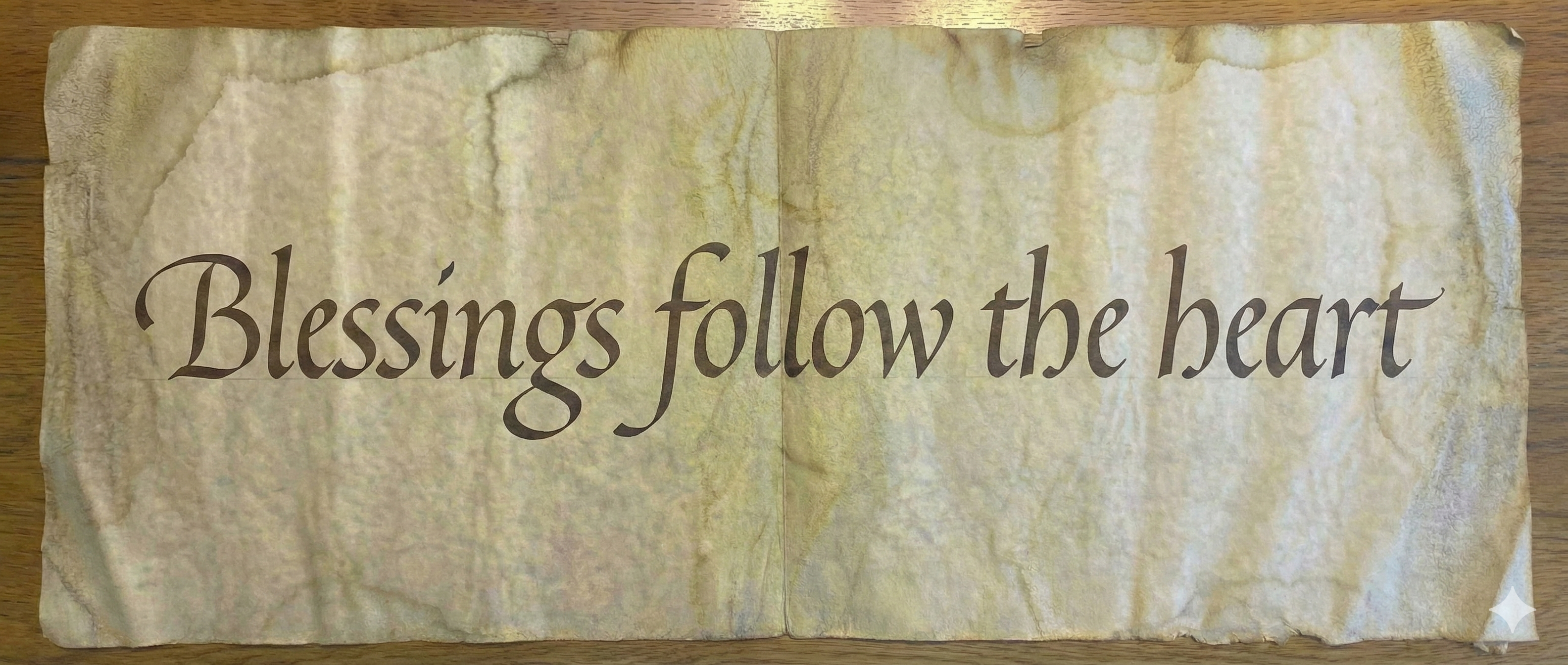
✍️ Humanist Calligraphy: Writing a Clear Shape for the "Boundary"
Humanist calligraphy emphasizes clear strokes, balanced spacing, and comfortable white space, like a healthy boundary: neither too closed nor completely open.
- Sentence writing:I have the right to say no and to protect my space.
(I have the right to say "no" and protect my own space.) - When writing "right" and "protect", make the letter structure stable and clear; deliberately leave more blank space around "my space" to symbolize the psychological distance you reserve for yourself.
- After each rewrite, I would draw a faint line along the edge of the paper, as if telling myself, "This is the boundary, and I can decide who can cross it."“
Lesson 1039: Childhood Trauma and Boundary Awareness - Guided Drawing
Purpose:Re-experience "I am in the middle, I have boundaries" visually.
step:
1. Draw a small circle in the center of the paper and write your name or a symbol that represents you.
2. Draw three concentric circles: the innermost circle should contain my own needs (rest, space, time, quiet, etc.); the middle circle should contain people I can get close to; and the outermost circle should contain people or situations where I need to keep my distance.
3. Draw lines of varying thickness between the rings: the lines should be clearer and more solid for areas that require more protection.
4. After finishing, quietly observe this "Boundary Mandala" and feel: I can also stand in the center of the picture, instead of always standing on the edge watching others.
Please log in before submitting your drawings and feelings.
○ 1039. Childhood Trauma and Boundary Awareness: Suggestions for Journaling Guidance
① Write down three things you "had to agree to" during your childhood. Do they still affect you today?
② List three situations in your current life where it's hardest for you to say "no" (family, work, close relationships are all acceptable).
③ After each scenario, write a sentence that you would like to say, even if you can't say it right now.
④ Record an experience where you tried to gently say "no" or "I need some time to think," and what changes occurred in your body?
⑤ Write a message of encouragement to yourself: Even if you are still practicing, learning to protect yourself does not mean being selfish, but rather a slow process of maturing from trauma.
Please log in to use.
Boundaries are not about rejecting love, but about giving love a real and sustainable shape. As you gradually learn to stand at your own center, many invisible wounds left from childhood will slowly heal with each clear and gentle "This is mine."