

Lesson 1112: The Psychological Process of Loss and Grief
Duration:75 minutes
Topic Introduction (Overview):
Loss isn't limited to death; it can also mean losing relationships, health, a lifestyle, or an important vision of the future. When a major event occurs, people often quickly enter a grieving process after the initial shock: denial, anger, bargaining, deep grief, and eventual acceptance. However, grief in reality is not linear; it's like the tide, sometimes strong, sometimes weak, sometimes receding, sometimes surging. A small trigger can pull a person back into the depths of grief. This lesson will help you understand the true nature of grief and learn how to cope with those emotions that "cannot be resolved, only endured" in sorrow.
The core of grief is not "letting go," but rather rediscovering "who I am after the loss." You may experience conflicting emotions simultaneously: loneliness, numbness, fear, guilt, relief, longing, anger, emptiness, heaviness, and sudden clarity… These emotions are not contradictory, but rather the natural flow of grief. In this lesson, we will explore four psychological pathways of grief: ① understanding reality; ② engaging with emotions; ③ rebuilding life; ④ giving meaning to memories. A mandala is not about drawing something, but about observing—observing how grief spreads within the heart, and also observing the slow formation of a new order within it.
▲ AI Interaction: Grief is not a phase, but a movement
Please write down the location of your sorrow, and let AI help you understand its flow:
- ① What was the last thing that triggered a sudden sadness in you? Describe it in one sentence.
- ② What happened to your body at that moment? Did your chest sink? Did your eyes feel tight? Did your shoulders feel weak? Did you stop breathing?
- ③ Is there a sad sentence you've always been afraid to say? Write it down; no explanation is needed.
What grief needs most is to be seen, not analyzed. Click the button below to gently observe your grief with AI.
○ Grief Coping: Sound Bearing Exercises
People who are grieving often feel that "sound" can reach their hearts before words. A steady, gentle voice can help emotions find a vessel to be contained.
Practice steps:
- Play a soft piano or cello piece at a low and steady volume.
- Close your eyes and observe which note or string vibration will subtly ease your emotions.
- Don't try to stop the grief; let the sound flow like a bowl.
- If tears well up, let them come; it is sorrow flowing.
A mandala is not about drawing something, but about watching—watching how sound can make your grief feel supportive instead of rigid.
Aromatherapy Drinks: Soothing and Harmonizing During Grief
Recommended drinks:A soothing warm drink made with rose and lemon balm.
Rose helps soothe chest tightness, heartbreak, and feelings of injustice; lemon balm, with its gentle lemon scent, can calm nerves and reduce anxiety and nighttime awakenings. This combination is especially suitable for grieving states where one feels unable to cry, experiences chest tightness, or feels emotionally stuck.
Suggested use: Steep in hot water for 5 minutes before drinking. Before taking the first sip, close your eyes and inhale the aroma, letting it touch your chest, then let the warmth slide down your throat. A mandala is not about drawing something, but about observing—observing how fragrance provides a gentler outlet for sorrow.
○ American Natural Diet: A Gentle Energy Bowl for Mood Lows
Grief often leads to decreased appetite, heaviness in the body, and depletion of energy. The American naturopathic diet emphasizes accompanying emotional recovery with "warm, soft, and nutritious" foods. This lesson recommends the "Gentle Energy Bowl": a base of warm oatmeal, topped with steamed pumpkin, lentils or white beans, roasted apple slices, and garnished with a touch of cinnamon.
Pumpkin is rich in beta-carotene, which can stabilize mood; beans provide protein to support brain repair; baked apples bring a touch of sweetness, symbolizing that "life still has warmth"; cinnamon can improve circulation, allowing the body to feel a little bit of vitality again. This is one of the most comforting ways to "physically soothe" the body during the grief phase.
Healing Recipes
/home2/lzxwhemy/public_html/arttao_org/wp-content/uploads/cookbook/a-yu-fei-tuo-mi-cheng-yin.html(Please confirm that the following has been uploaded: a-yu-fei-tuo-mi-cheng-yin.html)
Dream Mandala Healing · Mi Xiangwen 1112 · The Shape of the Gap
In your dream, you come to a lake. The lake is calm, but there is a gap in the water, so deep that you can't see the bottom. You know that's where you "lost." You want to go closer, but you're afraid of falling in; you want to go away, but you feel that would be disloyal. You stand between the lake shore and the gap, unsure of where to place your feet.
As you look down, you see a mandala pattern slowly emerging on the lake shore. At the center is the black gap, while the outer ring, like layers of protective shell, surrounds it with soft lines. You try to focus on the center, and your heart aches faintly; but as your gaze moves to the second and third rings, you find that the pain is still there, but not as sharp.
A mandala is not about drawing something, but about observing—observing the gaps left by loss, and observing how you slowly grow an outer ring around it. The gaps won't disappear, but you can learn to coexist with them, allowing both love and loss to leave space in your heart.

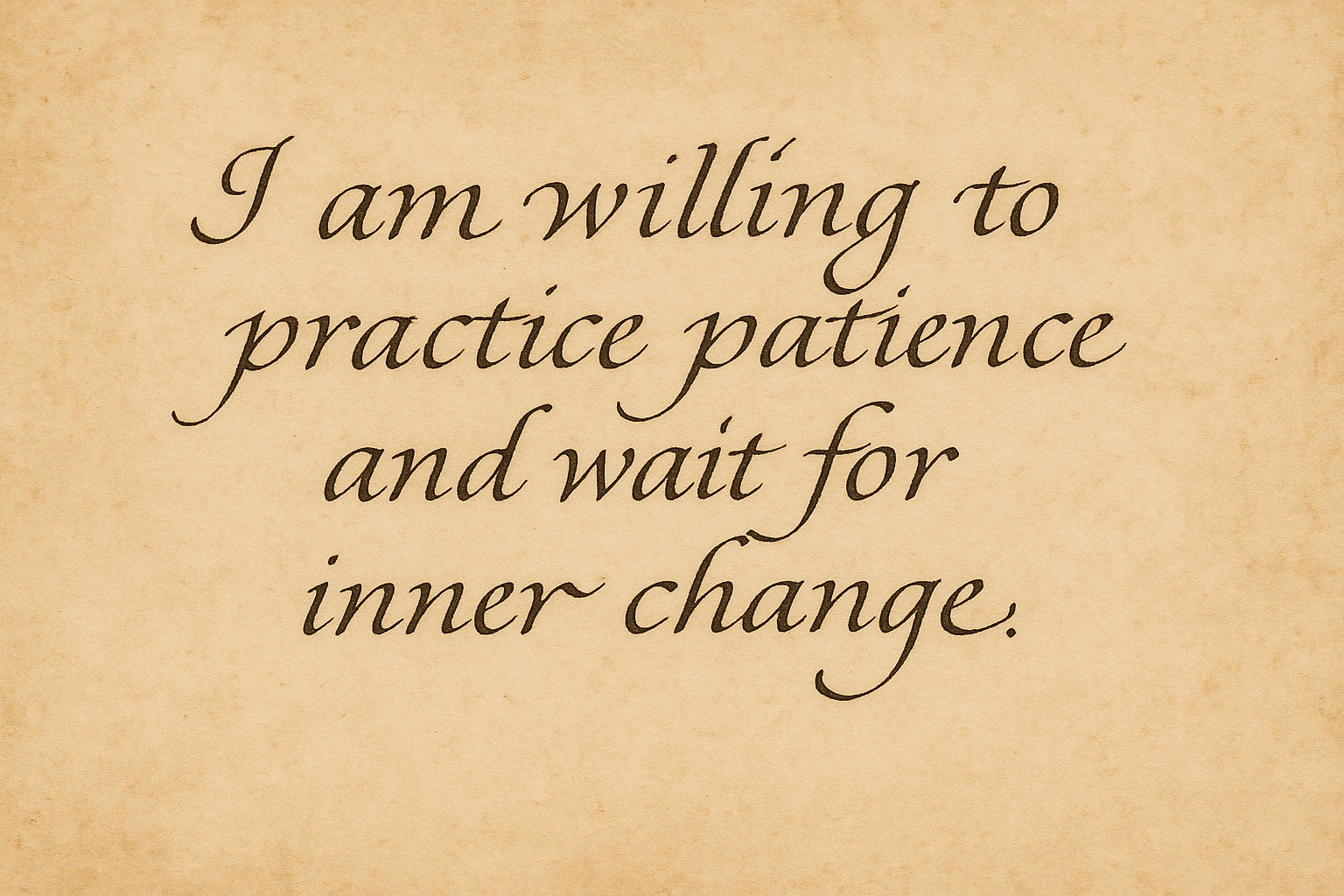
○ Medieval Gothic calligraphy: “I grieve, therefore I love.”
The Gothic alphabet has a stable structure and clear lines, making it suitable for practicing the sense of writing that "stabilizes emotions and meaning" during periods of grief.
- English sentences:I grieve, therefore I love.
- Chinese equivalent:I will grieve, because I love.
- Writing Tips:As you write each letter, let your breath follow the rhythm of the letter's shape; exhale gently at the points where you emphasize the strokes, giving your sorrow a soft outlet.
Lesson 1112: The Psychological Process of Grief - Guided Mandala Viewing
Purpose:Give your grief a space to be contained and observed, instead of letting it completely engulf you.
Find a mandala pattern with a darker center and a gradually brightening outer ring. Focus your gaze on the center, and visualize it as "loss itself." Observe your body's reaction: Is your chest tight? Is your breathing shallow? Then, slowly let your gaze spread outward along the pattern, as if adding layers of protection to the loss.
When you reach the outer circle, please whisper, "I'm here."“
A mandala is not about drawing something, but about observing—observing gaps, observing pain, observing how sorrow moves, and also observing how you stand firmly on the outermost layer of the image.
Please log in before submitting your drawings and feelings.
○ 1112. The Psychological Process of Loss and Grief: Journaling Guidance Suggestions
① Write down "What I lost is..." and complete the sentence. No explanation is needed.
② When you think about this loss, which part of your body feels sore, painful, empty, or tight first?
③ Write down the sentence you most want to say to someone who has passed away or been lost.
④ Write down a sentence you would like to say to yourself, starting with "Even though I am still in pain, I will..."
⑤ Looking back on the past week, was there a moment when you felt a little bit lighter? Even if it was only 1%.
⑥ Finally, I wrote: "Sorrow is moving, and I am with it."“
Please log in to use.
Grief doesn't disappear, but it changes shape. May you gradually find a new order in the process of observing, bearing, and flowing, allowing love to continue to shine in your heart.