

Lesson 1194: Correcting Avoidance, Self-Blame, and the Tendency Towards Perfectionism
Duration:75 minutes
Topic Introduction (Overview):
In the mood cycle of bipolar II disorder, the depressive phase is often accompanied by significant self-denial, while the hypomanic phase may drive impulsive behaviors driven by perfectionism. Avoidance, self-blame, and excessive perfection are not three unrelated psychological phenomena, but rather interconnected: the more you blame yourself, the more you avoid; the more you avoid, the more you feel "not good enough"; the more you feel not good enough, the more you pursue unattainable perfection, ultimately forming a cycle that traps you in the long run. This course will guide you to identify the details of this cycle, including: which scenarios are most likely to trigger avoidance? How do you habitually blame yourself internally? Where do your standards of perfection come from? Together, we will build a "realistic tolerance" framework and learn how to adjust your standards back to an actionable range.
Mandala drawing isn't about drawing something; it's about observation—observing how the three inner traps reinforce each other; observing how you try to "become a better version of yourself" in every instance of self-blame; and observing the fact that you don't need to be perfect, nor do you need to unconditionally perform well to be understood. This course combines herbal healing teas, the Canadian Maple Cure Diet, and calligraphy to help you practice "letting go of harshness," "allowing imperfection," and "avoiding avoidance and procrastination" through multiple senses, laying the foundation for long-term, stable, and resilient self-care.
▲ AI Interaction: Identifying Your "Avoidance-Self-Blame-Perfection Cycle"“
Write down the most recent experience where you "felt unmotivated but kept blaming yourself for not doing anything".
Answer three short questions:
- ① What was I avoiding at the time? (Task, dialogue, personal feelings)
- ② How did I blame myself? (Write down my original words)
- ③ What does my ideal "perfect version" look like? (Write it down to reveal its true form)
Send these three pieces of content to AI to help you transform "perfect requirements" into "actionable small goals".
Click the button below to practice with AI how to stop blaming yourself, reduce perfectionism, and decrease avoidance behaviors.
○ Music Therapy: Rhythm Practice That Allows You to Let Go of Demanding Standards
Perfectionists find it hard to "relax" because their attention is always focused on finding mistakes. This musical exercise isn't about making you stronger, but about training you to "accept imperfection."
- Choose a gentle piece of music that you "don't really like".
- If you don't like a certain note while listening, don't skip it or replace it.
- Note that even if you don't like it, it can still exist; the world hasn't been destroyed.
- You are practicing "allowing imperfections into your experience".
In this process, the brain gradually becomes less vigilant about "mistakes," making you more tolerant of imperfections in real life.
Herbal Healing Tea: Chamomile and Peppermint Stress Relief Drink
Recommended reasons:Chamomile helps soothe a tense nervous system, while peppermint can relieve chest tightness, brain fog, and stiffness caused by perfectionism. Suitable for drinking before starting a task, it helps you switch from "all or nothing" mode to "step-by-step completion mode."
Usage suggestions:Steep 2g of chamomile and 1g of peppermint leaves in hot water for 5 minutes. It's recommended to drink this while planning your tasks, letting the aroma signal you to "let go of self-blame and start afresh."
○ Maple Cure Diet
For a brain and body constantly stressed due to perfectionism, stabilizing blood sugar and supplementing with healthy fats are crucial. The Maple Walnut Warm Bowl uses warm grains as a base, with a touch of maple syrup, walnuts, and blueberries, providing both physical energy and psychological comfort—a symbolic reassurance that "a little sweetness is acceptable and perfection is not necessary."
It's suitable as a small ritual before starting a task, allowing the body and mind to prepare for a "just enough" rhythm, rather than "having to do it to the extreme."
Healing Recipes
/home2/lzxwhemy/public_html/arttao_org/wp-content/uploads/cookbook/maple-walnut-bowl-02(Alternatively, you could try relaxed="1" or use an existing filename.)
Image Healing: Psychological Mandala Imagery 1194 · Loosened Knot
Imagine a tightly pulled knot, all the force concentrated on one point, tightening with each pull. It symbolizes you concentrating all your tasks, responsibilities, expectations, and self-reproach on that single point. Now, slowly observe it: don't pull, don't tug, don't untie, just watch it. With your breath, the knot softens, and the tightest point begins to loosen a little.
A mandala is not about drawing something, but about observing—observing how the knots loosen because you "stop straining"; observing how you are freed from the need for perfection; observing a soft, breathing path unfold in your hands. You don't need to do everything perfectly; you just need to stop tying everything to a knot.
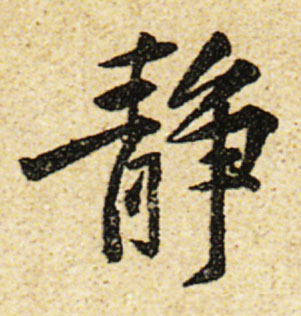
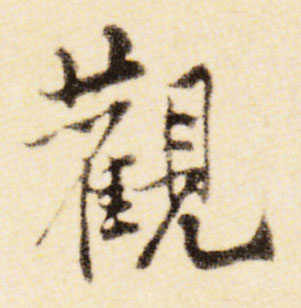

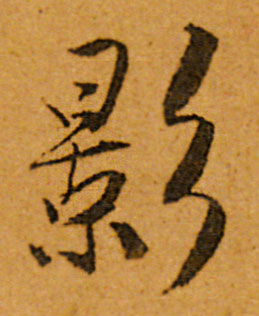




○ Chinese Calligraphy: Balance Practice in Running Script
The rhythm of running script varies from fast to slow, and the pressure of each stroke varies from light to heavy, perfectly symbolizing "balance" and "allowing for fluctuations." This lesson's running script practice aims to help you break through "perfectionist writing" and experience "natural flow."
- Written words:No need for perfection, just keep moving forward.
- English equivalent:Not perfect, just forward.
- Writing Tips:Intentionally avoid striving for perfect symmetry or uniform speed in your strokes, allowing your handwriting to be "a little uneven." Practice in this process: do not correct, blame, or rewrite.
Lesson 1194: The Avoidance-Self-Blame-Perfection Cycle - Self-Awareness Visualization Exercise
Purpose:To bring the invisible psychological cycle to life through visible images.
- Draw three circles: avoidance, self-blame, and perfectionism.
- Connect the three circles with arrows, in the order you prefer.
- Observe: Which arrow is the thickest? Which loop is the most frequent?
- On the outside of each of the three circles, write an "alternative expression," such as: "I allow myself to pause," "I can move forward without blaming myself," and "I don't have to do 100%."
- Place the entire image on the table as a visual cue to "stop the loop".
Please log in before submitting your drawings and feelings.
○ 1194. Avoidance, self-blame, perfectionism – journaling guidance
① What three things did I avoid today? Write them down.
② What phrase do I most often use to blame myself? (Use the exact words)
③ Where does my "perfect standard" come from? Is it mine? Or is it someone else's voice from the past?
④ Which task can I reduce the standard by 20%? Write a new, executable version.
⑤ Write a forgiving note for yourself: "I am practicing allowing imperfections and letting myself move forward."“
Please log in to use.
When you break free from the cycle of "avoidance-self-blame-perfection," you begin to emerge from the system that oppresses you, regaining choice and flexibility. Allowing for imperfection is the first step towards long-term stability.