

Lesson 1267: Identifying and Soothing the Sensitivity of Abandonment
Duration:75 minutes
Topic Introduction:
In the emotional fluctuations of cyclothymia, "abandonment sensitivity" often appears like a shadow, following the ebb and flow of emotions: during hypomanic phases, you may feel exceptionally close and warm, and even a slight delay in responding can make you feel threatened in the relationship; during depressive phases, you may quickly fall into deep anxieties about "not being worthy of love" and "the other person will leave me." This course helps you identify the psychological roots of this sensitivity, including rhythmic changes, differences in emotional energy, and the impact of sleep and stress on the brain's threat perception system. It also teaches you how to self-soothe when sensitivity is triggered—from breathing exercises and body landing exercises to using relationship stability scripts and rational checking exercises—gradually transforming "fear of abandonment" into "a sense of relationship stability." When you can see the onset of sensitivity instead of being immediately swayed by emotions, you begin to truly master the ability to harmonize the rhythm of relationships.
○ Common triggers for feelings of being abandoned
- Hypo-hysterical phase:The widening gap between expectations and reality, coupled with heightened social energy, leads to higher demands for responses from others.
- Low period:A decline in self-worth makes it easy to interpret the other person's silence or distance as "leaving".
- Hypersensitivity reaction:When sleep is reduced and stress accumulates, the brain's "threat amplification effect" on subtle cues is enhanced.
▲ AI Interaction: Identify Your Sensitive Triggers
Tell the AI: What was the last event that made you suddenly feel "abandoned"?
Is it a delayed reply? A change in tone? A canceled date? Or sudden silence?
AI will help you analyze the trigger points and provide a self-soothing script that you can use immediately.
○ Soothing for the Sensitive to Abandoned: Music Therapy
Choose music with strings or piano as the main instrument and a gentle rhythm to gradually transition your body from "relationship alert mode" to a stable state.
While listening, observe the tension in your shoulders, neck, chest, and abdomen, and write down the comforting phrases you need most at that moment.
Music can help reduce the perception of threat, allowing the brain to return to a more balanced interpretive state.
○ Eastern Healing Tea - White Chrysanthemum Calming Tea
Recommended reasons:The combination of white chrysanthemum, goji berries, and light mint can help reduce internal tension and relieve chest pressure. It is very suitable for physical reactions such as rapid heartbeat and shallow breathing that are common after "abandonment sensitivity" is triggered.
usage:Steep 4g of white chrysanthemum, 6-8 goji berries, and a small amount of mint in hot water for 6 minutes. Drinking this quietly helps to bring attention back to the body and bring emotions back from a rapid, threatening mode to reality.
○ Codonopsis and Red Date Soup
Codonopsis pilosula replenishes qi and stabilizes energy, while red dates nourish the spleen and heart. When combined with a small amount of goji berries, it can help regulate energy instability and restlessness caused by emotional fluctuations.
The sensitivity to abandonment is often amplified when energy is low or emotions are unstable. This soup can gently support the body and mind, allowing you to maintain a sense of groundedness during emotional ups and downs.
Tonify Qi and calm the mind
Soup therapy
Healing Recipes
/home2/lzxwhemy/public_html/arttao_org/wp-content/uploads/cookbook/kao-ji-xiong-rou-quan-mai-mian-bao.html(Please confirm that the following has been uploaded: kao-ji-xiong-rou-quan-mai-mian-bao.html)
Psychological Mandala
Psychological Healing: Psychological Mandala - Thoughts 07
Imagine a point of light at the center of a mandala slowly expanding and then contracting, like breathing.
When feelings of abandonment arise, the heart feels like a coil suddenly tightening, but this point of light reminds you: the world has not left you, and you are still at the center.
Watching the expansion and contraction of the light spots, you will feel a long-lost sense of being "accommodated".
Practice while watching: Even if there are gaps in the relationship, I am still here.
Please watch three times and let the light spot become your anchor.
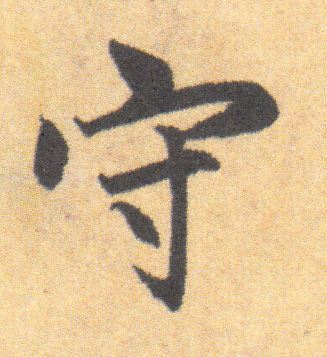
○ Chinese Calligraphy - Running Script
The flowing lines of running script, without losing their rhythm, symbolize "the advance and retreat, and distance in relationships."
Practicing cursive script can help shift your focus from the other person's reaction back to your own rhythm when you feel abandoned or sensitive.
- Written words:“"A peaceful mind and stable emotions"”
- Writing Tips:Allow the brushstrokes to flow naturally, and practice maintaining a steady breath at each turn. This can help build an internal experience of "I can remain at peace amidst changing relationships."







○ Drawing Guidance: Relationship Safety Circle and Response Map
Draw a large circle on the paper to symbolize a "relationship safety net".
Draw a wavy line inside the circle to represent your emotional fluctuations.
When you think about the feeling of "abandonment," write your reaction on the rising and falling points of the wave line, and then draw some solid points on the outside of the circle: breathing exercises, supporters, real-world evidence, stable relationship experiences, etc.
Finally, these points are connected back to the great circle to form a "stable loop".
After you finish drawing, look at the whole picture and try to understand that sensitivity does not equal danger, and you can always find a way back to a stable path.
Please log in before submitting your drawings and feelings.
○ 1267. Sensitive to Abandonment: Log Guidance Suggestions
① Write down the events that recently triggered the sensitivity.
② Record what you are most afraid of losing right now.
③ Write a comforting sentence that you would like to say to yourself.
Please log in to use.
Sensitivity is not a weakness, but a rhythm that needs to be understood and accommodated.
The more you can calm yourself, the less likely you are to be taken away by fear.