

Lesson 1525: Diagnostic Assessment and Severity Grading (including AUDIT-C)
Duration:60 minutes
Topic Introduction:This course focuses on how to use scientific tools to initially assess the severity of alcohol use disorder, helping you move beyond simply "feeling how much you drink" and instead see your current situation through visual scores and classifications. The course will introduce the core content, scoring methods, and interpretation principles of commonly used screening scales (especially AUDIT-C), and explain the clinically common approaches to classifying mild, moderate, and severe disorders. You will learn how to view scales as "maps for collaborative dialogue," rather than new labels or grounds for self-blame, while respecting medical expertise. The course will also remind you that no self-assessment result can replace a professional diagnosis, but it can provide important clues for more structured communication with doctors and mental health professionals.
○ Key points of diagnostic assessment and severity grading
- Assessment Purpose:It's not about labeling yourself as "good" or "bad," but about assessing the level of risk and whether intervention and support are needed.
- AUDIT-C Core:The risk of problem drinking is initially screened by three indicators: frequency of drinking, amount consumed at one time, and binge drinking.
- Severity rating:Based on scale scores, withdrawal symptoms, functional impairment, and past medical history, the severity of the condition can be determined as mild, moderate, or severe.
- Dynamic perspective:The grading is not static, but may rise or fall over time and with changes; it is a "process snapshot".
- Safety and Referral:High-risk or severe results suggest the need for closer medical evaluation, and hospitalization or medical supervision may be necessary to quit drinking.
▲ AI Interaction: What do you see when the scale score becomes a mirror?
Each score on the scale is not a judgment of you, but a record of your "drinking patterns." This lesson invites you to treat the assessment results as a mirror, to see them gently, rather than with fear or denial.
Try to recall in your mind: If you had completed the AUDIT-C questionnaire, what choices would you likely make for each question? What kind of life rhythm and emotional landscape are hidden behind these answers?
You can start by writing down three simple sentences: ① What range is my approximate score likely to fall into; ② What emotions did this result evoke in me; ③ What is the consequence I am most worried about.
Next, try writing a response to yourself, such as: "I'm willing to take this as a reminder, not a verdict." Let the assessment be the beginning of the conversation, not the end.
Click the button below to analyze your alcohol usage patterns with AI, discuss what the scale results might mean, and where you can start making adjustments.
○ Diagnostic assessment and severity grading • Music therapy
When conducting self-assessments or reviewing scores, many people experience feelings of shame and anxiety about being "categorized." This section suggests playing a piece of instrumental music with a calm rhythm and simple melody to create a quiet atmosphere for reading and facing the results.
With music playing, please write down three subheadings: ① “What the grades tell me”; ② “What I’m really afraid of”; ③ “The resources I still have”. Under each subheading, record 2–3 specific thoughts or facts.
When you break down scores into specific sentences, they cease to be cold numbers and become fragments relevant to your life. The rhythm of the music reminds you that all assessments are merely snapshots of the present moment, not the final outcome of your destiny.
In conclusion: Let music help you transform the tension of "fear of being evaluated" into the courage of "being willing to face the status quo".
○ Oriental healing tea
Recommended drinks:Chrysanthemum & Goji Berry Tea
Recommended reasons:Chrysanthemum clears the liver and improves eyesight, while goji berries nourish the liver, replenish blood, and strengthen the body's resistance. When facing alcohol-related assessments and considering the burden on the liver and long-term health, this gentle tea symbolizes an attitude of "taking care of yourself," helping you shift from self-blame to self-protection.
usage:Take 6 dried chrysanthemums and 10 goji berries, steep in 80–90℃ hot water for 5 minutes, and then drink. Drink 1–2 cups daily as a “small self-care ritual” after filling out a questionnaire or reviewing your drinking history.
○ Japanese Food Therapy: Salt-grilled Saury (Sanma Shioyaki)
Pacific saury is rich in DHA/EPA and high-quality protein, which helps protect cardiovascular and brain function. For those who want to gradually repair their bodies after long-term alcohol consumption, it's a friendly and practical dietary choice. Paired with light rice and vegetables, it creates a filling yet not overly heavy dinner, which is beneficial for stabilizing blood sugar and mood.
Healing Recipes
/home2/lzxwhemy/public_html/arttao_org/wp-content/uploads/cookbook/sanma-shioyaki.html(Please confirm that sanma-shioyaki.html has been uploaded)○ Free Mandala Healing: Stabilizing Anxiety Through Visualization
Image Healing: Free Mandala Stability Guidance
Please choose an existing mandala image, sit quietly, and simply observe it. Gently focus your attention on the central area, coordinating with slow and even breathing. There is no need to analyze what the image symbolizes, nor is there any need to "draw" anything.
Mandala drawing isn't about drawing something; it's about observing. This practice of observation allows you to take a step back from "staring intently at grades and consequences," and first experience a stable and gentle gaze. While looking at the mandala, you can silently tell yourself, "Grades are just information, not the whole of me." Let the rhythm of the image help you slowly descend from assessment anxiety.
If you wish, you can repeatedly view the same mandala at different times, observing how your breathing, heartbeat, and feelings about the assessment results change. The focus remains on "seeing" and "feeling the present moment," rather than creating new patterns.

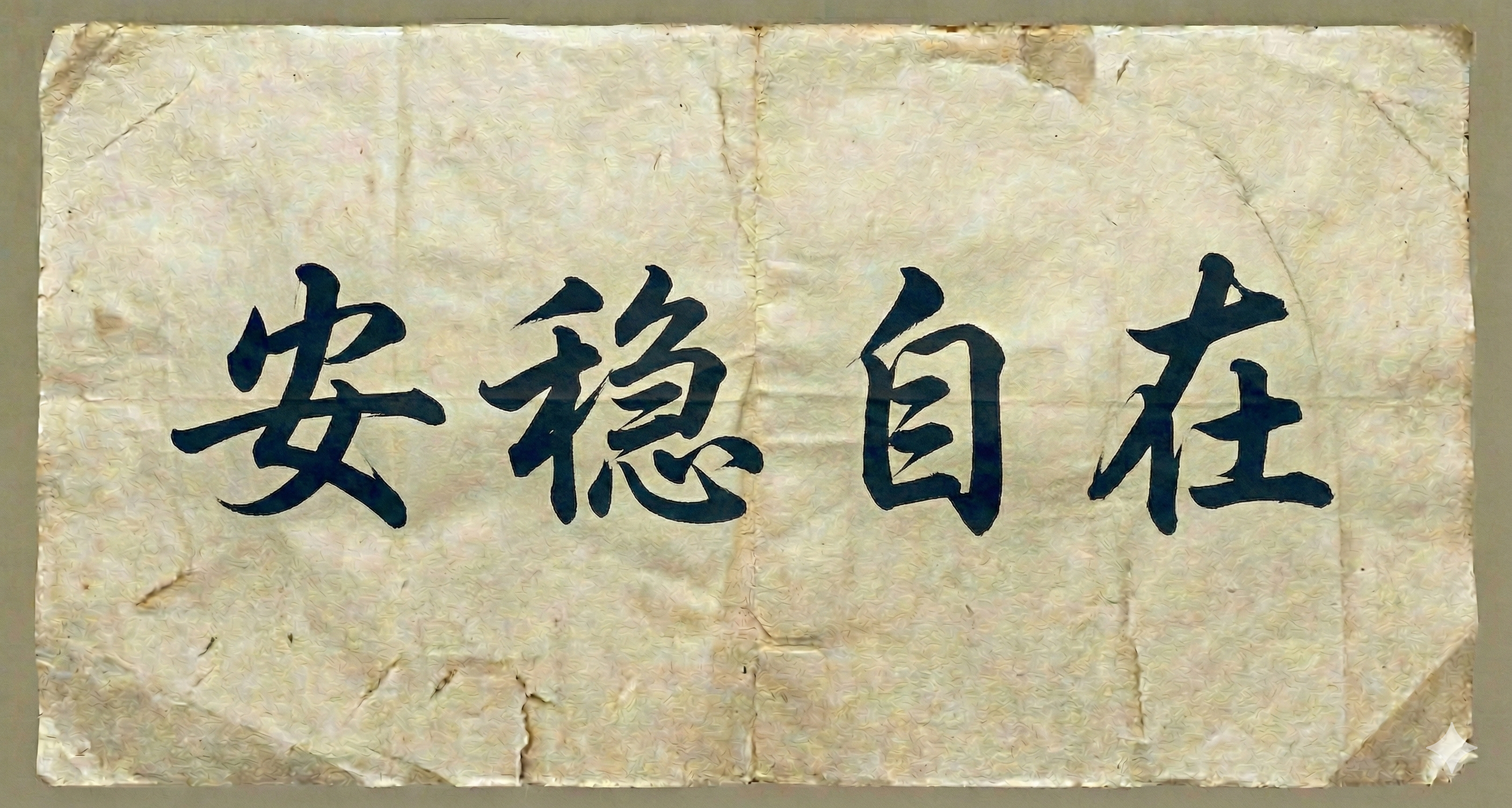
○ Suggestions for seal carving calligraphy practice
In this course, seal carving calligraphy is used as a way to train patience and self-discipline, helping you shift your focus from grades to the present moment and your breath. Suggestions are as follows:
- Written words:
Drink in moderation and maintain self-control.
Measured Drinking · Steady Heart - Psychological Intention:
Diagnostic assessments and severity grading remind us that boundaries and moderation can be learned. Seal carving requires slow, deliberate progress, stroke by stroke, symbolizing that you too can gradually establish new boundaries in your drinking behavior, rather than adopting a black-and-white "all or nothing" approach. - Knife skills:
When carving, consciously slow down and feel the resistance and texture of the tool against the stone surface. Before each cut, take one or two deep breaths to let the movements follow the rhythm of your breathing, rather than acting impulsively. - Emotional transformation:
When you think about your scale score, channel your emotional energy into the sculpting action, replacing repeated self-blame with meticulous, continuous strokes. Once finished, pause to look at the impression and the marks, viewing it as a testament to "I am learning to take control of my life."
○ Diagnostic assessment and severity grading: Guiding suggestions for art therapy
This page uses drawing to help you transform your "scores" into a visible image map. The goal is not to achieve artistic effect, but to help externalize the severity and impact of alcohol use. Please remember: drawing exercises cannot replace medical diagnosis; they are only an aid to self-awareness and communication with professionals.
I. Score Ladder: Seeing your current score range
- Draw a simple staircase on a piece of paper, marking different severity levels from low to high (e.g., "possibly safe", "increased risk", "high risk").
- Based on your current assessment of your drinking patterns, draw yourself on the corresponding tier, which can be represented by a small dot or a small figure.
- Write down support and risks on both sides of the steps: on one side, write "People and resources that help me," and on the other side, write "The most worrying consequences if I don't make adjustments."
II. Red, Yellow, and Green Lights: The One-Step Difference Before and After Assessment
- Draw three connected circles to symbolize red, yellow, and green lights. You can use different shades of the same color to distinguish them, rather than sticking to the actual colors.
- Write in the "green light" circle: areas of life that are currently in good condition (such as regular work, important relationships, and acceptable health indicators).
- Write in the "yellow light" circle: There are subtle changes but it hasn't reached the point of collapse yet (e.g., being late occasionally, memory deterioration, or more volatile emotions).
- Write in the "red light" circle: If you continue drinking like this, what aspects you are most worried about worsening (such as the risk of hospitalization, unemployment, relationship breakdown, etc.).
Friendly reminder: If you experience significant dizziness, palpitations, sweating, hand tremors, confusion, or other withdrawal symptoms or severe discomfort while recalling or completing the questionnaire, please prioritize safety and seek medical attention as soon as possible if necessary. All self-assessment results should be used in conjunction with a professional evaluation. You can upload photos of your artwork to help professionals better understand your concerns and desired adjustments.
Please log in before submitting your drawings and feelings.
○ 1525. Diagnostic Assessment and Severity Grading (including AUDIT-C) · Log-Guided Recommendations
① Regarding the score: Please write down your most immediate feeling about being "evaluated". Is it tension, resistance, relief, or a mixture of emotions? Describe the source of this feeling in 3-5 sentences.
② Specific impact: Review the past month and give one or two examples of how your drinking patterns have affected your studies/work, relationships, or physical condition, so that the severity rating is no longer just an abstract concept.
③ Scope of adjustment: Assuming the severity can be adjusted downwards by one level, what do you think is the most realistic and feasible step? Is it reducing alcohol consumption during certain periods, seeking professional counseling, or letting someone important to you know about your concerns?
④ Self-talk: Finally, write down a sentence to encourage yourself and use it as a reminder for your actions in the coming weeks, such as: "I am willing to take it one step at a time and turn numbers into a starting point for change, rather than a source of shame."“
Please log in to use.
Diagnosis and classification are not judgments, but maps—may you see where you are and also the next small step you can take.