

Lesson 1482: Symptoms of Conversion Disorder

Duration:70 minutes
Topic Introduction:The course title and introduction are designed to gently guide you through the "Symptoms of Conversion Disorder." It outlines symptoms such as weakness, tremors, gait abnormalities, sensory changes, speech and visual disturbances, and episodic events, emphasizing that these symptoms are recognized rather than causing shame. This content is for psychological education and self-care reference only and should not replace medical diagnosis, psychotherapy, rehabilitation training, or emergency treatment. There is no need to rush to change yourself.
○ Course topic audio
Lesson 1482: Symptoms of Conversion Disorder
Click to view the read-aloud text
Before we begin, take a deep breath. Today we'll learn about the symptoms of conversion disorder. Conversion disorder can manifest in a wide range of ways, including weakness, paralysis, tremors, tics, gait abnormalities, numbness, tingling, pain, loss of voice, visual or auditory changes, and may also include episodic events. Symptoms may resemble neurological problems, but they often exhibit functional patterns. Today we'll help you understand your symptoms as signals that need to be understood, not as failures or something you're faking. Remember, functional symptoms are not signs of weakness, nor are they something you're deliberately displaying. They are more like a response formed by the nervous system, stress, attention, and physical learning. Our goal is not to blame the body, but to retrain it. When learning, please don't push yourself too hard. You can focus on understanding just one concept, noting just one trigger point, or trying just one small functional exercise. If you experience significant discomfort, an attack, a risk of falling, or a sudden deterioration in function, please follow your doctor's medical advice first. If you only experience increased anxiety, you can slow your breathing and give your body some time to confirm it's safe. At the end, give yourself a gentle reminder: the symptoms are real, and recovery can be real too. Today, you only need to take one step forward; you don't need to change everything at once. You can silently remind yourself: stabilize first, then practice; be safe first, then move forward. Every time you're willing to stop, you're paving the way for new physical experiences. Don't rush to overcome your fears; simply bring your attention back to a small, actionable movement. Allow yourself to gently and professionally relearn how to work with your body, little by little. When you're willing to complete a small exercise, you're giving your body room to recover. Take it slow; stability is more important than perfection. Take it slow, be calm first. Take it slow, be calm first. Take it slow, be calm first. Take it slow, be calm first. Take it slow, be calm first. Take it slow, be calm first. Take it slow, be calm first. Take it slow, be calm first. Take it slow, be calm first. Take it slow, be calm first. Take it slow, be calm first. Take it slow, be calm first.

AI Healing Q&A
Conversion disorder may manifest as weakness, tremor, gait abnormalities, numbness, tingling, speech difficulties, visual or auditory changes, or episodic events. You can tell the AI when your symptoms started, how long they lasted, and what situations exacerbated or alleviated them. The AI will gently help you identify patterns and reduce fear and misunderstanding. If symptoms are new, rapidly worsen, or are accompanied by warning signs, please undergo a medical evaluation first.

○ Music therapy guidance
When weakness, tremors, abnormal gait, altered sensations, or episodic events frighten you, try listening to familiar music first. Don't try to control your body; simply let your ears follow the steady beat and feel that you still have external cues to rely on. If symptoms appear new or significantly worsen, please seek medical evaluation first. Once you feel safe, music can help you gradually reduce panic and return to a manageable state.
○Eastern and Western Healing Teas
○ Eastern Healing Tea - Licorice and Ginger Tea: This tea combines the nourishing and harmonizing effects of licorice with the warming properties of ginger. Licorice harmonizes medicinal properties, moistens the lungs, and calms the mind, while ginger warms the body, dispels cold, and promotes blood circulation. This tea is suitable for gastrointestinal discomfort and low mood caused by cold, stress, or anxiety. Instructions: Boil a few slices of ginger and 1 teaspoon of licorice in hot water for 10 minutes. Add honey to taste and drink. Drink 2-3 times a week to help increase body heat and relieve physical and emotional tension. When used in conjunction with the course "Symptoms of Conversion Disorder," the process of brewing tea, waiting, and slowly sipping can be used as a small exercise to calm the nervous system and pause excessive focus on symptoms. Gentle Reminder: This tea recipe is for daily dietary and emotional well-being reference only and cannot replace doctor's diagnosis, neurological evaluation, psychotherapy, rehabilitation training, medication, or emergency treatment. Pregnant women, breastfeeding mothers, children, those with chronic diseases, allergies, or those currently taking medication should consult a professional first.
○ Healing Recipes
○ Western Herbal Nutrition: Herbal Oat Apple Bake
Recommended dishes:Herbal Oat Apple Bake Recommended reasons:When learning about symptom presentations, low-stimulation, repeatable dietary steps can help observe the stress response behind weakness, tremors, sensory alterations, or episodic experiences, allowing the body to gain some stability. This diet, based on the principles of gentleness, stability, and low stimulation, helps the body gain some sustainable support. It cannot replace medical evaluation, nor can it directly treat conversion disorder or functional neurological symptoms, but it can be used as part of regular eating, rhythm management, and mind-body observation. Recipe (1–2 servings): practice: Before preparing this dish or drink, please stop and observe your body: are you experiencing weakness, tension, numbness, tremors, pain, post-ictal fatigue, or worry about the symptoms? Please do not blame yourself; simply treat these reactions as signals that need to be gently recorded. Before eating or drinking, take three slow breaths and observe your eyes, head, shoulders, neck, chest, stomach, hands, feet, and gait. If there is a risk of falling, swallowing, driving, operating equipment, using fire, or caring for others today, prioritize safety arrangements before eating. Take your first bite slowly. Daytime diets can be combined with sunlight, short breaks, and rehabilitation exercises; evening diets should be portion-controlled to avoid overeating, excessive sweetness, or drinking too much water that may affect sleep. Video Title:Oatmeal, Apple, and Herbal Baking Pan: A gentle dietary approach to support functional observation and stabilize rhythms in a course on the symptoms of conversion disorder. hint:If the conversion symptoms continue to worsen, significantly affecting walking, speaking, swallowing, studying, or working, or are accompanied by intense fear, trauma response, depression, or self-harming thoughts, please contact an in-person doctor, psychologist, rehabilitation therapist, or emergency resources immediately.Click to view healing recipes
◉ Western Herbal Nutrition: Herbal Oat Apple Bake
I. Recommended Dietary Therapy and Reasons
2. Recipe and Method
3. Small rituals for body and mind
4. Dietary Therapy Experience Record
V. Instructional Videos (approximately 3–5 minutes)
6. Precautions

○Mandala Healing
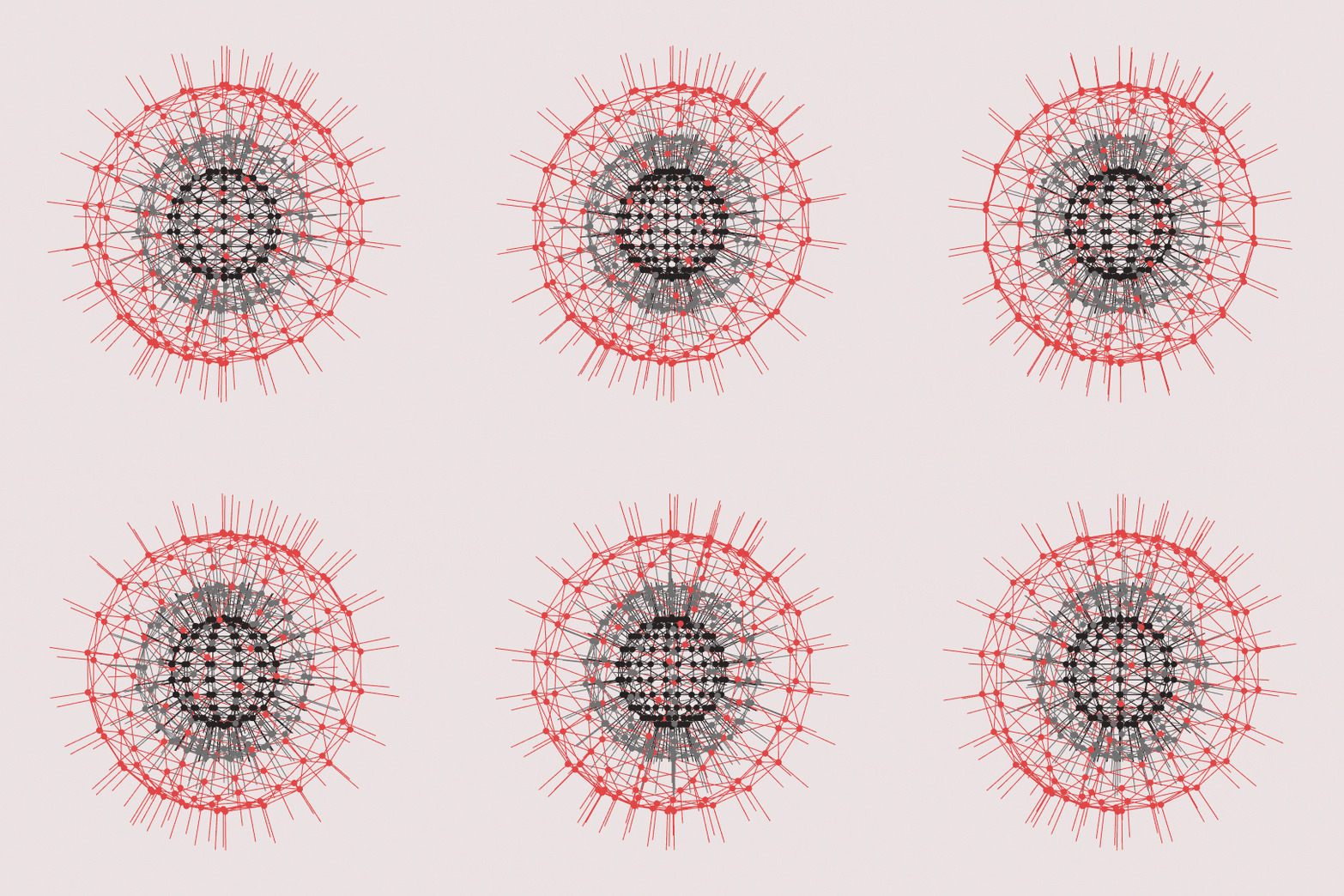
When experiencing weakness, tremors, gait abnormalities, numbness, speech difficulties, or episodic events, you can look at a gentle mandala. The center catches your fear, while the outer ring reminds you not to rush to fight your body. Gently observe: when symptoms arise, what makes it tighter, and what makes it slightly looser? If new symptoms appear or worsen, please seek medical attention first. After confirming your safety, you can then practice gradually stabilizing your condition.
● AI Balance Psychological Simulation Engine ●
AI Balance Psychology Simulator
AI Mandala Color Healing EngineAZ Image Coloring · 40 Colors

○ Calligraphy and engraving therapy practice
When weakness, tremors, gait abnormalities, numbness, speech difficulties, or episodic events frighten you, try a short period of calligraphy practice. There's no set content to write; simply slow your hand down and let your breathing become more stable, following the strokes. Don't try to control your body or blame yourself. If symptoms reappear or significantly worsen, seek medical attention first; once you're safe, use the practice to help your body gradually return to the present moment.


○ Art Therapy Guidance
When weakness, tremors, gait abnormalities, sensory changes, speech difficulties, or episodic events frighten you, you can draw these symptoms as different shapes. Let lines represent instability, let colors represent tension, and also leave a safe area in the picture. Drawing is not a diagnosis, nor is it to prove the authenticity of symptoms; rather, it helps you see that your body is crying for help. Once you've confirmed it's safe, then slowly look for clues to recovery.
Please log in before submitting your drawings and feelings.

○ Diary Healing Suggestions
The journal section is for guiding you through the "Symptoms of Conversion Disorder." Write down the most impactful point from today's lesson and a small action you'd like to try. Record the experience that best represents your physical symptoms, and then write down how you'd like to observe it gently, rather than rushing to blame or prove anything. Write truthfully, briefly, and in a way you can bear. There's no need for deep analysis, and you don't need to write it for anyone else; the important thing is to let your feelings be seen gently. After you're finished, gently close the journal and take a slow breath. It doesn't need to be complete, nor does it need to appear strong.
Please log in to use.
May you gradually return to a more stable, clear-headed, and gentler version of yourself through today's practice.