
Lesson 776: Coping with Family Conflict and Intervention Stress

Course duration:70 minutes
This course helps learners cope with family conflicts and intervention pressures. It emphasizes avoiding shaming or coercive methods of cleansing, instead focusing on collaboration through negotiated boundaries, timelines, and mutually agreed-upon rules. Learners will also practice expressing boundaries, protecting their own pace, and accepting appropriate support. The practice emphasizes safety, slowness, and feasibility, avoiding the goal of achieving all changes at once. Please record each action, change in anxiety, and spatial shift to create a reviewable practice track.
○ Course topic audio
Lesson 776: Coping with Family Conflict and Intervention Stress
Click to view the read-aloud text
Family members might panic when they see the mess, but forcibly cleaning often exacerbates tensions. What you need isn't to be controlled, but to cooperate gradually with respect. Practicing expressing boundaries and needs can shift conflict from confrontation to negotiation. Regarding "coping with family conflict and intervention pressure," focus on understanding, pausing, and making choices, rather than blaming yourself. Prepare a small piece of paper and write down one thing you most want to practice today, and then write down a minimum version you can accomplish. This way, even if you're not feeling well, you still have a path to follow. You can think of today's practice as a gentle companionship, not a harsh exam. Choose a small starting point, give yourself a manageable scope, and then proceed with steady movements. If resistance, frustration, or reluctance arises during the process, don't rush to deny it; simply acknowledge gently: "I'm feeling a little uncomfortable right now, but I can still continue slowly." When you're willing to stop and observe, you're no longer completely carried away by old habits. Even just pausing for ten more seconds, seeing one more thought, or making one more note are all part of the recovery. Please include these small changes; they are slowly accumulating. If you can't do something at a certain step, don't immediately give up. You can retreat to smaller goals, such as tidying up only one corner, judging only three items, or writing down only one feeling. Recovery requires flexibility, not forcing yourself. The gentler you adjust your methods, the easier it is for new habits to stay. When you finish practicing, give yourself a simple wrap-up. You can drink some water, wash your hands, open the window, or write down what you accomplished today on a piece of paper. This wrap-up will remind your body: I've done a little, and I can stop here for today. Remember, change isn't about overturning the past all at once, but about gradually returning life to yourself through gentle practice. You don't need to prove to anyone that you'll get better immediately; you just need to give yourself more understanding, more order, and more breathing space today. Taking it slow doesn't mean standing still; it means you're finally starting to move forward in a way that doesn't harm you. As long as you see even a little more than yesterday, it's already worth acknowledging. Please carefully count these small efforts; they are not superfluous comforts, but evidence that new habits are forming.
AI Healing Q&A
Describe to the AI the most difficult item, thought, or space to deal with today regarding family intervention and conflict coping. Let the AI break it down into context, thought, emotion, physical reaction, urge to hoard, and small alternative actions, and generate a gentle alternative phrase to remind yourself that you don't need to hoard for security. The focus of this exercise is on safety, slowness, and feasibility, not on achieving complete change all at once.

○ Music therapy guidance
Music therapy revolves around family intervention and conflict coping. Choose music with a steady rhythm and gentle melody, listen for three minutes first, then focus on a very small area. While listening, observe your breathing, shoulder and hand tension, and anxiety score, using the music as a stabilizing signal for starting, pausing, and ending. The focus of the practice is safety, slowness, and feasibility; do not aim for complete change in one go. Please record your anxiety score, physical reactions, and spatial changes before and after the action.

○East-West Healing Tea Drinks
Recommended drink: Lily and Goji Berry Tea. Reason for recommendation: Lily has a calming effect, while goji berries are nourishing. Suitable for relieving palpitations, insomnia, or physical weakness, helping to gradually stabilize emotions. Instructions: Steep a small amount of lily bulbs and goji berries in hot water for 5-10 minutes. Drink lightly in the evening. Coordinate with three slow breaths while drinking, and record changes in anxiety before and after the process. Suitable as a short pause before and after cleansing to help stabilize movements.
○ Healing Recipes
Ginseng and Ganoderma Porridge
Ginseng and Ganoderma lucidum porridge is nourishing and suitable for those experiencing prolonged fatigue, mental exhaustion, or requiring support during recovery. It symbolizes providing inner strength for long-term conditioning, but should not be used for intensive supplementation. Learners can use it as a reference for physical and mental recovery under professional advice. If unsuitable, it can be replaced with regular rice porridge, emphasizing stability, regularity, and sustainability. Simultaneously, it should be combined with a small-scale conditioning session to record changes in physical condition, emotions, and surrounding environment.
Replenish Qi and strengthen the body | Mental support | Careful nourishment
Open the healing recipe
◉ Eastern Food Therapy · Porridge · 36. Ginseng and Lingzhi Porridge
I. Recommended Dietary Therapy and Reasons
Recommended dishes:Ginseng and Ganoderma Porridge
Recommended reasons: Ginseng and Ganoderma lucidum porridge is nourishing and suitable for those experiencing chronic fatigue, mental exhaustion, or needing support during recovery. It symbolizes providing inner strength for long-term organization, without seeking strong supplementation or rapid change. For learners with hoarding disorder, what truly matters is a stable routine, a gentle diet, and sustainable action, rather than a one-time, excessive effort to organize.
2. Recipe and Method
Recipe (1–2 servings):
- Ginseng slices 2 g
- Ganoderma lucidum slices 3g
- 60 g japonica rice
- 900 ml of water
- Two red dates (optional)
practice:
- Soak or wash beans, grains, nuts, or herbs as needed in advance.
- Rinse the rice thoroughly and put it in a pot for later use.
- Add the main ingredients and water to a pot and bring to a boil over high heat.
- Simmer over low heat for 25–40 minutes to allow the rice grains to gradually open up and the ingredients to soften.
- Ingredients that cook more easily or have a milder aroma can be added in the latter part of the cooking process to maintain the flavor profile.
- Add a small amount of rock sugar, brown sugar, goji berries, or salt as needed, and simmer for another 2–3 minutes.
- Once the porridge has become soft and thick, it can be eaten warm.
3. Small rituals for body and mind
When preparing ginseng and lingzhi porridge, you can first observe the color, aroma and texture of the ingredients, and gradually shift your attention from the cluttered space, the coming and going of items and external evaluations back to the actions in your hands.
As you heat, stir, or plate, slow down and feel the scattered ingredients gradually come together to form a palatable whole. Remind yourself: I don't need to clean everything at once; I only need to complete one manageable small step.
When you take your first bite, focus on the warmth, softness, fragrance, or fullness to let your body know that it is safe and bearable, and you can relax a little.
4. Dietary Therapy Experience Record
- Record the time of consumption: before, during, or after tidying up, or before bedtime for mental and physical relaxation.
- Observe whether there are any changes in stomach burden, satiety, mental stability, and anxiety intensity within 30–60 minutes after consumption.
- If you consume ginseng and Ganoderma lucidum porridge after cleaning, sorting, discarding, or reviewing, you can record whether it helps reduce fatigue and restore a sense of control over your body.
V. Instructional Videos (approximately 3–5 minutes)
Video Title:Ginseng and Ganoderma Porridge: A gentle and stable light culinary recipe
6. Precautions
- Ginseng and Ganoderma lucidum should be used with caution according to one's constitution.
- Those with high blood pressure, insomnia, or who are currently taking medication should consult a professional first.
- For those who find it unsuitable, regular millet porridge can be substituted.
- Do not eat too much at one time to avoid overeating or putting extra strain on your stomach.
- For first-time users, it is recommended to try a small amount and observe the body's reaction.
- This product is best consumed in small amounts and slowly to avoid excessive intake at one time.
hint:This recipe is for daily physical and mental well-being and is not a substitute for any medical diagnosis or treatment. If you have chronic illnesses, are pregnant, have food allergies, are taking medication, or have special nutritional restrictions, please prioritize following the advice of your healthcare provider and nutritionist.

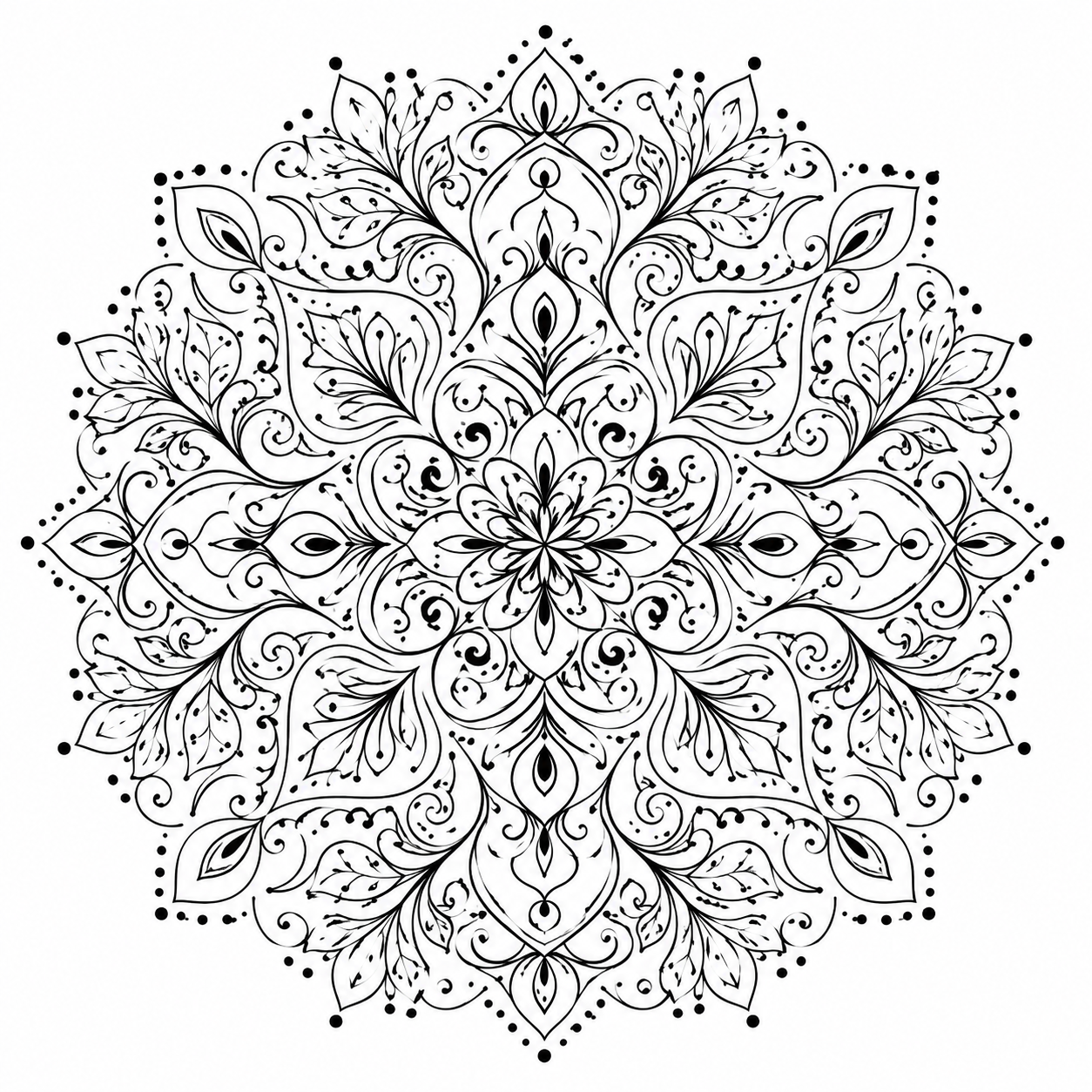
Mandala Viewing Healing
Mandala visualization revolves around family intervention and conflict resolution. Choose an image with a clear center and orderly hierarchy. Slowly look from the outer circle towards the center, and then back from the center to the whole. During practice, do not analyze whether the image is good or bad; simply experience the visual process from chaos to order, helping to return attention to boundaries and a sense of space. The emphasis of practice is on safety, slowness, and feasibility; do not aim for complete change in one go.
● AI Dynamic Geometric Vision Focus and Emotion Regulation Engine ●
AI Dynamic Geometric Vision Focus and Emotion Regulation Engine · v7.0.0
Before we begin, I'd like to know how you feel right now.
There is no standard answer; just choose the one that best reflects how you feel right now.
The experience is over. Tell us how you feel now.
There is still no standard answer; just choose the one that best reflects how you feel right now.
#FF5252
After the fluorescent line crawling is completed and stopped, first select a color, then click on the closed area in the graphic to fill in the color.
AI Digital Mandala Interactive Focus Engine
A–Z Free Selection · Layered Lines · 60 Color Fills
AI Digital Mandala Static Focus EngineAZ Image Coloring · 60 Colors

○ Calligraphy and engraving therapy practice
This calligraphy and engraving therapy exercise revolves around "family conflict and intervention stress." No fixed sentences are prescribed; learners can choose 2 to 6 words from the course title, personal goals, or their feelings for the day to write. Slow down the beginning, middle, and end of each stroke, observing whether you are rushing to finish, fill the page, or complete the task immediately. The focus of the exercise is to let the strokes help slow your breathing, rather than striving for a complete piece.


○ Art Therapy Guidance
Art therapy is designed around family intervention and conflict coping. Please draw a room, drawer, or desktop, gradually creating a passageway, a blank space, and a usable area from a crowded state. Finally, write "I can restore the space little by little," using the drawing to practice moving from a feeling of loss of control to an organized order. The focus of the practice is safety, slowness, and feasibility, not on achieving complete change all at once.
Please log in before submitting your drawings and feelings.

○ Diary Healing Suggestions
Journaling therapy revolves around recording family interventions and conflict resolution. Write down a small area and an item that was addressed today, the reason for keeping it, the anxiety score, and the final decision. Also, record whether your body relaxed, whether the space became clearer, and a small step you can take tomorrow, making the tidying experience visible. The focus of this practice is safety, slowness, and feasibility; it doesn't aim for complete change all at once.
Please log in to use.
May you gradually return to a more stable, clear-headed, and gentler version of yourself through today's practice.